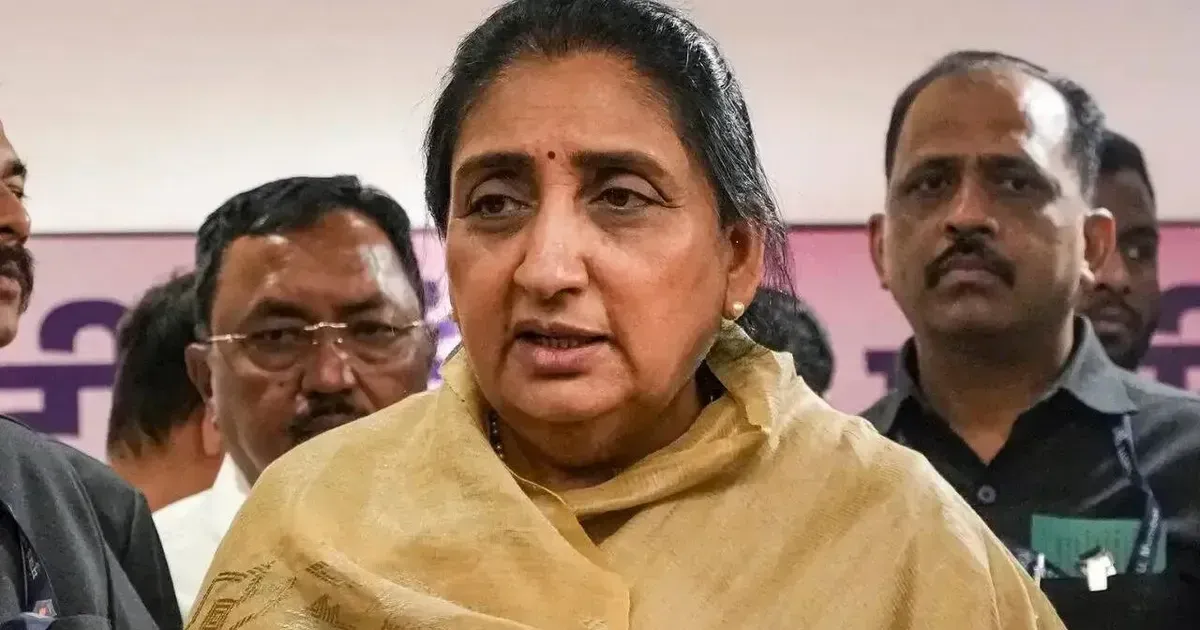
Sunetra Pawar strengthened her position in the Baramati by-election after the Congress party withdrew its candidate. The move followed an advisory from Sharad Pawar, who urged a unified front behind the Nationalist Congress Party nominee. The April 9, 2026, withdrawal did not create an automatic walkover because independent candidates remained in the race. Local election filings showed a more complicated contest than early projections suggested.
Some outlets projected a walkover for Sunetra Pawar immediately following the exit of the Congress candidate. Records from the regional election office, however, confirm that numerous other contestants remain active in the race.
Multiple independent candidates have refused to step aside, preventing the immediate declaration of a victory. These individuals represent a diverse range of local interests and personal political ambitions that complicate the Pawar family strategy. Election officials confirmed that the withdrawal of a major party candidate does not automatically terminate a contest when other valid nominations persist. Nationalist Congress Party leadership has already initiated internal discussions to address the remaining challengers. Negotiators are now working to understand the motivations of each independent candidate before the final withdrawal deadline. Baramati has long been the primary theater for Pawar family dynamics, and this by-election continues that tradition through intense local scrutiny.
Sharad Pawar Orchestrates Congress Exit
Sharad Pawar issued a direct advisory to Congress leadership to ensure the opposition vote remained consolidated behind a single candidate. The move aimed to prevent any fragmentation that could benefit splinter groups or rival factions within the state. Political analysts note that the Nationalist Congress Party relies heavily on these collaborative maneuvers to maintain its regional dominance. By removing their candidate, the Congress party signaled its continued commitment to the broader alliance structure in Maharashtra. Such coordination is frequently observed in high-stakes by-elections where the symbolic value of the seat outweighs individual party growth.
This is the second time in three years that such an alliance has been tested in the Baramati region. Congress officials stated that the decision followed weeks of deliberation regarding the long-term stability of the coalition.
“The Congress has withdrawn its candidate from the Baramati by-election following an advisory from Sharad Pawar to support NCP candidate Sunetra Pawar,” Congress officials said.
Voters in the constituency now face a ballot that includes the primary NCP candidate alongside dozens of lesser-known names. The influence of the elder Pawar in this process demonstrates his ongoing role as a central designer of regional strategy. Local party workers from both the Congress and the NCP are now expected to coordinate their grassroots efforts. Joint rallies are scheduled for the coming weeks to project an image of total solidarity to the electorate. Internal polling suggests that a unified voter base sharply increases the probability of a decisive margin. Despite this organizational strength, the presence of independent challengers introduces a variable that party whips cannot entirely control.
Independent Challengers Obstruct Unopposed Path
More than 22 independent candidates have officially maintained their presence on the ballot, according to the latest figures from the Election Commission. These challengers represent a broad spectrum of the local population, ranging from social activists to former municipal councilors. Their refusal to withdraw denies the NCP the prestigious "unopposed" status they sought to project. Reports indicate that at least 30 individuals initially filed papers, though a handful have since retracted their bids. Every remaining independent requires the NCP to maintain a full campaign infrastructure, including polling station agents and local surveillance.
The cost of a full election cycle remains a factor for the party despite the lack of a major opponent. Independent candidates often use these contests to leverage local grievances or build personal brands for future municipal cycles.
Persuasion efforts by NCP intermediaries are now focused on the most influential independents in the group. These negotiators offer various incentives or future political considerations in exchange for a formal withdrawal. The deadline for removing names from the ballot is approaching rapidly, creating a sense of urgency within the Pawar camp. If the independents hold firm, the constituency will proceed to a standard voting day with multiple electronic voting machine panels. Local observers suggest that some independents are backed by rival political factions seeking to embarrass the Pawar family. Maintaining a crowded field forces the NCP to divide its attention and resources across thousands of polling booths. Each candidate is a potential drain on the primary candidate's total vote share.
Baramati Political Legacy and Voter Dynamics
Baramati has historically functioned as the ancestral and political stronghold for the Pawar family for several decades. The seat is synonymous with the rise of the Nationalist Congress Party and its influence over the sugar cooperatives and educational institutions of the region. Every election in this constituency is viewed as a referendum on the family's local stewardship and national relevance. Sunetra Pawar represents the latest iteration of this legacy, tasked with holding the ground against both internal and external pressures. The recent split within the NCP has added a layer of complexity to voter loyalties that was previously absent.
Traditional supporters must now navigate a landscape where familiar names appear on different sides of the political aisle. Turnout figures in previous by-elections suggest that Baramati voters remain highly engaged with the democratic process regardless of the number of candidates.
Agricultural policy and water management remain the two most critical issues for the rural segments of the electorate. Candidates who fail to address these concerns often find themselves marginalized in the final tally. Sunetra Pawar has centered her messaging on continuity and the expansion of existing developmental projects. Independents, by contrast, are highlighting niche issues or local infrastructure gaps to gain traction. The ability of the NCP to mobilize its well-oiled machinery will determine if these minor challenges remain insignificant. Observers are watching the margins closely to gauge the current strength of the Pawar brand among younger voters. Data from the 2024 general election cycle indicated a shifting demographic that demands more direct engagement from the political elite.
Baramati Competition and Dynastic Politics
What the evidence points to in Baramati is not a triumph of democratic consensus, but a clinical exercise in dynastic gatekeeping. That a major party like Congress can be instructed to vacate its own electoral ground at the "advisory" of a rival patriarch should offend anyone who believes in a healthy multi-party system. It isn't collaboration; it is the managed decline of political choice. By pressuring the Congress to withdraw, the Pawar machinery is attempting to turn a public election into a private coronation.
The presence of the 22 independent candidates is the only thing standing between the constituency and a total collapse of electoral competition. These independents are often dismissed as spoilers, but in this specific context, they are the only ones holding the line for a basic democratic principle. If the NCP succeeds in "persuading" them to withdraw, Baramati effectively becomes a private fiefdom where the act of voting is rendered ceremonial. We should be deeply skeptical of any "victory" achieved by clearing the field through backroom deals rather than at the ballot box.
The obsession with an unopposed win reveals a deep insecurity within the NCP leadership. They fear a real contest because even a minor protest vote would expose the cracks in their regional hegemony. A walkover is not a sign of strength; it is a sign of a rigged local market.