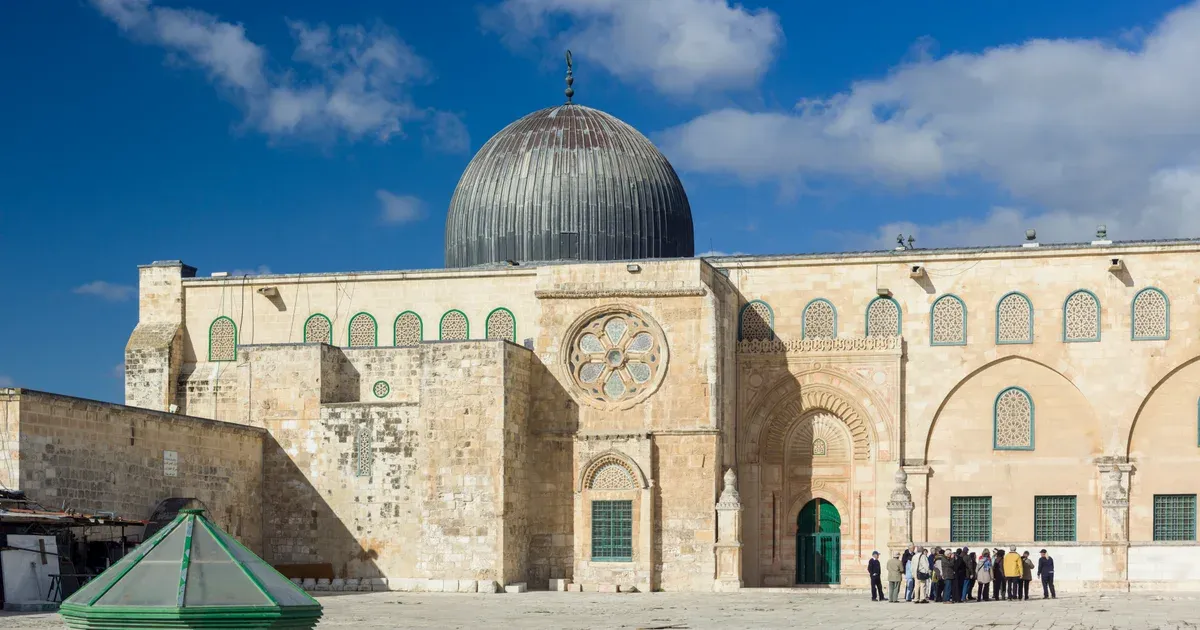
Israeli police authorized thousands of Palestinian worshippers to enter the Al-Aqsa Mosque compound after a 40-day access ban. Security forces kept checkpoints around the Old City while allowing morning prayers to resume under supervision. Younger men still faced strict entry requirements under the reopened access rules. Clerics and regional officials watched for signs that the decision would hold beyond a single prayer period. The April 9, 2026, decision eased one restriction while leaving the Jerusalem status quo under heavy pressure.
Entry requirements remained strict for younger men despite the general lifting of the blockade. Police sources said that the decision to reopen the site stemmed from a temporary reduction in localized threats. Previous weeks had seen the compound nearly empty of its usual morning crowd. Palestinian families, many traveling from outskirts of Jerusalem, faced multiple identity checks before reaching the prayer mats. The silence that had characterized the plaza for forty days broke with the sound of collective prayer.
Security Restrictions and Palestinian Access Patterns
Religious life in the Old City had reached a standstill during the month-long exclusion period. Residents of the surrounding neighborhoods reported that the closure separated families from their traditional places of worship during a period of high religious significance. Israeli security forces justify these measures as necessary to prevent civil unrest. By contrast, local community leaders describe the restrictions as a form of collective punishment that targets the religious identity of the population. Checkpoints at the Damascus Gate and the Lions Gate were the primary filters for movement.
Security persists as the primary justification for the presence of heavy weaponry near the prayer mats.
Crowd control specialists used facial recognition software and biometric scanning at the entrance points to verify the identities of those entering. This technology allows for a rapid assessment of individuals against a pre-existing security database. While 3,000 people were allowed in, the number stays far lower than the tens of thousands who typically attend before a crisis. Many older worshippers noted that the atmosphere felt heavy with the presence of hundreds of officers stationed along the perimeter walls.
Animal Sacrifice Attempts Challenge Status Quo
Extremist settler groups attempted to smuggle goats and lambs into the Al-Aqsa Mosque compound to perform ritual sacrifices. These actions represent a deliberate challenge to the status quo agreement that has governed the site since 1967. Under this agreement, the site is managed by the Jordan-led Waqf, while Israel maintains security controls. Non-Muslim worship is officially prohibited within the compound. Security details intercepted at least five different groups attempting to carry livestock through the Mughrabi Bridge entrance.
The atmosphere was one of quiet relief but high caution as the first group of worshippers returned to the plaza after such a long period of forced absence.
Record attempts to conduct these sacrifices have prompted fears of a broader escalation in the region. Religious activists associated with the Third Temple movement argued that their right to worship should include the performance of ancient rituals. Police arrested twelve individuals who had disguised lambs in cardboard boxes and baby strollers. Such provocations often lead to immediate physical confrontations between activists and the Waqf guards who monitor the site. None of these animals reached the inner courtyard.
Jerusalem Police Face Heightened Sacrifice Threats
Interceptions of livestock occurred multiple times throughout the morning hours. Officers discovered one group of activists hiding in a nearby residential building with three goats intended for the sacrifice. Local authorities confirmed that the number of such attempts has reached an all-time high this year. Police records indicate a coordinated effort by religious organizations to fund these activities and provide legal support to those arrested. Security officials increased the fine for bringing animals into the Old City to act as a deterrent.
The current legal framework in Jerusalem prohibits any activity that could disrupt the public order at sensitive holy sites. Judges in the Jerusalem District Court have historically upheld the rights of the police to exclude individuals who pose a threat to the status quo. Despite these rulings, the frequency of incursions by religious activists continues to rise. Worshippers inside the mosque expressed concern that the security forces do not do enough to discourage the extremist groups before they reach the gates. Tensions remained high even as the prayers concluded without major violence.
Custodianship of the site remains a sensitive diplomatic issue between Israel and Jordan. The Hashemite Kingdom of Jordan maintains that any alteration to the access rules constitutes a violation of international agreements. Diplomats in Amman expressed concerns that the 40-day ban and the subsequent settler provocations undermine the role of the Waqf. International law experts point to the 1994 peace treaty between the two nations which recognizes the special role of Jordan at the holy shrines in Jerusalem. Every restriction on access is scrutinized by the global community.
Legal scholars from the Hebrew University noted that the balance between security and religious freedom is increasingly fragile. The state must navigate the demands of secular security protocols and the intense pressure from religious factions within the government. Recent shifts in the political cabinet have given more influence to ministers who favor increased Jewish access to the site. Palestinian officials argue that the 40-day ban was a test of how the public would react to long-term closures. Access was granted via the Lions Gate.
Reports from the scene indicated that the prayer service ended peacefully at approximately 10:30 a.m.. Security forces remained in their positions as the 3,000 worshippers exited the compound through the northern gates. Small groups of Palestinian youths gathered near the exit to protest the earlier ban. Police used verbal warnings to disperse the crowd before any physical altercations occurred. The gates were once again partially closed for the afternoon as the security assessment shifted back to a state of high alert.
Jerusalem Access and Status Quo Risk
During the 1920s, similar disputes over religious access in Jerusalem led to widespread unrest that reshaped the regional political map for a century. The lifting of the 40-day ban on April 9, 2026, is not a gesture of goodwill or a return to normalcy. It is a tactical decompression designed to prevent a total collapse of the local security apparatus. By allowing 3,000 people to pray, the Israeli state provides a pressure valve for a population that has been pushed to the brink by exclusion. This is management, not resolution.
The surge in animal sacrifice attempts by settler groups is a symptom of a deeper, more dangerous shift in the Israeli internal power dynamic. These activists are no longer a fringe element. They are now the forefront of a movement that feels emboldened by the current political leadership. Every time an activist carries a lamb toward the Mughrabi Bridge, they are testing the structural integrity of the 1967 status quo. That record numbers are attempting this shows they no longer fear the legal or social consequences of their actions.
Israel is playing a high-stakes game of double-appeasement that will eventually fail. The state tells the international community it protects the status quo while allowing the internal conditions for its destruction to flourish. Jordan is being marginalized as a silent partner in a deal that it can no longer enforce. When the next ban is inevitably enacted, the reaction will not be one of quiet waiting. The era of the status quo is ending. Strategic collapse is imminent.