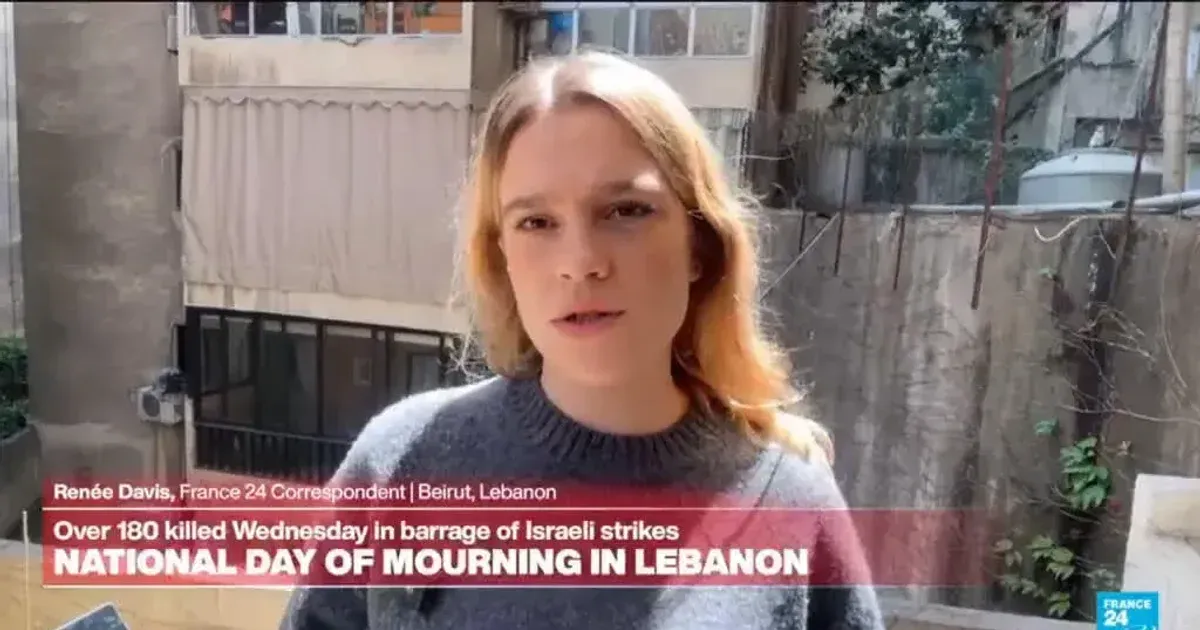
Lebanon entered a national day of mourning after Israeli airstrikes killed at least 182 people in a single day. Smoke rose from central Beirut as rescue teams searched collapsed apartment blocks and hospitals struggled with the wounded. The raids produced the highest single-day death toll since open hostilities began. Officials were also trying to confirm names while families moved between hospitals and municipal offices. That administrative work mattered because casualty lists were still changing. The April 9, 2026, mourning period also placed new pressure on a fragile U.S.-Iran ceasefire framework.
The scale of the casualties made the attack more than another exchange across a contested border. Lebanese officials treated it as a national trauma, while families moved between hospitals, morgues and damaged neighborhoods in search of relatives. Civil defense crews warned that unstable buildings could still hide victims beneath broken concrete and twisted metal.
Ceasefire Pressure After Beirut Strikes
The diplomatic problem is that Lebanon sits partly outside the narrow logic of the latest regional de-escalation effort. Washington and Tehran have focused on preventing direct confrontation, but Israel has continued to describe Lebanese operations as separate actions against Hezbollah-linked targets. That distinction is legally and politically contested inside Lebanon, where the civilian death toll has become the central fact.
Hospitals faced the immediate burden. Emergency wards filled with blast injuries, burns and crush wounds, while staff tried to identify bodies with limited information from destroyed residential blocks. The pressure was not only medical. Ambulance crews also had to work around the possibility of follow-on strikes, road closures and crowds gathering near damaged buildings.
Hospitals and Rescue Work
For Lebanese authorities, the day of mourning gave the government a way to recognize the dead while avoiding a promise it may not be able to keep. Officials can condemn the strikes, request international pressure and coordinate relief, but they do not fully control the military choices of Hezbollah, Israel or outside powers. That gap has defined much of Lebanon's wartime vulnerability.
The humanitarian picture also complicates any ceasefire diplomacy. If civilian neighborhoods continue to absorb the cost of retaliation, public anger will narrow the room for compromise. International envoys may still speak in terms of regional stability, but Lebanese families are measuring the conflict through funerals, hospital lists and the physical loss of homes.
The first practical need is documentation. Accurate casualty lists, hospital capacity figures and shelter counts will determine where aid goes and which families receive formal recognition of loss. Without that record, grief can turn into another layer of political dispute, especially in neighborhoods where residents already distrust official casualty narratives.
Regional Diplomacy and Civilian Risk
Israel's security argument rests on the claim that militant infrastructure has been embedded in civilian areas. Lebanon's counterargument is that the strike pattern has become indistinguishable from collective punishment for communities that cannot control every armed actor around them. That dispute is likely to shape the next round of diplomatic pressure at the United Nations and in direct conversations with Washington.
The immediate question is whether the mourning period becomes a pause or a prelude to further escalation. Hezbollah retaliation would increase pressure on northern Israel, while additional Israeli strikes would deepen Lebanon's humanitarian emergency. Either path would weaken confidence that the wider ceasefire framework can hold.
For now, the story is measured in rescue work and names of the dead. The political consequences will follow, but the first burden falls on families, hospitals and local crews trying to account for people still missing beneath the ruins.
That burden will not disappear after the official mourning period ends. Damaged neighborhoods need shelter, medicine and reliable casualty accounting before political leaders can credibly discuss recovery. The lack of a stable ceasefire channel also means aid planning must happen while residents still fear renewed strikes.
The event therefore leaves Lebanon with two overlapping emergencies: an immediate humanitarian crisis and a diplomatic crisis over who can restrain the next escalation. If foreign governments treat the deaths as background noise in a wider regional bargain, public anger inside Lebanon will deepen. If they make civilian protection central to talks, the mourning period could become a turning point rather than only another grim entry in the war's record. International pressure will matter most if it is specific. Calls for restraint are easy to ignore when each side believes it can define exceptions. A credible diplomatic push would have to address targeting rules, humanitarian access and the status of Lebanese civilians who are not party to the military decisions being made around them. Relief agencies will also need clearer guarantees for movement, because a mourning period without access would leave the worst-hit neighborhoods dependent on exhausted local networks. The recovery phase will test whether international attention can be converted into practical help. Lebanon needs medical supplies, temporary housing and reliable casualty documentation, but it also needs outside pressure that treats civilian protection as part of any regional settlement. Without that link, the same neighborhoods could be rebuilt only to face another round of strikes. That is why the mourning period has political force. It gives families a national ritual, but it also gives diplomats a deadline to show whether de-escalation means more than limiting direct U.S.-Iran confrontation. The measure of success will be whether aid, pressure and restraint arrive together, rather than as separate promises that leave civilians exposed.