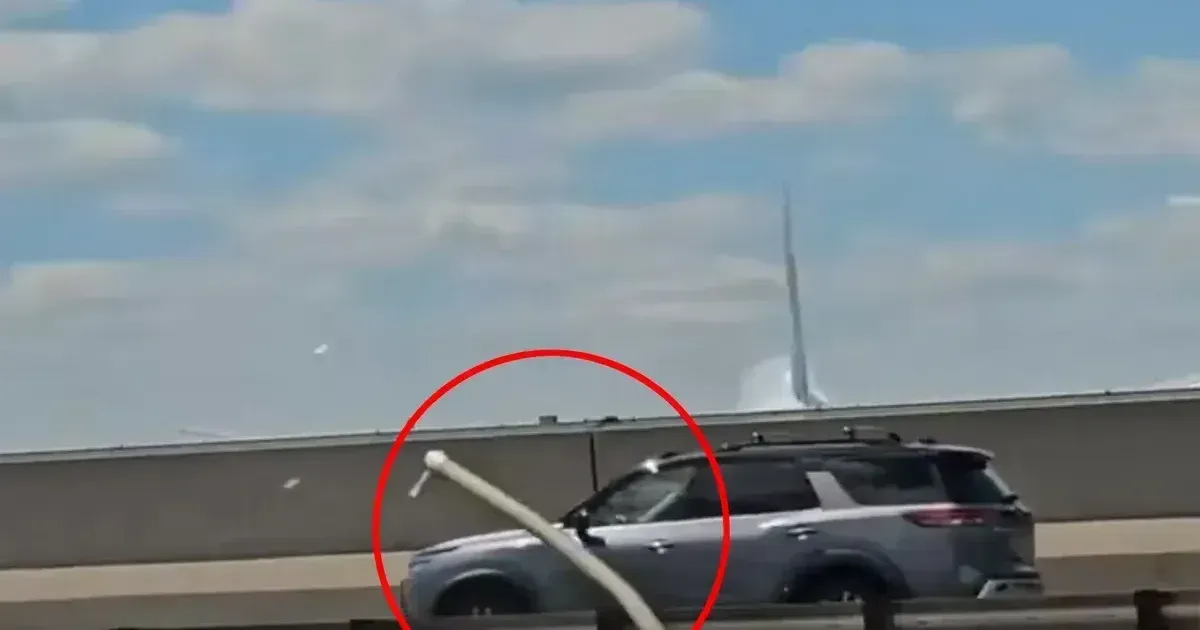
The Denver runway strike is first a safety investigation, not a spectacle. Investigators have to explain access control before the incident becomes another argument about airline reliability. Frontier Airlines and federal investigators are reviewing how a person reached an active runway at Denver International Airport before being struck during a takeoff roll. The incident happened on May 8, 2026, during a Los Angeles-bound departure and immediately raised questions about perimeter security at one of the largest airfields in the United States.
Early accounts identify the aircraft as a Frontier flight departing Denver for Los Angeles. Air traffic audio and local reporting indicate the crew rejected the takeoff after the collision, with emergency responders moving onto the runway while operations in the immediate area were halted.
The identity and status of the person on the runway should be handled cautiously until officials release a final statement. In an aviation incident this sensitive, premature certainty can mislead readers and create unnecessary distress for families, airport workers and passengers who are still waiting for formal findings. The central confirmed issue for readers is the runway incursion itself: an unauthorized person was in a protected movement area during a phase of flight when pilots have limited time and distance to react.
Denver International Airport has not released a full timeline explaining how the person reached the runway environment. That missing timeline is now the core of the safety investigation because every minute before the impact may show where detection or response failed.
Runway Collision Under Investigation
Runway incursions are treated as serious aviation safety events because they collapse the separation that keeps aircraft, vehicles and people apart. Even when passengers and crew are not injured, a rejected takeoff at high speed can create risks involving brakes, tires, engines and evacuation decisions.
Reports from the scene described fire and emergency activity after the aircraft stopped. If an engine or landing-gear area was involved, investigators will have to determine whether the fire followed the impact itself, the rejected takeoff, braking loads or another mechanical consequence of the emergency stop. That does not by itself establish the full extent of aircraft damage, and investigators will have to determine whether any engine, landing gear or fuselage component was affected by the impact.
Frontier is expected to cooperate with the Federal Aviation Administration, local police and any National Transportation Safety Board involvement. The FAA will focus on airfield operations and runway status, while local law enforcement will examine how the person entered a restricted area. The NTSB, if formally involved, would look at the aircraft sequence, crew decision-making, emergency response and any damage that affected the safe handling of the flight.
Denver's airfield is unusually large, covering roughly 53 square miles. That size creates a real security burden: fencing, patrols, cameras, sensors and surface-detection systems all have to work across a vast perimeter that includes remote sections away from passenger terminals.
Airfield Security and Passenger Impact
For passengers, the immediate concern was the aborted departure and the emergency response around the aircraft. A runway stop can leave travelers waiting while crews coordinate with airport operations, fire services and investigators before returning to a gate or beginning an evacuation.
For airport officials, the larger concern is access control. A person on an active runway can force ground stops, trigger diversions and expose aircraft to a hazard that is not visible until very late in the takeoff sequence. The incident therefore falls into the same safety category as vehicle incursions and wildlife hazards, even though the human circumstances are different.
Investigators will likely review gate logs, perimeter alarms, camera footage and surface-movement data. If the person entered through a fence breach, the response will focus on physical security. If cameras or alarms captured movement but did not trigger a timely response, the problem becomes operational rather than structural. If the person was already inside the secure zone, the inquiry becomes more complicated and may involve employee access, contractor controls or emergency mental-health circumstances.
The event also follows a period of heightened scrutiny around runway safety in the United States, including close calls involving aircraft and ground vehicles. That broader pattern makes the Denver case important beyond Frontier's operation alone.
Denver Must Explain How the Runway Perimeter Failed
The hardest question is how a person could reach the active surface of a major airport without being intercepted before a takeoff roll began. Modern airports spend heavily on surveillance, but the Denver incident shows that perimeter security is only as strong as its weakest sensor, gate, patrol route or response time.
The answer will matter for more than one runway. If investigators find a physical breach, Denver may need to reinforce fencing or patrol coverage. If they find a detection failure, the airport may need better alerts for small human targets moving in low-visibility areas.
Aviation safety depends on boring reliability: no person, vehicle or animal should appear where a jet is accelerating for departure. The Frontier case now becomes a test of whether Denver can explain the breach quickly and close whatever gap allowed it to happen.