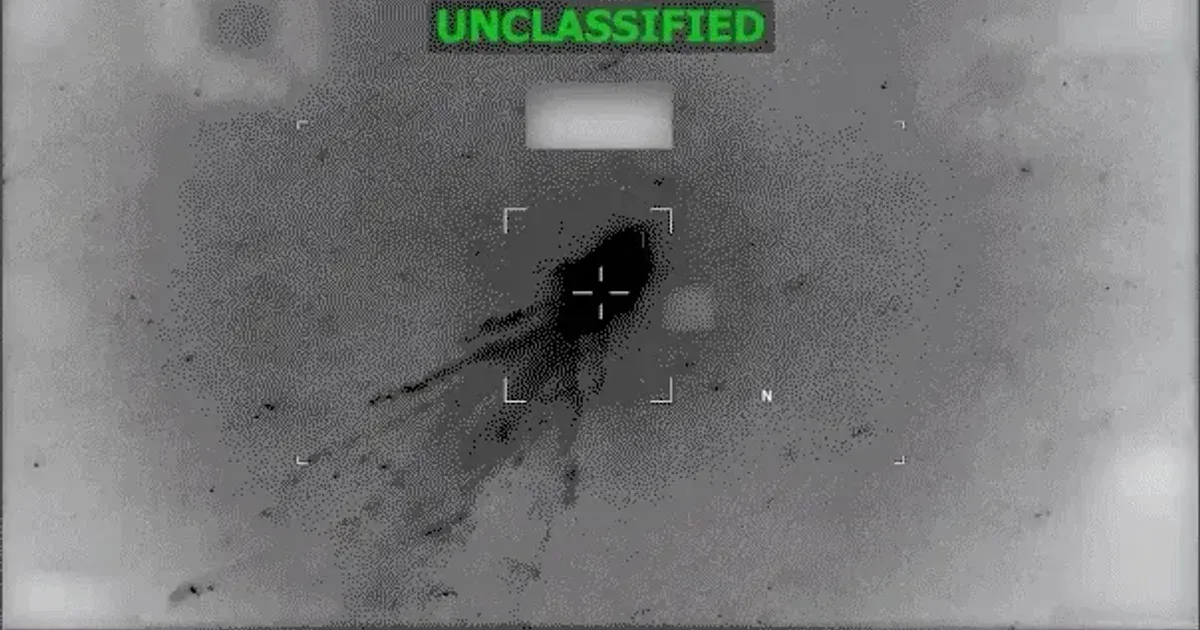
U.S. Southern Command said American forces struck an alleged drug-trafficking vessel in the Eastern Pacific, killing two people and leaving one survivor. The operation took place on May 8, 2026, and became the third lethal boat strike reported in five days under the Trump administration's expanded maritime campaign. SOUTHCOM will still face questions about identification standards, intelligence confidence and whether the strike fits the broader interdiction campaign.
The command said the vessel was moving along known trafficking routes and was involved in drug-smuggling activity. Public reporting supports the core fact of the strike, the two deaths and the surviving person, but it does not establish every tactical detail circulating around the operation. The public account therefore treats the weapon system, launch platform and precise strike mechanics with caution until further documentation emerges.
That restraint matters because these operations sit between law enforcement, military force and counterterrorism language. Officials describe the targets as narco-trafficking vessels, while critics argue that the administration has not publicly shown enough evidence to justify lethal force at this pace. The survivor makes this strike especially important because prior incidents often left no living witness outside the military record, limiting what courts, Congress or independent monitors could later test. That single fact may determine whether this case becomes more transparent than the earlier strikes.
Eastern Pacific Strike Adds to Campaign
The Friday strike followed a Tuesday attack in the Eastern Pacific that killed three people and a Monday strike in the Caribbean that killed two more. Together, the three incidents created a rapid sequence of maritime deaths across two theaters where U.S. forces have been targeting alleged drug vessels since September 2025. That tempo changes the public meaning of each individual strike: what might once have been framed as an exceptional interdiction now looks like an established operating pattern.
AP reporting said the latest operation left one survivor, an important distinction because most previous strikes produced no detainees and little public information beyond military statements. A survivor could provide investigators with intelligence about the vessel's route, cargo, crew and possible network links, but those details remain unconfirmed until officials release them.
SOUTHCOM and Joint Task Force Southern Spear frame the campaign as a way to disrupt transnational criminal organizations before shipments move closer to U.S. territory. The operational logic is direct: find the vessel, classify it through intelligence, strike before the crew can evade surveillance, then recover survivors or evidence if conditions allow.
Legal Scrutiny Around Maritime Force
The most sensitive question is not whether governments can interdict drug shipments at sea. They can. The harder question is when interdiction becomes a lethal military campaign and what public proof is required before suspected smugglers are treated as combat targets.
Human rights monitors and legal critics have described the boat-strike campaign as potentially unlawful because the administration often releases little evidence tying the people killed to specific trafficking networks. Military officials respond that the vessels are assessed through multiple intelligence channels and are operating in high-risk smuggling corridors. Even if that assessment is accurate, the lack of released evidence leaves a gap between what commanders say they know and what the public can independently evaluate.
The survivor in Friday's strike could become central to that debate. If the person is detained, questioned and processed through a legal channel, the case may produce more information than previous incidents. If the public record remains thin, criticism over transparency will likely grow.
The casualty count also shapes the legal and political risk. AP has reported that the campaign has killed more than 190 people since September 2025. A number that high makes the operation look less like episodic interdiction and more like a sustained armed campaign, even if officials continue to describe each strike as targeted and intelligence-driven.
Lethal Pressure May Shift Routes Without Reducing Trafficking
The administration is betting that lethal pressure will force traffickers to change routes, slow maritime shipments and raise the cost of operating in the Eastern Pacific and Caribbean. That may produce short-term disruption, especially if surveillance coverage is strong enough to make crews feel exposed.
But cartel logistics rarely depend on one route or one vessel type. If strikes become predictable, networks can shift toward smaller craft, semi-submersibles, altered timing or more dispersed loads. That adaptation risk is why the campaign cannot be judged only by the number of vessels destroyed or the number of crews killed. The result may be a more dangerous maritime environment without a durable collapse in trafficking capacity.
The strategic test is therefore bigger than the Friday strike. If the campaign saves lives by reducing drug flows, the administration will claim a hard-power success. If it mainly produces deaths at sea with limited evidence and adaptive smugglers, the legal consequences will eventually become political consequences as well.