Rubén Gallego arrived at the Capitol carrying the weight of a Democratic Party desperate for a winning blueprint in the American West. Success in the 2024 election transformed the former Marine from a progressive House member into a national emblem of electoral viability. Party leadership frequently cites his victory in Arizona as the definitive map for winning over working-class voters without alienating the urban liberal base. By April 18, 2026, Gallego had become a test case for how Democrats discuss border, class and Latino outreach after 2024. Early performance indicators from his first 15 months in office, however, suggest that the transition from a candidate of authenticity to a senator of consequence brings inherent legislative friction.
Congressional records show a voting pattern that attempts to balance border security concerns with traditional party priorities, a stance that now invites criticism from both political flanks.
Arizona voters rewarded Gallego in 2024 for a campaign that prioritized direct communication and military service over polished partisan rhetoric. Winning a seat previously held by independent Kyrsten Sinema required a delicate coalition of Maricopa County moderates and energized Latino communities in Pima County. Voters across the Sun Belt watched as he managed the complexities of immigration policy, often diverging from the national party line to support increased technology for border surveillance. His ability to maintain high favorability ratings during that cycle established him as a premier communicator. Recent polling suggests that this honeymoon phase is concluding as specific policy trade-offs become mandatory in a divided Senate.
Maricopa County became the epicenter of a large demographic and political shift that defined the early 2020s. Rubén Gallego recognized that the old McCain-style Republicanism was fracturing, leaving a vacuum that a veteran with a Harvard degree and an Iraq War pedigree could fill. Data from the 2024 election cycle indicates that his campaign outperformed previous Democratic benchmarks among men under the age of 40. This demographic proved critical in a state where margins are often measured in a few thousand votes. He avoided the abstract language of Washington, preferring to focus on real costs like prescription drugs and housing affordability. Such a focus allowed him to neutralize standard Republican attacks regarding cultural grievances.
Legislative Scrutiny and Policy Tensions
Washington life imposes a different set of constraints than the campaign trail in the Sonoran Desert. Rubén Gallego now sits on powerful committees where his votes on federal spending and judicial appointments are under a microscope. Progressive activists who supported his early career in the House have expressed dissatisfaction with his recent votes on border enforcement funding. They argue that he has moved too far toward the center to protect his reelection prospects in 2030. By contrast, moderate colleagues view his caution as a necessary survival tactic in a purple state. Balancing these competing interests has led to several high-profile instances where his final position remained unknown until the last minute of a roll-call vote.
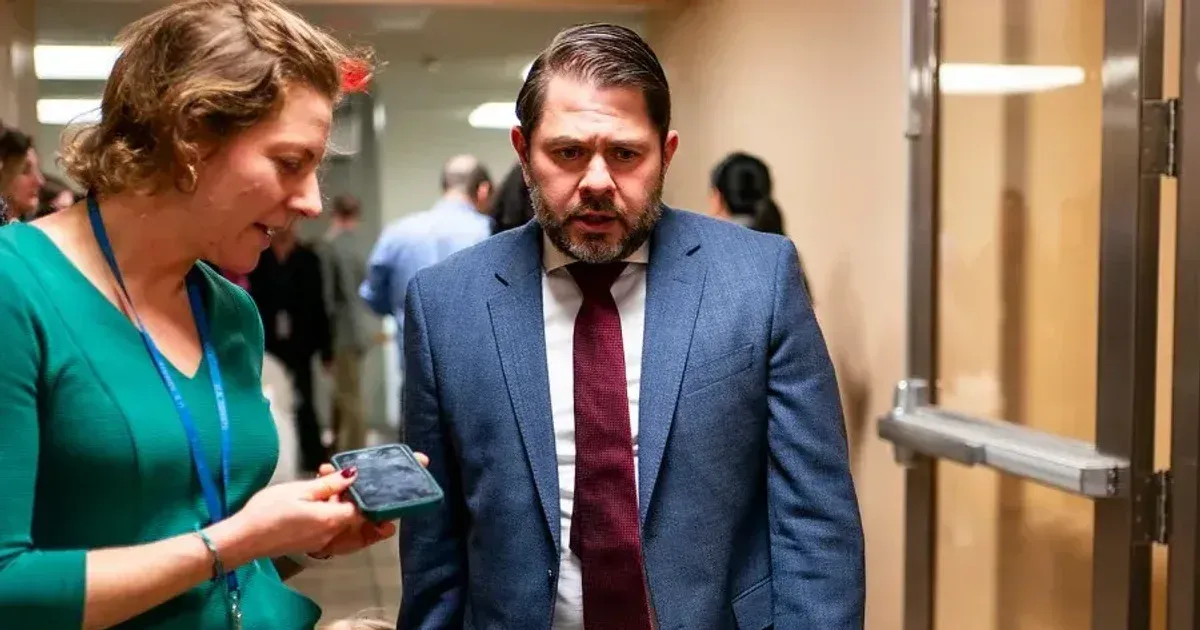
Sen. Rubén Gallego has been held up as a model for the Democratic Party's future since winning his Senate seat in 2024, with colleagues praising his skills as a communicator who succeeded during a time when other Democrats have struggled.
National Democratic Strategy and the Arizona Model
National strategists look at Gallego and see a solution to the party's perceived elitism. Communicating with voters in rural areas like Mohave County requires a different vocabulary than the one used in the Ivy League circles where he was educated. Gallego often leans into his blue-collar roots to bridge this gap. His campaign style is often described as aggressive and unfiltered, which contrasts with the cautious approach of many Senate veterans. This aggression was visible during several 2026 committee hearings where he challenged corporate executives on price gouging. Such performances are designed for social media consumption, ensuring his message reaches voters who avoid traditional news outlets.
Communication remains his greatest asset and his most meaningful vulnerability.
Future challenges for the Arizona senator include a likely well-funded Republican challenger in the next cycle. National Republican groups have already begun airing advertisements in the Phoenix market targeting his voting record on energy policy. They claim his support for green energy initiatives will lead to higher utility bills for Arizona families during the summer months. Gallego has countered these attacks by highlighting the job growth in the solar industry across the West. Economic arguments are the primary battleground where his political future will be decided. He must convince voters that the Democratic Party can be trusted with their pocketbooks as much as their social values.
Early 2026 fundraising totals show that Gallego continues to outpace his potential rivals. Small-dollar donors from across the country still view him as a rising star who could eventually seek higher office. Talk of a future presidential or vice-presidential run is common in Washington circles, though he has consistently dismissed such speculation. His focus remains on the immediate legislative calendar and the needs of his Arizona base. Political careers in Arizona are historically volatile, and he is aware of how quickly the electorate can turn. He currently maintains a narrow but stable lead in local approval ratings.
Arizona Coalition Model
Gallego’s national value comes from the coalition he assembled, not from a formula that can be copied without context. Arizona rewarded biography, border pragmatism and direct communication in a way that may not translate cleanly to every state.
The test now is legislative durability. If he can keep working-class, Latino and suburban voters engaged while taking difficult Senate votes, Democrats will treat the Arizona model as more than a one-cycle campaign lesson.