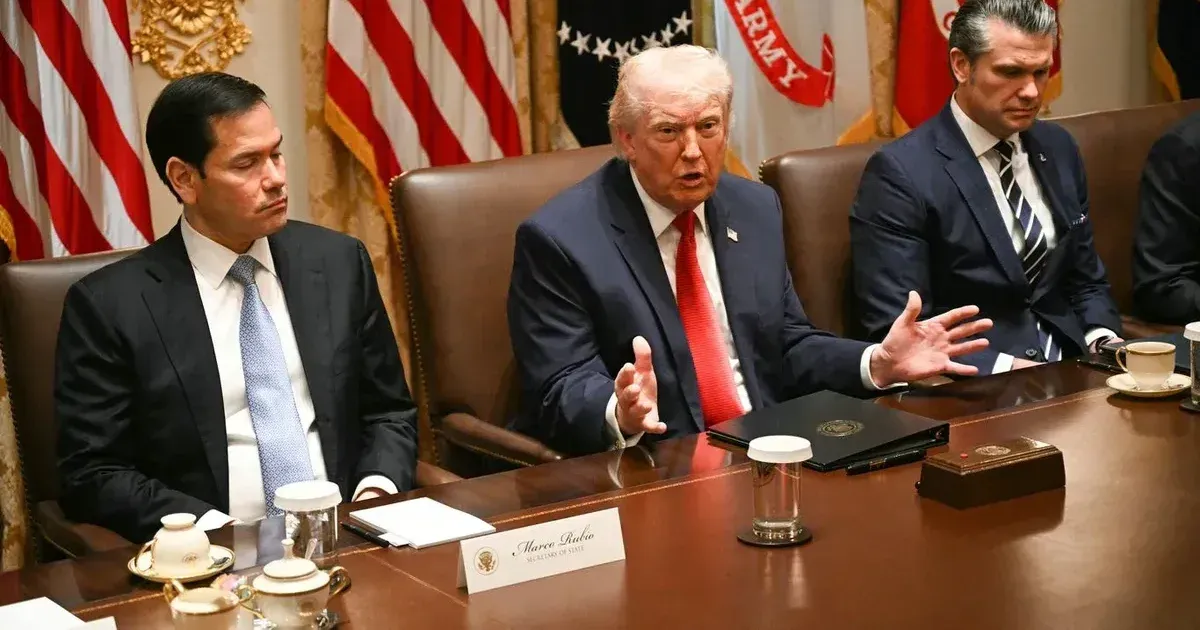
Trump's Situation Room meeting over Hormuz signaled that energy security had become an immediate crisis. Donald Trump gathered senior national security officials in the White House Situation Room on April 18, 2026, to address a renewed maritime blockade in the Strait of Hormuz. Intelligence reports indicate multiple attacks on civilian vessels in the waterway occurred less than 24 hours after the president predicted a resolution to the conflict. Iranian authorities announced the closure of the shipping lane on Saturday morning, citing national security concerns. This move creates a logistical nightmare for global energy markets. Security advisors remained focused on a ceasefire agreement that is set to expire in exactly three days.
Vice President JD Vance joined the high-level briefing alongside Secretary of State Marco Rubio and Defense Secretary Pete Hegseth. Treasury Secretary Scott Bessent and CIA Director John Ratcliffe provided data on the economic impact of the blockade. White House Chief of Staff Susie Wiles and envoy Steve Witkoff also participated in the Saturday session. General Dan Caine, Chairman of the Joint Chiefs of Staff, presented military contingencies. President Trump stated that Iranian negotiators had acted in an unexpected manner during recent diplomatic exchanges.
Hormuz Blockade and Uranium Enrichment Progress
Negotiations in Tehran suggest a hardening of the Iranian position despite recent reports of progress regarding nuclear stockpiles. Pakistani army chief Asim Munir led mediation efforts earlier this week to narrow the gap on uranium enrichment levels. Sources familiar with the talks claim the parties were close to an agreement before the latest maritime escalations. Iranian officials are currently reviewing new proposals submitted by the United States. Direct communication between Trump and Munir occurred via telephone at least once over the weekend.
Maritime traffic through the Strait of Hormuz accounts for approximately 20% of the world's liquid petroleum consumption. Iranian naval assets launched several targeted strikes on tankers within the last 48 hours. These kinetic actions coincide with the expiration of a temporary cessation of hostilities. Military analysts suggest the closure serves as leverage for the Supreme National Security Council in Iran. Crude oil futures spiked in response to the Saturday morning announcement from the White House.
Intelligence circles believe the sudden aggression stems from internal pressure within the Iranian regime. Hardline factions in the government continue to resist the terms of the new nuclear framework. Negotiators have yet to set a firm date for the next round of formal talks. The current ceasefire will vanish by Tuesday evening without a diplomatic breakthrough. Trump described the shift in tone from the Iranian side as a calculated attempt to gain advantages at the bargaining table.
Situation Room Deliberations and Negotiating Teams
Hegseth briefed the president on the readiness of the Fifth Fleet to escort commercial vessels. Sanctions remain a primary tool for Treasury Secretary Scott Bessent, who monitors the financial flows of the Iranian Revolutionary Guard. Marco Rubio emphasized the need for a unified front among Middle Eastern allies. The State Department has not issued a formal comment on the status of the Pakistani mediation. White House officials characterize the Situation Room meeting as an essential step in preventing a return to full-scale regional war. Military personnel currently wait for orders regarding freedom of navigation operations. Defense Secretary Pete Hegseth now faces intense political scrutiny.
"We've got a feeble-minded, trigger-happy president who plunged us into a war where no threat was present, with no clear objectives and no exit plan. We need to call that what it is. That's fascism," Tim Walz said.
Vance is scheduled to lead the next American delegation if talks resume in the coming week. His involvement indicates a shift in the administration's approach to direct diplomacy with the Islamic Republic. Previous efforts by Steve Witkoff focused on establishing a backchannel through regional partners. Ratcliffe provided the president with satellite imagery showing Iranian fast-attack craft maneuvering near international shipping lanes. Trump maintains that a deal remains possible within 48 hours despite the deteriorating security situation.
Walz Criticizes Administration Strategy from Spain
Governor Tim Walz of Minnesota attacked the administration's foreign policy during a progressive summit in Barcelona on April 18, 2026. Speaking to an international audience, Walz claimed the president lacks a coherent exit strategy for the ongoing Middle East tensions. The governor used the platform to distance himself from the current vice president's rhetoric regarding European policy. Walz specifically criticized the administration for engaging in what he described as avoidable military confrontations. Senator Bernie Sanders echoed these sentiments via video message, labeling the current conflict as dangerous and illegal.
Progressive leaders gathered in Spain to discuss global authoritarianism and democratic resilience. Walz argued that the current White House strategy prioritizes escalation over sustainable peace. His remarks highlighted the growing domestic rift regarding American involvement in Persian Gulf security. The governor suggested that the president's focus on personal deal-making undermines traditional diplomatic institutions. Public polling shows a divided electorate on the issue of renewed naval intervention. Walz finished his speech by apologizing to the audience for the current direction of American foreign policy.
Sanders pointed to the human cost of the conflict in Lebanon and Iran during his address. He joined Walz in calling for an immediate withdrawal of naval assets from the immediate vicinity of the Strait. These criticisms come as the White House attempts to project strength during the Situation Room sessions. Administration officials dismiss the comments from Barcelona as political theater. Rubio maintains that the threat to global commerce requires a decisive response from the United States. The political battle lines over the Iran policy are now clearly drawn between Washington and progressive hubs.
Hormuz Crisis Tests White House Options
Diplomacy by intimidation is a dangerous gamble that Donald Trump continues to favor, yet the Strait of Hormuz is a geographic reality that does not bend to rhetoric. The administration's belief that it can toggle between maximum pressure and instant deal-making ignores the institutional inertia of the Iranian security state. By allowing JD Vance to take the lead on upcoming negotiations, the White House is essentially admitting that its previous envoy-led efforts have failed to produce a lasting framework. The Iranians have clearly calculated that a temporary blockade is worth the risk if it forces a more favorable enrichment ceiling.
Whether the Fifth Fleet will fire on Iranian assets to clear the channel is the only question that matters for global markets. If the White House hesitates, the precedent of a closed Strait becomes the new baseline for maritime security. If U.S. forces strike, a regional fire becomes unavoidable. The Strait of Hormuz is not a real estate deal; it is a choke point where the world's energy supply meets a motivated, asymmetric military power.
Tim Walz is right about the lack of an exit plan, but his critique fails to acknowledge that in the Persian Gulf, there is no such thing as an exit, only varying degrees of entanglement. The Tuesday deadline will prove whether Trump’s personal brand of diplomacy can survive a direct challenge to the global oil supply. Victory is unlikely.