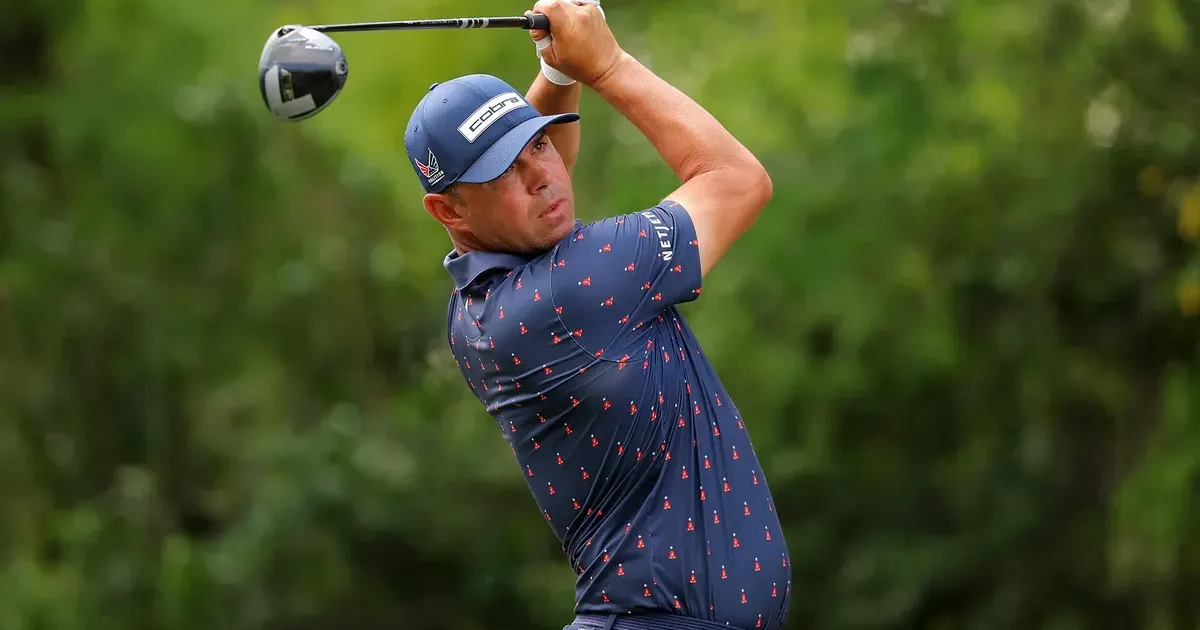
Gary Woodland turned a medical comeback into a Sunday walk up the leaderboard. Gary Woodland claimed the Texas Children's Houston Open title on March 30, 2026, finishing five strokes ahead of the field. He demonstrated a level of composure that had eluded him since his last professional win seven years ago. Victory at Memorial Park Golf Course follows a grueling medical journey that nearly ended his career in the premier ranks of the sport. Critics often dismissed his chances of returning to the winner's circle after such a long absence from the top of the leaderboard. This victory settles those doubts with definitive finality. Sunday's performance provided a statistical outlier in a season defined by parity. Woodland entered the final round with a narrow lead but expanded it through a display of precision iron play and aggressive putting. He carded a final-round 66, ensuring that no challenger could pull within striking distance during the back nine. Gary Woodland ended the tournament at 18 under par. He led the field in strokes gained off the tee and green-to-tee efficiency throughout the four-day event. Success in professional golf rarely follows a linear trajectory. Houston Open Results and Margin of Victory Winning by five shots at a venue as demanding as Memorial Park indicates a return to the elite form Woodland showcased during his 2019 US Open triumph. The field in Houston included several top-ten players who struggled to manage the firm conditions and increasing wind speeds. Woodland, however, maintained a steady pace and avoided the tactical errors that plagued his closest competitors. His scorecards showed only three bogeys over 72 holes of competition. The final margin of victory is the largest seen at the Houston Open in over a decade.
The drought between his fourth and fifth PGA Tour titles lasted exactly 2,485 days. During that interval, the golfing world saw the rise of a new generation of power hitters and a fundamental change in the technology of the game. Woodland stayed committed to his swing mechanics despite the lack of immediate results. Peers on the tour frequently cited his work ethic as a standard for veteran players attempting to maintain relevance. His bank account will see a serious boost as the winner's check for this event totaled 1.62 million dollars.
Medical History and Brain Surgery Recovery
Recovery from the surgery Woodland underwent in 2023 was far from certain. Surgeons performed a delicate procedure to remove a lesion from his brain that had been causing debilitating tremors and internal fear. Doctors warned that the physical coordination required for a professional golf swing might never return to its previous peak. Woodland spent months in quiet rehabilitation, away from the cameras and the scrutiny of the sports media. He had to relearn the spatial awareness necessary to track a ball at high velocities.
Medical records from that period describe a patient who faced intense sensitivity to light and sound. These symptoms forced a total withdrawal from public life for nearly half a year. Recovery demanded more than physical rehabilitation. Woodland also had to address the neurological impact of the surgery, which altered his perception of pressure and competition. By the start of the 2025 season, his physical metrics had stabilized, yet the results on the course remained inconsistent. He missed six cuts in his first ten starts after returning to full-time play.
Woodland's victory in Houston comes after opening up about his personal struggles in an emotional interview
CBS Sports reported that the psychological weight of his medical history was a constant companion during his comeback. Many analysts wondered if the scar tissue, both literal and metaphorical, would prevent him from winning again.
Professional Impact of Seven Year Title Drought
Statistically, players who go seven years without a win on the PGA Tour have a less than five percent chance of ever winning again. Woodland defied these odds by focusing on short-game improvements. He recognized that his previous reliance on sheer power was no longer a sustainable strategy for his aging body. The transition to a more technical, finesse-based approach required a change in coaching and mindset. He began working with specialists who focused on the physics of the putting stroke. The Houston Open was the ultimate test for these adjustments.
Professional observers noted a change in his demeanor during the final round. Woodland appeared detached from the emotional stakes of the tournament, focusing instead on the mechanical execution of each shot. This shift in focus is a hallmark of veterans who have endured meaningful career setbacks. He did not celebrate prematurely even as his lead grew to four shots on the fourteenth hole. Only when the final putt dropped on the eighteenth green did the stoic mask finally break. He is now the oldest winner on the tour this season.
Mental Health and PTSD in Professional Golf
Beyond the physical recovery, Woodland has been candid about his battle with PTSD following the surgery. The trauma of a life-threatening brain condition often manifests in high-pressure environments like a final-round Sunday. ESPN and BBC Sport have both documented the psychological hurdles he faced while trying to regain his competitive edge. PTSD symptoms, including sudden spikes in anxiety and heart rate, can be catastrophic for a golfer who needs a low resting pulse to execute delicate shots. Woodland worked with sports psychologists to develop breathing techniques that reduce these episodes.
Health professionals suggest that the intense focus required for golf can act as a trade-off for those with PTSD. It provides a necessary distraction but also creates a vacuum where intrusive thoughts can emerge during lulls in play. Woodland's victory proves that he has found a way to manage these internal triggers. The win moves him to twelfth in the FedEx Cup standings and secures his invitation to all four major championships for the next two years. He now holds five career titles on the PGA Tour.
His victory is a hard fact that outweighs years of speculation regarding his health.
Comeback Pressure Point
Sentimentalism rarely survives the rigors of the PGA Tour money list, yet the comeback of Gary Woodland offers a rare intersection of human resilience and elite performance. The golf world loves a redemption arc, but this win is less about a feel-good story and more about a brutal refusal to be marginalized by biology. Woodland did not just win; he dismantled a field of younger, healthier athletes who lacked his specific, trauma-forged grit. His five-stroke victory is a cold indictment of those who prioritize youthful potential over the hardened experience of a veteran who has literally looked into the abyss of a neurosurgical operating room.
Professional sports organizations often treat athletes as depreciating assets once they hit their mid-thirties, especially those with serious medical histories. Woodland has effectively reset his valuation. By conquering PTSD and the physical aftermath of brain surgery, he has created a blueprint for longevity that depends on psychological fortification. The PGA Tour will undoubtedly attempt to sanitize this victory into a promotional tool for mental health awareness. They should instead view it as a warning.
Any competitor who has survived the removal of a brain tumor is unlikely to be intimidated by a difficult lie in a bunker or a 15-foot par putt. Woodland is dangerous because he has already lost everything once before and realized he could survive the loss. Professional golf is a cold business, but Woodland just proved he is the coldest operator in the room.