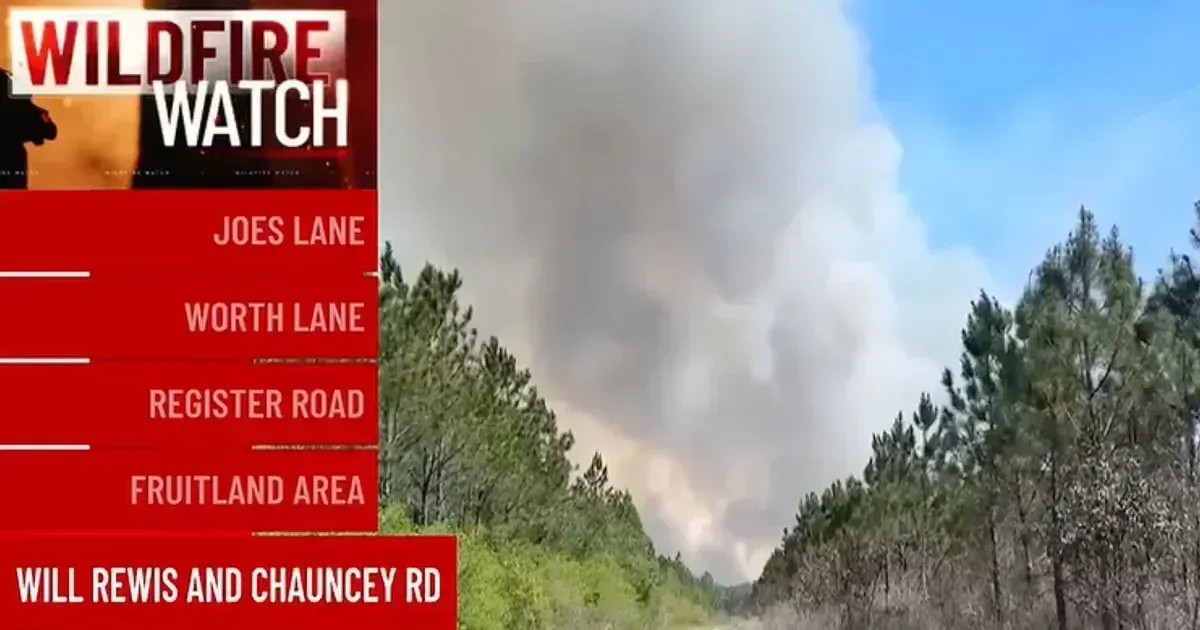
Governor Brian Kemp confirmed on April 25, 2026, that uncontrollable wildfires have incinerated dozens of structures across southern Georgia. State authorities continue to struggle with multiple blazes that have already consumed tens of thousands of acres near the border with Florida. These fires, categorized by emergency services as highly aggressive, are primarily fueled by a protracted drought that has left regional timber and brush in a volatile state. High winds and low humidity have hampered efforts to establish containment lines in the most heavily affected counties.
Tragedy struck the emergency response efforts early Saturday when a volunteer firefighter lost his life while battling a fast-moving blaze. Official reports indicate the individual was part of a crew attempting to protect residential properties when the wind shifted suddenly, trapping the team. While other members of the unit escaped with minor injuries, the volunteer succumbed to the intense heat and smoke inhalation before rescue teams could reach him. He is the first confirmed fatality of the current fire season in the region.
Evacuation orders now cover several rural districts as the fire perimeter expands toward more populated zones.
Destruction of Homes and Infrastructure in Georgia
Dozens of families have lost their primary residences as flames moved through wooded neighborhoods with little warning. Mark Strassmann of CBS News reported from a disaster zone where entire blocks of homes were reduced to ash and twisted metal. Emergency shelters in southern Georgia are reaching capacity as displaced residents seek refuge from the encroaching smoke and heat. Local utility companies have disconnected power to thousands of customers to prevent further ignitions from downed lines, leaving many communities in total darkness.
Property damage assessments are currently preliminary because many areas remain too dangerous for inspectors to enter. Structural losses include not only residential houses but also agricultural outbuildings and critical timber processing facilities. Southern Georgia relies heavily on its forestry industry, and the loss of these stands is a multiyear economic setback for local landowners. Heavy machinery and specialized water tenders have been diverted from neighboring states to assist in protecting the remaining infrastructure.
Firefighters describe the behavior of these blazes as erratic and unpredictable.
Ground crews face severe challenges due to the dense undergrowth and swampy terrain typical of the Okefenokee region. These conditions make it difficult for heavy bulldozers to create effective firebreaks, forcing personnel to rely on aerial water drops. Rob Marciano of CBS News noted in a recent forecast that weather patterns show no immediate sign of substantial rainfall, which means the fuel loads will stay dangerously dry for the foreseeable future. Existing moisture levels in the soil are at their lowest point in over a decade.
Georgia Volunteer Firefighter Casualty Report
One blaze near the state line was specifically blamed for the death of the volunteer firefighter mentioned in preliminary reports. National Guard units have been mobilized to provide logistical support and security for the affected zones, allowing local fire departments to focus entirely on suppression. Resources are stretched thin as the number of active fire starts outpaces the available manpower. Mutual aid agreements have brought in crews from as far away as Tennessee and Alabama to strengthen the front lines. Training protocols for volunteers are now under scrutiny by state safety boards to determine if equipment failure or situational awareness contributed to the fatality.
“Wildfires fueled by drought have burned tens of thousands of acres in southern Georgia and northern Florida,” official statements cited by The New York Times said.
Regional hospitals have reported a surge in respiratory issues among the elderly and children living downwind of the blazes. Smoke plumes from the fires are visible on satellite imagery and have drifted as far north as Atlanta and as far south as Orlando. Health officials issued air quality alerts urging residents to stay indoors and use HEPA filters where available. The sheer volume of particulate matter in the air has also created visibility hazards on major interstates, leading to several multi-vehicle accidents.
Meteorological Drivers of Southern Wildfires
Drought conditions have persisted across the Southeast for the last six months, creating a tinderbox environment. Records show that rainfall totals in southern Georgia are 15 inches below the seasonal average, a deficit that has completely desiccated the deep layer of peat and pine needles on the forest floor. This organic matter can smolder for days, even after surface flames are extinguished, leading to sudden flare-ups that catch containment crews off guard. Atmospheric high-pressure systems have trapped hot air over the region, further accelerating the evaporation of what little moisture remained in the vegetation.
Lightning strikes from dry thunderstorms have been identified as the ignition source for several of the largest active blazes. These storms produce intense electrical activity but very little precipitation, making them a primary threat during drought cycles. Fire investigators are also looking into human-caused ignitions, though no evidence of arson has been confirmed at this stage. Most fire starts have occurred in remote areas with limited road access, making early detection and rapid response nearly impossible for local authorities.
Evacuation Orders Across Southern Georgia Districts
Authorities have implemented mandatory evacuation zones in Clinch and Ware counties to prevent further loss of life. Law enforcement officers are conducting door-to-door sweeps to ensure all residents have left the path of the advancing fire. Many citizens have expressed frustration with the speed of the evacuation orders, claiming they had only minutes to gather essential belongings before the smoke became too thick to navigate. Roadblocks are currently in place on several state highways to prevent civilians from entering active fire zones.
Relief organizations like the Red Cross have established mobile kitchens to feed both displaced families and the thousands of personnel working on the fire lines. Coordination between state and federal agencies is handled through a central command post in Waycross. This facility manages the deployment of air tankers and monitors the progress of containment lines via real-time drone surveillance. Despite the influx of resources, the containment percentage for the largest blazes remains below 10 percent.
Predictions for the coming days suggest that the fire may cross deeper into Florida territory.
Georgia’s Fire Response Exposes Years of Deferred Mitigation
Staring into the orange haze of the southern horizon reveals a policy failure masquerading as a natural disaster. State officials in Georgia and Florida have long ignored the predictable cycles of the Okefenokee ecosystem, preferring to focus on short-term timber profits over long-term fire resilience. The death of a volunteer firefighter is more than a tragedy; it is a condemnation of a system that relies on unpaid labor to reduce the risks created by poor land management and unchecked rural development.
Urban sprawl has pushed residential developments deeper into the wildland-urban interface, yet building codes in these regions rarely mandate fire-resistant materials or defensible space. When the inevitable drought arrives, the state is forced into a reactive crouch, burning through millions of dollars in emergency funds to protect properties that should never have been built without rigorous safeguards. The evidence points to the consequences of a decade of deferred maintenance on forest floors where fuel loads have reached catastrophic levels. The current containment strategy is a desperate gamble against the weather. Unless the Governor shifts focus from suppression to aggressive, year-round mitigation, southern Georgia will continue to burn every time the rain stops. Hard questions must be asked about why specialized equipment was not pre-positioned despite months of drought warnings. This is a systemic collapse.