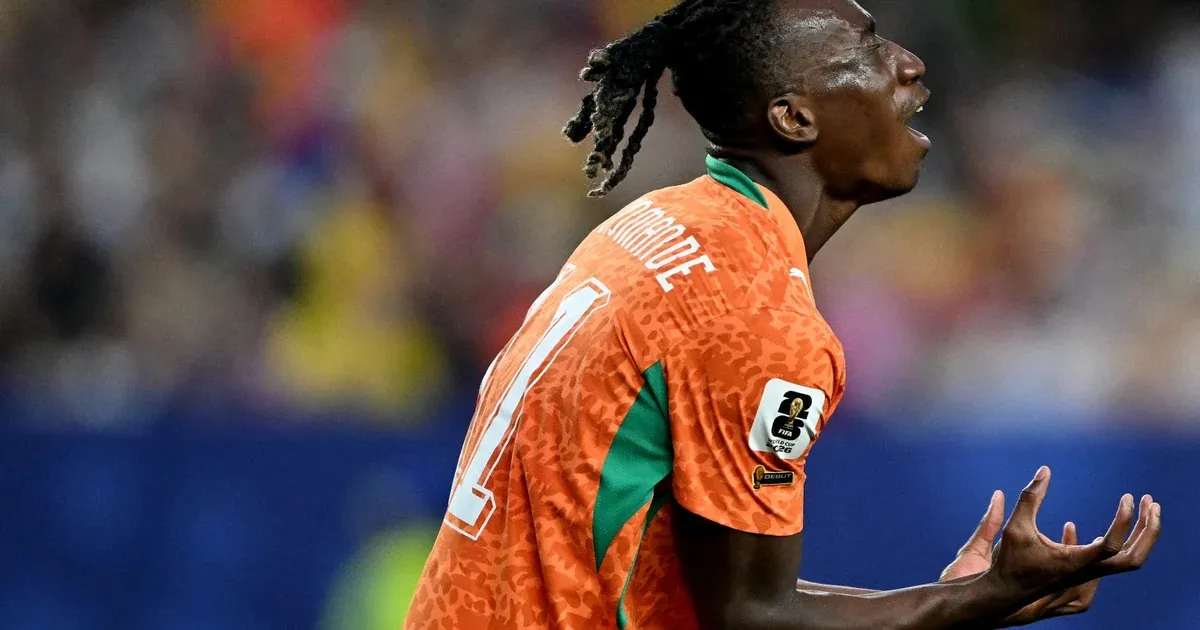
Germany opened its World Cup campaign with a 7-1 rout of Curaçao, but Day Four also belonged to Yan Diomande, the U.S.-based teenager whose performance for Ivory Coast turned him into one of the tournament's first breakout names. The day mattered because the expanded format produced two different stories at once. The matches played on June 14, 2026, gave the expanded tournament both a heavyweight statement and a youth-development story.
Germany's result was the cleanest scoreboard message of the day. Curaçao, the smallest nation ever to reach the World Cup, briefly gave its supporters a historic goal, but Germany's depth and finishing power quickly took control in Houston.
Germany Turns a Mismatch Into a Statement
The 7-1 scoreline reflected Germany's attacking range. Kai Havertz, Jamal Musiala and other front-line options gave the four-time champions the kind of opening win that can settle a squad and raise expectations before tougher group-stage tests arrive.
Curaçao still left with a meaningful tournament moment. Its goal mattered because debutant teams often measure their first World Cup by evidence that they can compete emotionally, even when the opponent's quality eventually overwhelms them.
The match also showed why Germany remains difficult to judge early. A rout of a debutant does not prove title readiness, but it does show that Germany has enough scoring variety to punish teams that cannot match its tempo and movement.
The score also matters for tournament math. In a crowded group stage, goal difference can become the difference between a clean path and a complicated final matchday. Germany banked that advantage immediately, while Curaçao now has to recover emotionally and tactically before its next fixture.
For Curaçao, the debut still carried pride. Scoring at a World Cup against Germany gives the squad a permanent moment even inside a heavy defeat, and that matters for a country trying to build a larger football identity from a small player pool.
Yan Diomande Becomes a Breakout Watch
Yan Diomande, a teenager still connected to the American school and development system, gave Ivory Coast a different kind of headline. His ability to attack defenders, receive under pressure and change the rhythm of the match made him one of the most discussed young players of the day.
The point is not that one performance guarantees stardom. It is that World Cups often create scouting accelerants. A player who had been known mainly within development circles can become a global subject in one match if the stage, timing and opponent align.
For U.S. soccer observers, Diomande's rise also carries a familiar lesson: the American development landscape is increasingly connected to global football, even when the player represents another national team. Talent can be shaped in one country and define a match for another.
That cross-border development story is becoming more common. Players move through academies, schools, private training environments and dual-national pathways before choosing the national team that fits their identity and opportunity. Diomande is now part of that wider conversation.
The next question is whether opponents can adjust quickly. Once a teenager becomes a headline, defenders study tendencies, coaches shift coverages and the second match becomes a different test from the first breakout performance.
Day Four Keeps the Tournament Open
Beyond Germany and Diomande, the day's broader schedule reinforced how volatile the group stage can be. Japan's draw with the Netherlands, Sweden's large win and Ivory Coast's late breakthrough all changed the early conversation around dark horses and knockout paths.
Power rankings will move quickly after results like these, but coaches will treat the first week more carefully. Goal difference matters, injuries matter and one young player's breakout can force opponents to revise scouting plans almost overnight.
Germany exits the day with a strong platform. Curaçao exits with a historic goal. Diomande exits with a new level of attention. That combination is exactly what the opening week of a World Cup is built to produce.
The day did not settle the tournament, but it gave fans and scouts clear signals to track: Germany's depth, Curaçao's resilience and Diomande's ability to turn one match into a global scouting event.
The next group matches will show whether those signals were opening-week noise or the first outline of deeper tournament trends.