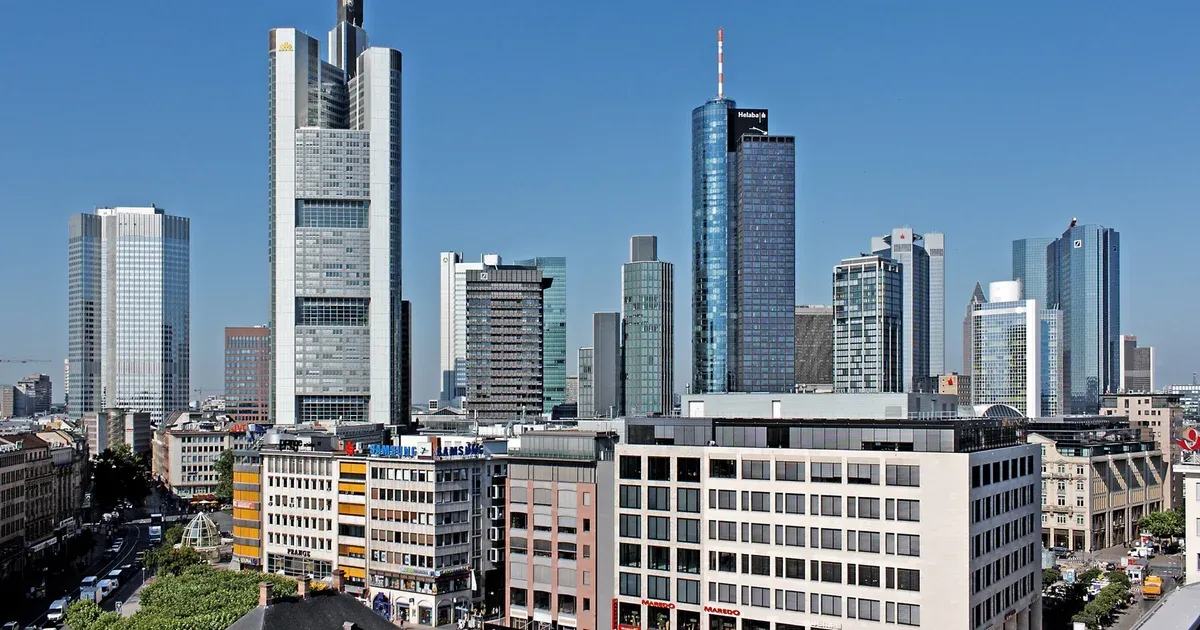
Leading research institutes in Germany announced that the national economy will grow at less than half the pace originally projected. Economic advisors in Berlin revised the annual growth outlook downward as energy security fears and supply-chain disruptions take a heavy toll on industrial output. The downgrade was announced on April 1, 2026. Primary factors behind this shift include the intensifying military conflict in the Middle East and the resulting spike in global energy prices. Projections now suggest a stagnation period that could last through the next fiscal year.
Industrial production in the Eurozone's largest economy has struggled to recover since the initial outbreak of hostilities. Germany relies heavily on stable trade routes and affordable fuel to power its manufacturing sector. Foreign demand for German machinery has plummeted as global markets react to the instability in the Persian Gulf. Local manufacturers report a 15% drop in new orders compared to the previous quarter. High inflation continues to erode domestic purchasing power.
Industrial Contraction in the German Heartland
Manufacturers in the Rhine-Ruhr region face rising overhead costs that threaten their global competitiveness. Automotive firms have paused several production lines due to a shortage of critical components normally routed through the Suez Canal. Energy prices for industrial consumers rose by 22% in the last thirty days. Chemical plants, which require large amounts of natural gas, are operating at reduced capacity to avoid insolvency. Business confidence reaches its lowest point since the pandemic era.
Economic institutes in Munich and Berlin warned that the current downturn is structural. Labor shortages and an aging demographic already constrained the potential for growth. Hostilities in Iran accelerated these pre-existing trends by forcing a rapid and expensive transition away from legacy supply chains. Private investment remains subdued while corporations wait for a ceasefire that appears increasingly unlikely. Capital flight toward the United States and Singapore has accelerated since January.
Federal budget planning faces a serious shortfall as tax revenues from the corporate sector dwindle. Chancellor officials are considering emergency subsidies to keep energy-intensive businesses afloat. Critics argue that such interventions only delay an inevitable restructuring of the German industrial model. Defense spending, however, is the only sector seeing a meaningful increase in government allocation. The national debt-to-GDP ratio is expected to climb by three percentage points by year-end.
Tokyo Summit and the Macron Diplomatic Offensive
President Emmanuel Macron landed at Haneda Airport in Tokyo early this morning for a high-stakes summit focused on the Iran crisis. He was greeted by a Japanese diplomatic delegation before proceeding to the Kantei for talks with Prime Minister Sanae Takaichi. Security in the Middle East dominates the bilateral agenda as both nations seek to protect their maritime interests. Japan imports a majority of its crude oil through the Strait of Hormuz. France maintains a naval presence in the Indian Ocean to monitor these essential shipping lanes.
Bilateral discussions between Emmanuel Macron and Sanae Takaichi will address the urgent need for a coordinated international response to the conflict. Diplomats indicate that the two leaders seek to establish a maritime security coalition to escort commercial tankers. Previous attempts to stabilize the region through sanctions have failed to deter regional escalation. Both leaders emphasized the necessity of maintaining open communication channels with Tehran. Tokyo has long been an intermediary between Western powers and the Iranian government.
Nikkei reported that the two countries were also expected to sign a rare earths deal.
Resource security has become the foundation of the French-Japanese partnership. Diversifying supply chains away from dominant regional players is now a matter of national security for both Paris and Tokyo. French aerospace firms require steady access to neodymium and dysprosium for advanced engine manufacturing. Japanese electronics giants seek to lock in long-term contracts to avoid market volatility. Joint ventures in mining projects across Africa and the Pacific are under consideration.
Rare Earths Agreement and Economic Security
Securing critical minerals is the primary goal of the memorandum of understanding signed today by the two heads of state. This agreement creates a framework for sharing stockpiles during global emergencies. Manufacturers in Germany and elsewhere in Europe may eventually benefit from these expanded supply lines. Prime Minister Sanae Takaichi stated that Japan would invest heavily in refining technologies to reduce reliance on third-party processors. Macron signaled that France would provide military protection for deep-sea mining exploration. Scientific cooperation on recycling rare earth elements will receive new funding.
Global repercussions of the Iran war extend far beyond the immediate combat zone. Shipping insurance premiums for vessels traversing the Indian Ocean have tripled since February. Emmanuel Macron noted that the cost of inaction is far higher than the price of a strong military and diplomatic presence. Several shipping giants have already rerouted their fleets around the Cape of Good Hope. This detour adds ten days to the transit time between Asia and Northern Europe. Freight costs for a standard container have reached record highs.
European leaders are watching the Tokyo summit closely as they weigh their own strategic autonomy. Germany remains hesitant to commit naval assets to the region while its domestic economy falters. Tension between Berlin and Paris over the appropriate level of military intervention continues to simmer. Chancellor Olaf Scholz has prioritized domestic energy relief over foreign expeditionary forces. Sanae Takaichi has taken a firmer stance, citing the existential threat to Japan's energy imports. Regional stability appears distant as long as the conflict in Iran persists.
Global Repercussions of the Iran War
Markets in New York and London reacted cautiously to the news of the French-Japanese rare earths deal. Commodity traders remain focused on the potential for a total blockade of the Persian Gulf. Oil prices fluctuated near $120 per barrel throughout the morning session. Analysts at major investment banks suggest that a prolonged war could trigger a global recession. Central banks face the difficult task of managing inflation without stifling what little growth remains. The risk of stagflation in the Eurozone is now the primary concern for the European Central Bank.
Security analysts in Tokyo warned that the rare earths deal may provoke a response from other major exporters. Supply-chain diversification is a slow process that requires years of capital investment. Emmanuel Macron argued that the current crisis provides the necessary push for these difficult transitions. Prime Minister Sanae Takaichi reaffirmed Japan's commitment to the rules-based international order. Hostilities continue to spread across the Middle Eastern theater. Military experts anticipate a spring offensive that could further disrupt global trade.
Industrial Weakness Meets Resource Diplomacy
European leaders are finally waking up to the reality that their industrial survival cannot depend on a pacified Middle East. Relying on Tokyo for resource security while Berlin burns through its cash reserves is a desperate gamble by a fractured European elite. Germany is currently the weak link in the Western alliance, paralyzed by an obsolete industrial model that requires cheap energy which no longer exists. While Emmanuel Macron performs his usual brand of high-flying diplomacy in Japan, the fundamental problem remains: Europe is geopolitically hollow.
Macron and Sanae Takaichi may sign all the rare earth agreements they want, but those minerals still have to travel through contested waters. The French-Japanese pact is a recognition that the United States is no longer the sole guarantor of global trade routes. Germany cannot hide behind its pacifist constitution when its factories are shutting down for lack of fuel. Berlin's refusal to lead is creating a vacuum that Paris and Tokyo are rushing to fill, albeit with limited resources. This scramble for security is a clear sign that the era of globalization as we knew it has ended.
Investors should look past the diplomatic smiles in Tokyo and focus on the hard numbers coming out of Germany. A stagnating German economy is a drag on the entire global system that no rare earths deal can offset. The move toward bilateral mineral pacts is a precursor to a more aggressive mercantilism. If the Iran crisis does not resolve soon, we will see a permanent balkanization of global supply chains. The practical lesson is that security planning now sits inside economic forecasting, not outside it.