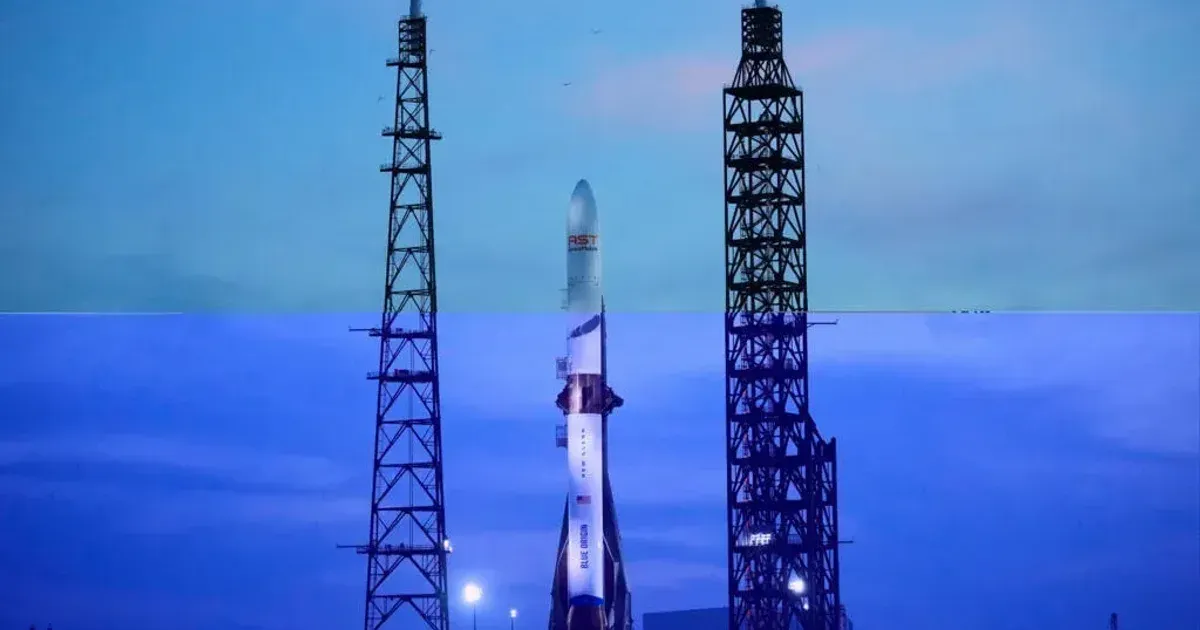
Blue Origin technicians are investigating the destruction of a New Glenn flight vehicle following a major test failure at Cape Canaveral. The explosion gives Blue Origin a costly engineering setback at a moment when heavy-lift competition is accelerating. Investigators now have to separate a destructive test failure from a design flaw that could delay future flight attempts. The failure also gives competitors a chance to question whether Blue Origin can keep pace. The incident occurred during a scheduled hot-fire test on the evening of May 28, 2026. Witnesses near the Florida launch site described an enormous orange glow that illuminated the coastline as the heavy-lift rocket was engulfed in flames.
Initial reports indicate the vehicle was undergoing a static fire procedure when the explosion happened. Emergency crews at the Kennedy Space Center and the surrounding Cape Canaveral Space Force Station responded to the site to contain secondary fires. No injuries were reported during the incident.
Flames and debris scattered across the launch pad area as the primary structure of the rocket disintegrated. This failure is one of the largest hardware losses in the company's launch program. Engineers had intended the test to validate the propulsion systems required for orbital flight.
Jeff Bezos, the founder of the aerospace firm, addressed the failure in a brief statement shared with personnel. He emphasized the necessity of rigorous testing and the risks inherent in developing new heavy-lift technology. Bezos clarified that the company would prioritize a thorough analysis of the telemetry data to prevent a recurrence.
Recovery efforts began immediately after the site was secured.
Fireball Engulfs Heavy-Lift Vehicle at Cape Canaveral
Spectators several miles away captured video of the event, which showed the New Glenn booster standing vertically before a sudden rupture occurred near the base. The resulting fireball reached hundreds of feet into the air. Data from the test stands will likely provide the specific cause of the pressure vessel failure or engine malfunction that triggered the blast.
Safety protocols prevented personnel from being in the immediate vicinity during the ignition sequence. The company had cleared the pad and established a wide exclusion zone prior to the start of the countdown. Ground infrastructure sustained visible damage, though the extent of the impact on the launch mount remains under assessment.
Success for the New Glenn program is critical for the long-term viability of the company’s commercial contracts. The rocket is designed to carry more than 45 metric tons to low Earth orbit in its reusable configuration. Current projections for its first operational flight had been set for later this year, a timeline that now faces substantial delays.
Blue Origin founder Jeff Bezos said the company would identify the cause of the explosion before returning New Glenn to flight.
NASA officials are monitoring the situation closely. The agency has contracted Blue Origin for several high-profile missions, including components for the Artemis lunar program. A prolonged investigation could disrupt the broader schedule for American lunar exploration and satellite deployment.
Competitive Stakes and Lunar Mission Delays
Competition in the heavy-lift sector has intensified as SpaceX continues to iterate on its Starship vehicle. Blue Origin has frequently marketed New Glenn as a more stable and reliable alternative for government and commercial payloads. This explosion, however, narrows the window for the company to prove its orbital capabilities before competitors lock in long-term launch agreements.
Strategic considerations extend to the Blue Moon lander project. The lander depends on the New Glenn launch system for transport to the lunar vicinity. If the investigation reveals a fundamental design flaw in the booster’s architecture, the entire lunar architecture could require re-engineering.
The failure marks another setback for the venture as it seeks to bridge the gap with its industry rivals. Previous hardware tests had shown promise, but the transition to full-scale hot-fire tests has proven difficult. The company must now demonstrate it can recover from a high-profile loss without losing the confidence of its primary investors and federal partners.
Flight hardware of this scale involves thousands of individual components and complex software interdependencies. A single valve failure or sensor error can lead to the total loss of the vehicle in seconds. Future tests will likely involve more conservative fuel loading and enhanced sensor arrays to capture high-speed telemetry from the engine bells.
A Lost Booster Puts Blue Origin's Schedule at Risk
Commercial space dominance often hinges on the reliability of uncrewed testing phases. While the explosion at Cape Canaveral is a setback, it fits within the historical pattern of aerospace development where controlled failures often expose the work needed for system maturity. The financial cushion provided by Jeff Bezos allows Blue Origin to absorb the cost of a lost booster, but the cost of lost time is less easily managed.
Industry observers will watch how NASA reacts to this volatility. If the agency perceives Blue Origin as lagging too far behind SpaceX, it may shift additional funding toward secondary providers to ensure the Artemis timeline remains intact. Maintaining a multi-provider landscape is a stated goal of the Department of Defense and NASA, yet that policy relies on the actual availability of flight-proven hardware.
Engineers must now balance the need for speed with the absolute requirement for safety. Data recovered from the wreckage will determine if New Glenn can return to the pad in months or if the project faces a year-long hiatus. The aerospace sector depends on tight engineering margins, and this failure shows how quickly those margins can disappear during full-scale testing. The path back to launch will depend on whether investigators find an isolated fault or a broader design issue.