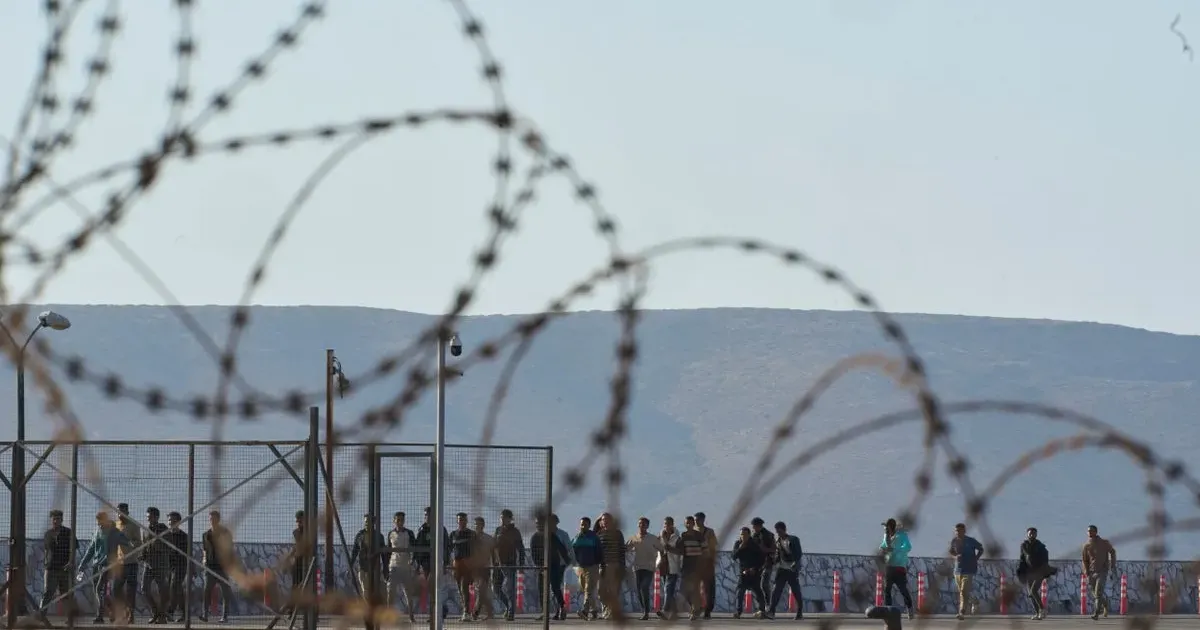
Greek authorities faced another deadly Mediterranean case after survivors from a rubber boat rescued off Crete said at least 22 migrants died during a six-day journey from Libya. Twenty-six people survived, including a woman and a minor, after a Frontex vessel found the boat near the island.
The survivors told Greek officials that people who had died during the crossing were thrown into the sea on the orders of a smuggler. That detail makes the case more than a maritime tragedy. It turns the crossing into an alleged crime scene where the dead were removed before investigators could document the full chain of events.
Six Days at Sea
The boat had reportedly departed from the Tobruk area in eastern Libya, a route that has become more visible as smugglers push people toward Crete and other southern Greek entry points. The distance is longer and more exposed than many Aegean crossings. On an overloaded rubber boat, that distance becomes lethal once food, water, fuel or navigation fails.
Greek coastguard accounts and survivor testimony pointed to a voyage marked by exhaustion, thirst and exposure. By the time rescuers reached the vessel, the case was already beyond a standard interception. The living needed medical attention, and the dead were no longer all on board.
Two Sudanese men were reported to be facing court in Greece after being accused of involvement in the smuggling operation. The legal process matters because survivor testimony is often the only evidence left after deaths at sea. When bodies are lost, prosecutors have to build cases from frightened witnesses, partial manifests and whatever can be reconstructed from the boat itself.
Crete Becomes a Harder Border
The deaths also underline the pressure building around Crete. The island has seen more arrivals as eastern Libya routes draw attention from smuggling networks and European border agencies. For Greek authorities, that shift creates a practical problem: surveillance can spot vessels, but it cannot reverse dehydration, exposure or panic after days adrift.
Frontex involvement gives Europe a direct role in the rescue record. The agency can detect and intercept boats, yet detection is not the same as protection when a vessel is already deep into a failed crossing. The longer the route, the more every delay costs. A rubber boat that might survive a short dash can become a coffin on a route that requires days of open-water endurance.
The case also shows how deterrence changes smuggling behavior rather than ending it. When one path becomes harder, networks sell another. The new path is often longer, less visible and more profitable precisely because it is more dangerous. Migrants pay for movement, but smugglers price in disposability.
Policy Cannot Hide Behind Smugglers
The smugglers carry direct responsibility for putting people on an unsafe boat and, according to survivors, ordering the dead into the sea. That responsibility should not become a political escape hatch for Europe. A border regime that relies on remote surveillance, Libyan containment and emergency rescues is still producing mass death in public view.
Humanitarian agencies have warned for years that Mediterranean death counts are incomplete. Many boats disappear without witnesses, and many bodies are never recovered. That means the Crete case is not only a documented disaster. It is a visible sample of a larger system whose failures are often hidden by the water itself.
Border Failure Verdict
The 22 deaths off Crete expose the cruelty of a migration system that treats danger as a filter. Smugglers exploit that system, but they did not create the political demand for invisible borders and deniable suffering. Europe keeps building a regime in which rescue arrives after the worst has already happened, then calls the result enforcement.
The dead were not lost to the sea alone. They were lost to a route made profitable by desperation, harder by policy and survivable only by chance.