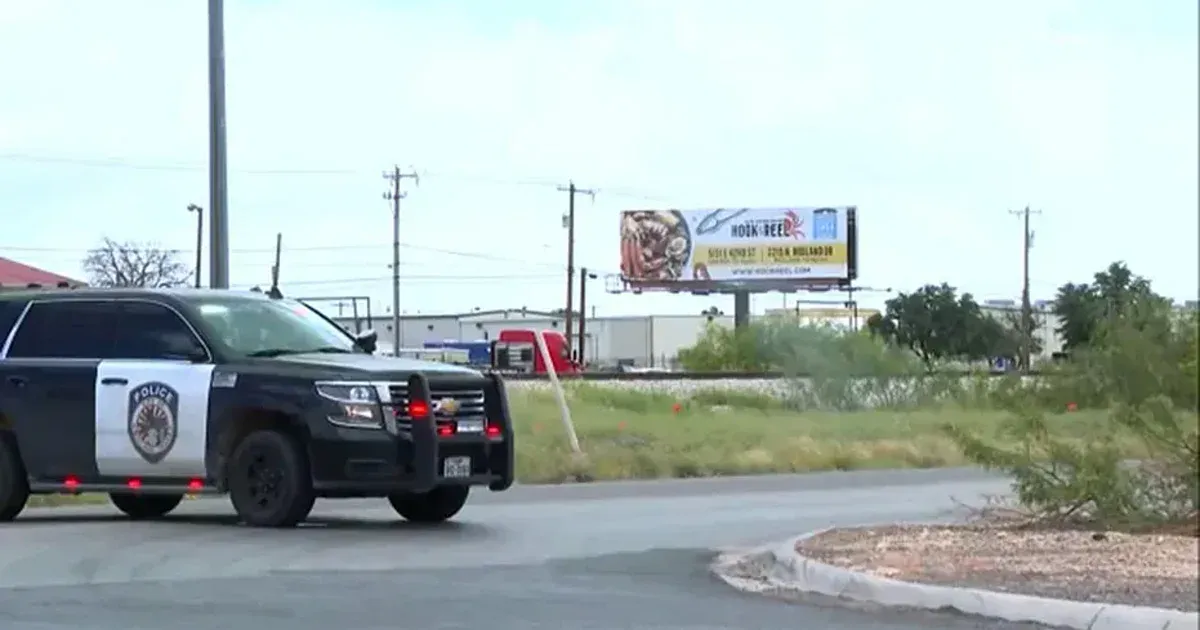
A gunman killed one person and injured 10 others in Midland, Texas, before a standoff ended with the suspect dead inside an abandoned veterinary clinic. The attack forced police into an active-shooter response across part of the West Texas city and sent victims to Midland Memorial Hospital. The shooting was reported on June 12, 2026.
Authorities identified the suspect as Victor Mata Villarreal, a 45-year-old Odessa man who was already wanted after allegedly firing at a Midland police officer earlier in the week.
Police Traced the Attack to a Standoff
The response began after reports of an active shooter near West Wall Street. Officers said the suspect retreated into an abandoned veterinary clinic after the shooting and pursuit disrupted the surrounding area.
Details of the Midland, Texas, shooting remain incomplete because investigators are still reconstructing the path of the attack. Officials have not released a motive, and they have not said whether Villarreal died by suicide or law enforcement fire.
The Texas Department of Public Safety said Villarreal was wanted for attempted capital murder of a peace officer after a separate pursuit days earlier. That history shaped the tactical response because officers believed they were dealing with a suspect willing to fire on police.
Robots and Drones Reduced the Risk
Police used armored vehicles, drones and robots during the standoff. Midland Mayor Lori Blong said remote footage helped authorities confirm the suspect was dead before officers entered the building.
"We moved to deny more targets for this active shooter," Police Chief Greg Snow said.
The use of unmanned tools mattered because several officers had been pinned down during the response. In a barricade situation involving a suspect with a recent allegation of firing at police, every step toward the building carried risk.
Victor Mata Villarreal had a criminal history involving weapons cases, according to reports citing Texas records. That background does not answer why the attack happened, but it helps explain why authorities treated the scene as a continuing threat until the building was cleared.
Hospital and Investigators Shift to Recovery
Midland Memorial Hospital treated victims after the shooting, including patients who required surgery. The immediate public-safety phase has now shifted into a forensic investigation and a community recovery effort.
The Midland Memorial Hospital response also showed why mass-casualty planning matters outside the largest U.S. cities. A sudden shooting can force a regional hospital to manage trauma care, lockdown concerns, family communication and staff safety at once.
Federal agents and victim-services personnel joined the local response, while Texas Rangers took a role in the investigation. That wider involvement reflects the number of crime scenes, the prior officer-shooting allegation and the need to account for every round fired during the attack and standoff.
The severe conclusion is that Midland is now dealing with two timelines: the minutes of violence that left victims dead or wounded, and the longer process of explaining how a wanted suspect was able to launch another attack. The second timeline will determine whether the city gets answers or only another tragedy file.
The earlier officer-shooting allegation is central to that second timeline. Villarreal was not an unknown figure who appeared from nowhere. Authorities had already been looking for him, which means investigators will have to examine the search effort, public alerts, interagency communication and the decisions made between the first incident and the mass shooting. That does not mean every later tragedy was easily preventable. It does mean the public will expect a clear account of what police knew, where they believed the suspect was and how quickly information moved across agencies. In a regional manhunt, gaps of hours can become gaps that matter. The hospital figures also need careful handling. Early shooting reports often shift as victims are counted, treated, transferred or discharged. The confirmed frame used here is one person killed and 10 injured, with the investigation still active and identities not fully released in the first accounts. Midland has lived through mass violence before, and that history makes this attack more than a breaking-news event. Residents will judge the response not only by how fast the standoff ended, but by whether officials explain the warning signs, support the victims and close the information gaps that always follow a chaotic shooting scene. The next official updates should be judged by precision, not speed. Families need accurate victim information, residents need to know when roads and businesses are safe, and investigators need to explain the suspect timeline without filling gaps with speculation. A mass shooting investigation can move quickly at the scene and still require patience in public. Midland deserves both urgency and accuracy, especially while families are waiting for names, conditions and a motive that may take longer to establish.