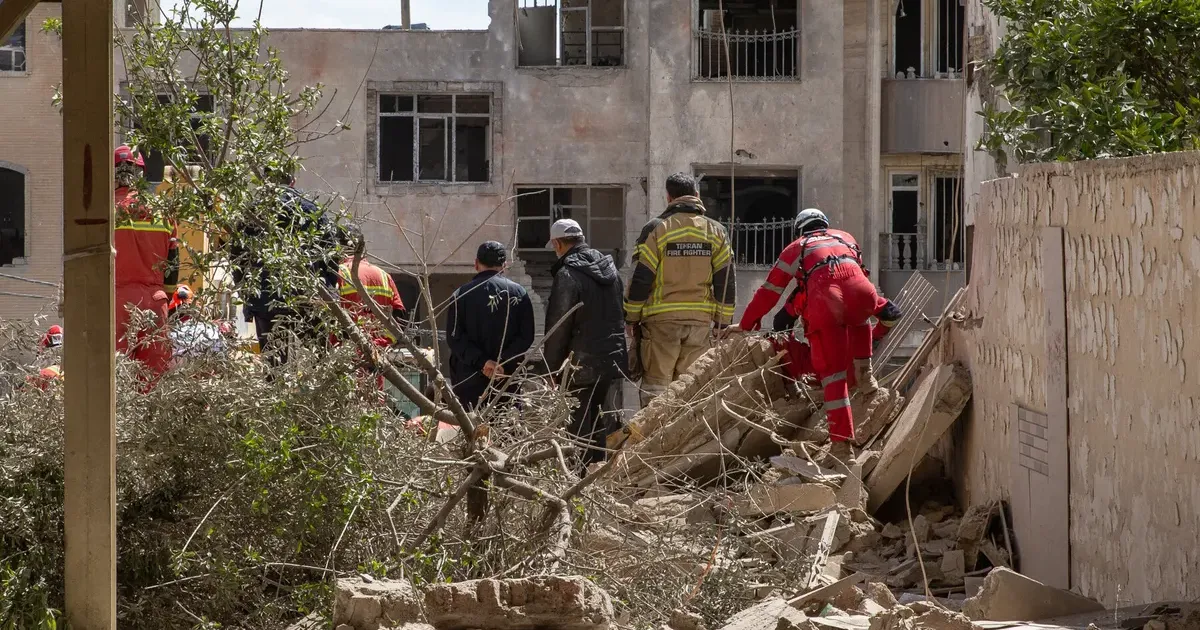
Pete Hegseth's warning that Iran could still fire missiles and one-way attack drones undercut the simplest version of Washington's battlefield message. The United States and Israel had damaged launchers, air defenses, command nodes and production sites, but the Pentagon still had to acknowledge that Tehran retained strike options.
The admission has aged into the July escalation. Renewed U.S. strikes around Iran's southern coast and the Strait of Hormuz did not begin in a vacuum. They followed the same strategic problem Hegseth had identified earlier: air power can reduce Iran's missile and drone threat, but it cannot easily erase a dispersed arsenal.
The surviving threat matters because it shapes every next decision. If Iran can still launch from mobile systems, hidden storage, coastal positions or allied networks, Washington has to decide what level of residual danger it can live with.
Residual Firepower Shapes the War
Iran's missile and drone structure is difficult to destroy completely because it is dispersed by design. Some launchers move. Some equipment is hidden or hardened. Some pressure can come through aligned groups or maritime harassment rather than direct Iranian salvos.
Each wave of strikes therefore produces a new assessment rather than a clean ending. Commanders can say the launch volume is lower, air defenses are damaged or drone attacks have fallen. They still have to plan for the next launcher, the next storage site and the next attempt to overwhelm defenses.
Official language becomes delicate at this point. If Washington promises total elimination, every surviving missile becomes proof of failure. If it admits a degraded but living threat, it has more room to explain why deterrence, air defense, diplomacy and maritime protection remain necessary.
Mobile Launchers Create a Political Trap
Mobile launchers are not only a military target. They are a political problem. If they survive, leaders in Tehran can claim endurance and use even small salvos to show that the state has not been broken. If the U.S. widens the campaign to chase them, Washington risks deeper escalation and civilian danger.
The mission definition therefore matters. Is the goal to protect shipping? Reduce missile fire? Force nuclear concessions? Restore deterrence? Punish attacks on U.S. forces? Those aims overlap, but they are not identical.
Confusing them is how limited campaigns become open-ended. A strike package can destroy equipment. It cannot by itself define the political end state.
Hormuz Turns Survival Into Market Risk
The Strait of Hormuz gives the missile assessment an economic edge. Iran does not need a perfect strike capability to change oil, insurance and freight behavior. It needs enough credible firepower to make shipowners, insurers and Gulf governments price danger into every transit decision.
Renewed attacks therefore on missile, drone and coastal-defense sites have global consequences. A damaged tanker, a warning shot, a drone swarm or a strike near a Gulf base can move markets even if most missiles are intercepted.
The market does not wait for a complete battlefield count. It responds to uncertainty. If Iran's remaining capacity can threaten shipping lanes, risk premiums become part of the price of fuel, food transport and airline operations.
U.S. Stockpiles Are Now Part of the Calculation
The other side of the surviving Iranian threat is American inventory. Ongoing strikes and air-defense operations have drawn heavily on Tomahawk cruise missiles, Patriot and THAAD interceptors, and other high-demand systems. Defense officials and military leaders have pushed contractors to build faster because replenishment cannot happen overnight.
The inventory pressure changes the cost of every intercepted drone or missile. Iran can use comparatively cheaper systems to force the U.S. and partners to spend expensive interceptors. Even successful defense can become financially and industrially draining.
For Washington, this is not only about Iran. Planners also have to preserve readiness for China, Russia, North Korea and Ukraine-related demands. A regional war that consumes scarce munitions creates pressure far beyond the Gulf.
Diplomacy Needs a Tolerable End State
The military question is therefore inseparable from the diplomatic one. A degraded Iranian missile force may still be dangerous. But if the U.S. defines success as total removal of every surviving launcher, the campaign has no realistic stopping point.
A tolerable end state might involve lower launch rates, reopened shipping lanes, monitoring, sanctions leverage, limited nuclear concessions and an understanding that deterrence will remain active. That would be messy, but wars often end through managed risk rather than perfect disarmament.
The danger is momentum. Each surviving launcher can be used as an argument for another strike. Each strike can produce another retaliation. The target list then starts driving policy instead of serving it.
The Warning Was Really About Limits
Hegseth's acknowledgement narrowed the gap between official confidence and battlefield reality. Iran had been hurt, but hurt was not the same as helpless. The distinction is now central to the July fight.
Trump wants strength without appearing trapped. Gulf partners want shipping security without regional collapse. Markets want proof that the conflict will stop bleeding into fuel prices. The Pentagon wants to reduce threats without burning through inventories faster than industry can replace them.
The strategic test is whether Washington can treat surviving Iranian firepower as a risk to manage, not an automatic reason for unlimited bombing. If every remaining missile becomes a mandate to keep escalating, the United States will have turned a degraded threat into a war plan with no exit.