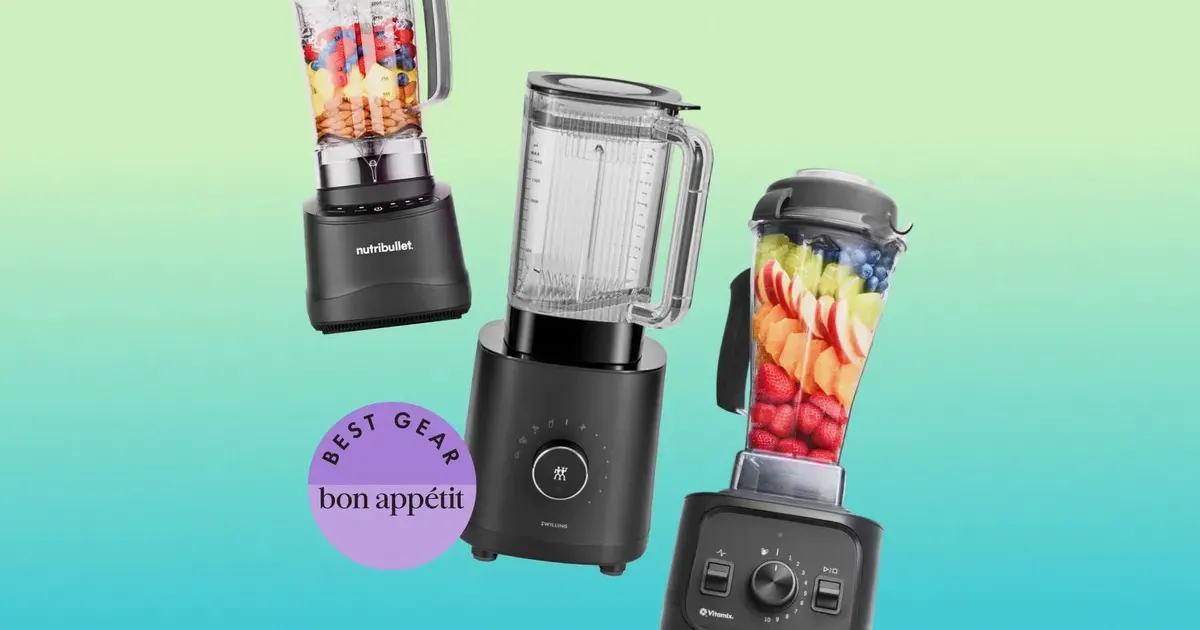
Rigorous Testing Defines the New Standard for Home Kitchens
Exhaustion defines the modern kitchen testing lab during a marathon session of culinary destruction. Researchers spent three months pulverizing fiber, heating liquids through friction alone, and shattering ice into the consistency of fine powder. Blenders arrived in boxes from across the globe, ranging from $40 impulse buys to $800 professional grade monoliths intended for residential countertops. Every motor was pushed to the thermal limit to see which machines would survive the daily grind of a health conscious 2026 household.
High performance blending has evolved from a niche requirement for raw food enthusiasts into a central pillar of the modern kitchen. No longer just tools for morning smoothies, these machines now function as food processors, grain mills, and soup makers. Consumers in 2026 demand not merely raw power. They want intelligent interfaces, noise suppression, and blades that do not dull after six months of frozen fruit. Such demands lead to a crowded marketplace where marketing jargon often obscures mechanical reality.
Quality costs more than most consumers are willing to admit.
Vitamix remains the benchmark against which all other machines are measured in this exhaustive 35 model study. The 5200 series, despite its aging design, continues to outperform digital rivals in pure vortex efficiency. Engineers at the company have resisted the urge to add touchscreen interfaces that often fail in damp kitchen environments. Instead, they rely on a manual dial that provides tactile feedback and precise control over the blade speed. During testing, the Vitamix turned fibrous kale and blackberry seeds into a liquid so smooth it felt like silk on the palate. Other brands struggled with the seeds, leaving a gritty residue that ruined the texture of the drink.
The Divide Between Power and Performance
Horsepower ratings often mislead the average buyer. A three horsepower motor sounds impressive on a retail box, yet the way that power transfers to the blades determines the final result. Testing revealed that some high wattage budget models from Ninja and NutriBullet actually struggled more with thick nut butters than lower wattage machines with better blade geometry. Torque matters far more than raw speed when dealing with heavy loads. If the blade cannot create a consistent vortex, the ingredients simply bounce around the top of the jar while the motor overheats at the base.
Durability remains the ultimate luxury.
Breville has made significant strides in 2026 with the Super Q, a machine that attempts to bridge the gap between industrial power and household elegance. One standout feature is the dedicated noise suppression technology. While a standard blender can reach 95 decibels, the Super Q operates at a much more manageable volume, allowing for conversation in the kitchen while a smoothie is being prepared. Engineers achieved this through a combination of motor housing insulation and a redesigned cooling fan that moves air more efficiently without the high pitched whine common in cheaper units.
Vacuum blending technology represents the most significant innovation of the last two years. Machines from brands like Kuvings and Hurom now offer the ability to remove oxygen from the jar before the blades begin to spin. This prevents the oxidation that typically turns a bright green smoothie into a dull brown mess within minutes. Results from the lab showed that vacuum blended juices retained higher levels of Vitamin C and remained stable in the refrigerator for up to 48 hours without separation. For the enthusiast who preps meals in advance, this technology justifies the higher price point.
Value Options and the Disposable Appliance Problem
Budget models frequently fail the longevity test. Units priced under $100 often utilize plastic drive sockets that strip over time when faced with heavy ice usage. In our 35 model comparison, several entry level blenders from big box retailers failed within the first 10 cycles of the almond butter test. Smoke began to curl from the bases as the motors seized under the strain of the dense mixture. Consumers looking to save money might find themselves buying three cheap blenders over five years, whereas a single investment in a legacy brand would likely last a decade or more.
This investment pays dividends for those who value consistency over initial savings. Still, the Ninja Foodi line offered a surprising middle ground. While it lacks the refined texture of a Vitamix, its multi blade system handles frozen cocktails and crushed ice with remarkable speed. It uses a different philosophy by utilizing a central tower of blades rather than a single set at the bottom. This design eliminates the need for a tamper tool, as the blades reach up into the ingredients to pull them down. It is a loud, aggressive machine, but for the casual user who makes a frozen margarita once a week, it performs admirably.
Personal preference often dictates the final choice between a jug blender and a personal bullet style unit. Personal blenders like the Magic Bullet Ultra have improved their seals to prevent the leaking issues that plagued earlier generations. These are ideal for single servings, but they fail when asked to make hot soups. Friction heat can build up pressure inside a sealed cup, leading to dangerous explosions when the lid is removed. We found that only the full sized vented pitchers are truly safe for processing hot liquids.
Analyzing the Physics of the Perfect Purée
Blade pitch and jar shape work in tandem to create the perfect culinary environment. Square jars, popularized by Blendtec, create turbulence that forces ingredients back into the blades without the need for a tamper. The hands free operation appeals to busy cooks who are multitasking at the stove. Yet, during our testing of 35 models, we found that square jars often leave small pockets of unblended material in the corners. Round or cloverleaf jars tend to produce a more uniform result for professional grade sauces.
Maintenance and cleaning also separate the winners from the losers. High end models now feature self cleaning cycles that use a drop of soap and warm water to scrub the blades in under 60 seconds. That feature is not just a gimmick. It ensures that protein powder and fruit sugars do not harden in the hard to reach areas under the blade assembly. Cheaper models with non removable blades proved difficult to clean, often requiring a bottle brush and a fair amount of patience to maintain hygiene standards.
The Elite Tribune Perspective
Kitchen culture in 2026 has become an arms race of over engineered hardware that most people simply do not need. Why are we celebrating a $700 appliance that does nothing more than spin a blade at high speeds? The obsession with professional grade equipment in a residential setting reveals a deep insecurity about our culinary abilities. We buy the Vitamix because we want to feel like a chef, even if we only use it to mix pre packaged protein shakes. Manufacturers have exploited this vanity by adding digital screens and Bluetooth connectivity to devices that were perfected forty years ago with a simple toggle switch. Technology for the sake of technology is a plague in the appliance industry. A blender should be judged on its ability to withstand the abuse of a frozen strawberry, not its ability to sync with a smartphone. what is unfolding is the commoditization of durability, where you pay a 500 percent markup just to ensure the plastic gear does not melt on the first day. It is time to stop applauding brands for making products that actually work and start demanding that the baseline for all appliances be longevity rather than landfill destined trash.