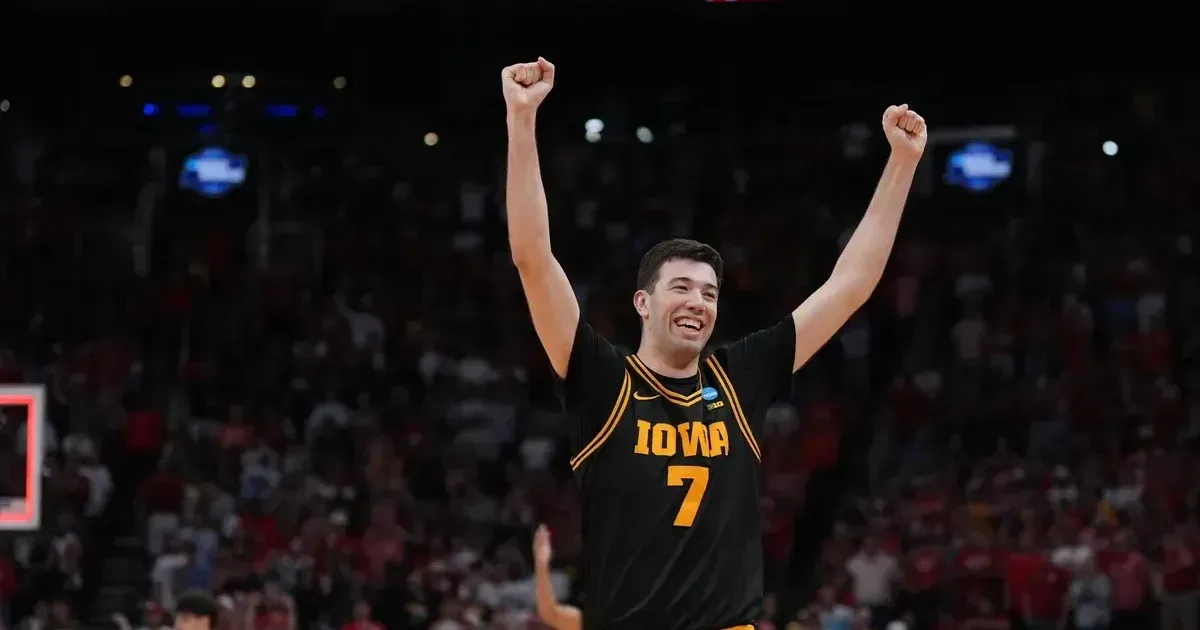
Fred Hoiberg watched his season unravel on March 27, 2026, when a personnel oversight left the Cornhuskers defending their basket with only four players. Iowa guard Payton Sandfort easily found an open lane to the rim while the fifth Nebraska defender sat unknowingly on the bench. Officials resumed play after a timeout with Nebraska failing to field a full lineup during the most critical sequence of the second half. Communication failed between the coaching staff and the substitution table at a moment that demanded absolute precision. Spectators at the Target Center watched in silence as the Hawkeyes exploited a defensive shell that lacked its primary rim protector.

Hoiberg accepted full responsibility for the blunder during his post-game media session. He admitted to a lapse in the substitution rotation that occurred as the team transitioned from their tactical huddle back to the hardwood. Assistant coaches appeared to believe the fifth man had already reported to the scorer's table, but the player remained seated. Such an error is rare in high-stakes collegiate basketball where multiple staffers are tasked with tracking player participation. Iowa players recognized the advantage immediately and moved the ball with rapid efficiency to find the gap in the understaffed defense.

Fred Hoiberg inadvertently pulled a Norman Dale.

Success in the NCAA Tournament often hinges on these microscopic details. Nebraska had fought back from a double-digit deficit to bring the game within one possession before the timeout was called. Momentum favored the Cornhuskers until the logistical failure gifted Iowa an uncontested layup. Referees are not required to count the players on the floor before blowing the whistle to live action. That burden falls entirely on the head coach and his bench assistants. Hoiberg stood on the sideline with his hands on his head as the realization of the empty spot on the floor became apparent.

Nebraska Communication Breakdown in the Sweet 16

Basketball operations at this level involve sophisticated coordination between the head coach and the specialized assistants. One coach typically manages the defensive assignments while another tracks fouls and substitution patterns. Somehow, the chain of command fractured during the transition from the bench to the court. Players often look to the bench for a final signal before the ball is keyed in. On this occasion, the four defenders on the floor assumed the fifth teammate was trailing the play or covering the weak side. Iowa exploited this assumption by overloading the paint with three offensive threats.

Hoiberg is the designer of a program that has seen a sizable resurgence over the last two seasons. His salary of $3.5 million reflects the expectations placed upon his ability to manage late-game scenarios. Yet the basic requirement of fielding five athletes proved too much for the Nebraska staff under the bright lights of the tournament. Critics pointed to the chaos on the bench during the preceding timeout as a sign of structural instability. While the players performed with physical intensity, the leadership failed the fundamental test of roster management. Iowa head coach Fran McCaffery noted the confusion but instructed his team to push the pace regardless of the defensive alignment.

One mistake changed the entire complexion of the final four minutes.

Pressure in the Sweet 16 acts as a solvent for even the most disciplined organizations. Nebraska entered the game as a slight underdog but had controlled the tempo for much of the first half. Iowa relied on their perimeter shooting to stay competitive before the coaching gaffe provided the spark they needed. In fact, the two points scored by Iowa during the four-on-five play represented the margin of victory. Analytics suggest that Nebraska had a 42% chance of winning prior to that specific defensive possession. Those odds plummeted to less than 15% once the Hawkeyes took the lead on the gifted basket.

Iowa Capitalizes on Hoiberg Personnel Oversight

Sandfort did not hesitate when he saw the vacant left corner. He signaled to his point guard to drive toward the middle, knowing that no weak-side help could arrive in time. Nebraska defenders scrambled to cover the extra man, which left the interior wide open for a secondary cutter. Iowa executed their set play as if they were facing a full defense, showing no mercy for the administrative error across the court. By contrast, the Nebraska bench erupted in a frantic attempt to signal for another timeout that they did not have available. The official closest to the Husker bench ignored the pleas as the play was already live.

Fans in Lincoln will likely remember this sequence longer than any other play from the 2026 campaign. Nebraska has struggled for decades to find a consistent foothold in the deep rounds of the tournament. This specific error reinforces a narrative of misfortune that has plagued the program across multiple coaching regimes. Hoiberg attempted to rally his squad after the basket, but the psychological damage was done. Players traded glances of frustration and confusion as they headed back to the other end of the floor. Iowa capitalized on this emotional dip by immediately forcing a turnover on the subsequent possession.

Precision matters more than effort in the final minutes of a knockout game.

Iowa used the confusion to build a five-point lead that Nebraska could not overcome. The Hawkeyes have long been known for their offensive prowess, but their ability to identify and exploit a coaching error was particularly sharp. Meanwhile, the Nebraska cheering section fell into a state of disbelief as the replay played on the jumbotron. It showed clearly that the fifth player was still adjusting his jersey on the bench when the ball was handed to the Iowa inbounder. No amount of defensive effort can compensate for a 20% reduction in manpower on the court.

Tactical Analysis of the Four Player Defensive Set

Defending with four players against an elite Big Ten offense is a mathematical impossibility. A standard man-to-man defense requires every offensive player to be accounted for, leaving no one to provide help in the lane. If Nebraska had attempted a zone, the gaps would have been even more pronounced. Iowa recognized the man-to-man look and used a simple high-low screen to isolate the mismatch. So the basket was not just a result of the missing player, but a result of Iowa making the perfect tactical choice in real-time. Statistics show that Iowa scores on 1.1 points per possession against five players, but that number jumps to nearly 2.0 against four.

Hoiberg noted that the team practiced late-game situations extensively during the week leading up to the regional semifinals. These drills usually focus on shot selection, clock management, and defensive positioning. Personnel counting is rarely a point of emphasis because it is considered an elementary part of the game. And yet the most basic requirement of the sport was the one that failed the Huskers. Personnel experts in the athletic department will likely review the bench protocols to ensure such a lapse never recurs. The damage to the team's postseason aspirations remains permanent despite any future procedural changes.

Chaos on the sidelines often mirrors the performance on the court.

Iowa moved to the Elite Eight with a sense of relief and renewed confidence. Their road through the tournament has been defined by close calls and resilient finishes. This victory over Nebraska adds a bizarre chapter to their season history. Reporters questioned McCaffery about whether he felt sympathy for his counterpart across the floor. He stated that in the heat of the tournament, you take every advantage provided by the opposition. Competitive sports at this level do not offer prizes for sportsmanship when an opponent makes a clerical error.

Statistical Fallout of the Nebraska Coaching Gaffe

Nebraska finished the game with 14 turnovers and a shooting percentage of 44%. These numbers are respectable but were overshadowed by the single defensive possession that lacked a full roster. Iowa outscored the Huskers by 6 points in the final three minutes, starting with the four-on-five layup. For instance, the shooting percentage of Iowa increased by 12% in the second half compared to their first-half performance. Nebraska's inability to set their defense after the timeout allowed Iowa to find a rhythm they had lacked all night. Every statistical category favored the Hawkeyes after the coaching blunder occurred.

Media outlets across the country immediately drew comparisons to famous basketball blunders of the past. Hoiberg joins a list of respected coaches who have suffered from momentary lapses in judgment during high-pressure situations. The Norman Dale reference from the NY Post highlights the irony of a coach voluntarily or involuntarily playing shorthanded. Unlike the fictional movie scenario, there was no redemptive arc for Nebraska in this real-world matchup. The final horn sounded on a season that many felt should have lasted at least one more round.

Finality in March is a cold reality for the losing side.

Hoiberg walked off the floor with his head down, ignoring the taunts from the Iowa student section. His tenure at Nebraska has been marked by a slow build toward relevance. This game was supposed to be the coronation of his rebuilding project. Instead, it became a lesson in the dangers of overlooking the mundane details of game management. The athletic director will have to answer questions regarding the bench's lack of coordination. Nebraska enters the offseason with a bitter taste and a long list of what-ifs following a tournament exit that was entirely preventable.

The Elite Tribune Perspective

Elite programs do not survive elementary math errors when the stakes involve a trip to the Final Four. Hoiberg has spent years cultivating a reputation as a tactical mastermind, yet he failed the most basic test of sideline management. It is easy to blame a single assistant or a distracted player, but the head coach is the ultimate arbiter of who takes the floor. It was not a missed jumper or a blown assignment; it was a systemic failure of professional standards.

Paying a coach millions of dollars is based on the assumption that they can, at the very least, count to five. When that assumption fails, the entire foundation of the program is called into question. Nebraska fans deserve better than a season-ending loss dictated by a clerical oversight. The incident should serve as a permanent stain on the Hoiberg era, regardless of how many wins he accumulates in the future. High-performance environments have no room for such negligence. The Hawkeyes did not win this game as much as the Cornhuskers surrendered it through a lack of basic situational awareness.

It was an embarrassing display of incompetence that should lead to immediate changes in how the Nebraska bench is structured and managed during live play.