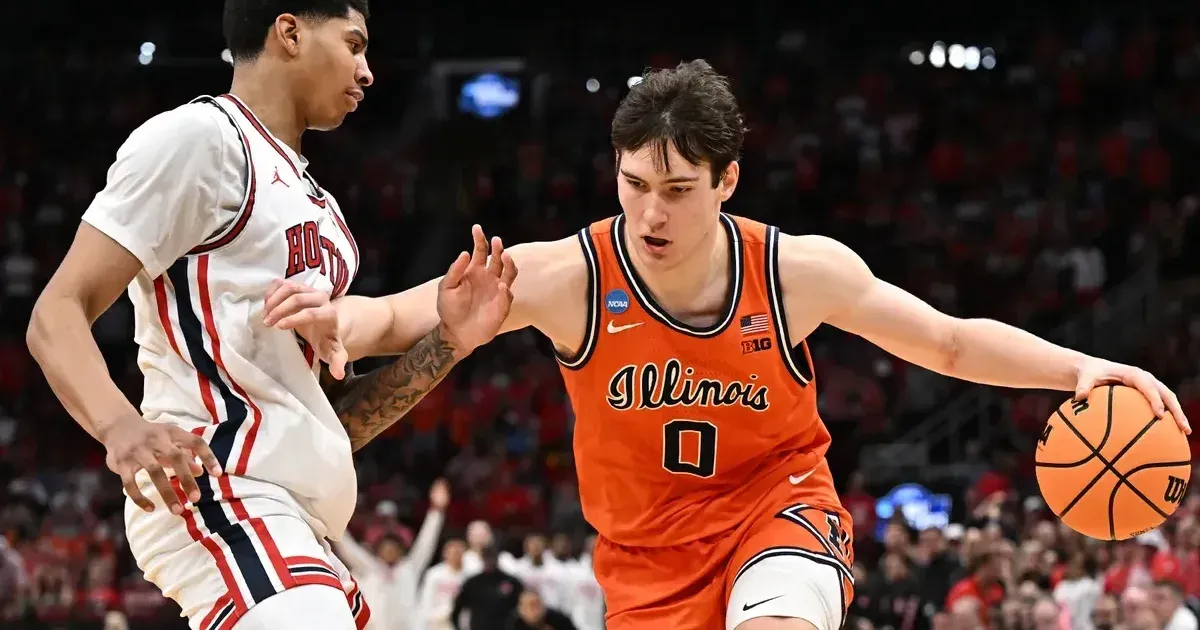
Illinois turned a tight South Region semifinal into a defensive statement, beating Houston 65-55 and moving within one win of the Final Four. The third-seeded Illini did not win by overwhelming Houston with pace or three-point volume. They won by matching the Cougars physically, taking away second chances, and forcing a trusted opponent into one difficult possession after another.
The March 27, 2026 game was still narrow at halftime, with Illinois leading 24-22. After the break, the Illini changed the tone completely. Houston scored only four points during the opening stretch of the second half, and Illinois used that drought to build a 17-0 run that made the game feel far less balanced than the bracket suggested. The Cougars had time to respond, but they never recovered their rhythm.
David Mirkovic gave Illinois the interior anchor it needed. He finished with 14 points and 10 rebounds, supplying the calm outlet when Houston pressure tightened. Keaton Wagler added 13 points and a game-high 12 rebounds, giving the Illini a second freshman who could affect the game even when shots were not falling cleanly.
Illinois Wins the Physical Game
Houston usually controls games through force, offensive rebounding, and defensive discomfort. Illinois disrupted that formula by winning the glass 43-34 and limiting the Cougars to a season-low 34 percent shooting. The Illini did not need a perfect offensive night because they reduced Houston's possessions to rushed jumpers, contested drives, and one-shot trips. The key sequence came early in the second half. Illinois protected the rim without fouling, closed out on shooters with discipline, and turned defensive stops into a cushion Houston could not erase. When the Cougars cut the margin to 50-41 with six minutes left, Illinois answered with another quick burst and removed the last serious doubt. The coaching adjustment was subtle but important. Illinois did not gamble for steals as much as it crowded driving lanes and trusted the back line to clean up misses. That reduced the number of scramble situations where Houston usually finds offensive rebounds or kick-out threes.
That response mattered because it showed Illinois could manage stress late in a tournament game. The Illini have been known for offensive efficiency, but this win showed a more portable March formula. Defense, rebounding, and late-possession patience travel well, especially against opponents that are used to imposing their own tempo. One night does not prove a championship run, but this result changed the way Illinois should be evaluated in the bracket. A team that can beat Houston by playing Houston's style has more paths to survive a poor shooting night. That is a meaningful upgrade from being viewed only as an offense-first contender. The next test will show whether that balance holds against a more familiar Big Ten opponent. Iowa will know Illinois' personnel better than Houston did, so execution in the half court may matter even more. That makes the next round a sharper test of whether Illinois can keep winning through defense when the matchup becomes more familiar.
Mirkovic and Wagler Set the Edge
Mirkovic's numbers were efficient rather than loud, but his value was obvious. He absorbed contact, finished through pressure, and stayed connected defensively when Houston tried to attack the lane. His rebounding kept Illinois from giving the Cougars the extra chances they normally use to wear teams down. Wagler's contribution was just as important. He shot unevenly, yet he stayed active on the boards and kept possessions alive. For a freshman guard to lead both teams in rebounding in a Sweet 16 game says plenty about Illinois' commitment level.
It also gave Brad Underwood flexibility, because the Illini could stay aggressive without sacrificing size. The frontcourt and backcourt worked together cleanly. Perimeter defenders could pressure the ball because Mirkovic was behind them. The bigs could hold their ground because the guards fought through screens and slowed Houston's first action. That balance is what made the 65-55 scoreline feel controlled rather than accidental. It also gave Illinois a repeatable identity for the next round. Tournament teams rarely survive on one skill alone. The Illini showed they can score with skill when needed, but this result proved they can also survive a game built around contact, loose balls, and half-court patience.
Iowa Matchup Comes Next
Illinois now moves into an all-Big Ten South Regional final against Iowa. The matchup carries a different tactical problem than Houston, but the Illini will enter it with proof that they can win without relying on a shootout. That matters in late March, when games often slow down and every rebound becomes a separate contest. Houston exits with a familiar frustration.
The Cougars defended well enough for stretches, but their offense did not generate enough clean looks once Illinois took away put-backs and transition chances. For Illinois, the takeaway is simpler: the roster looks deep enough, young enough, and disciplined enough to keep moving.