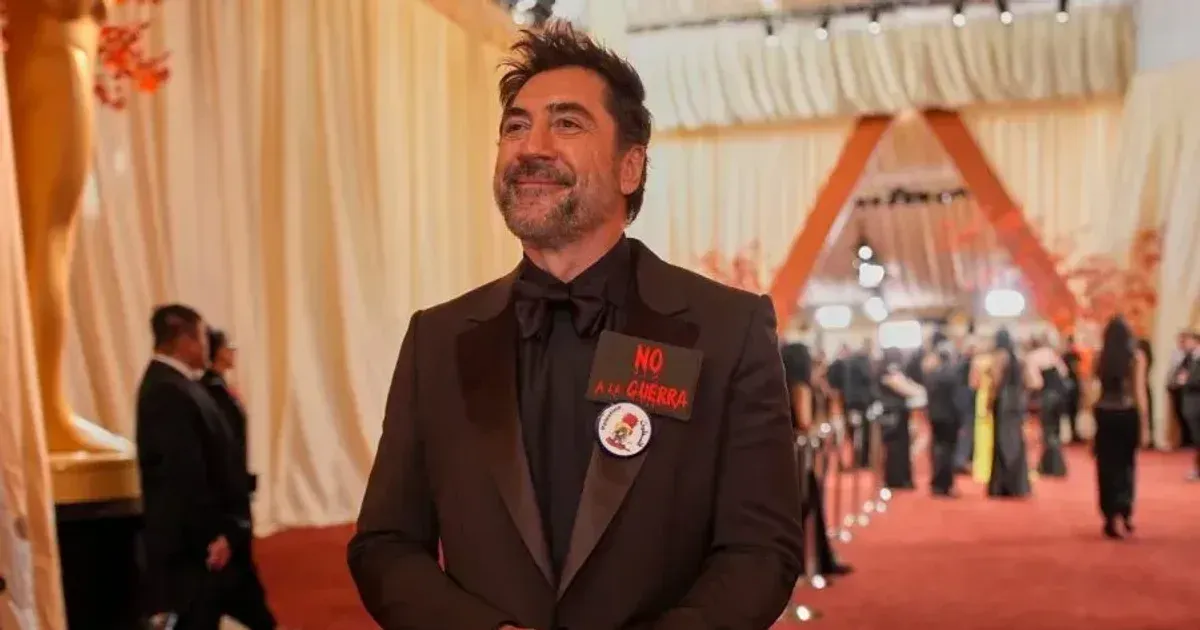
Los Angeles glittered under a heavy veil of security on Sunday night as the film industry attempted to balance celebration with political mourning. Conan O'Brien and Jimmy Kimmel targeted Donald Trump during the 98th Academy Awards in Los Angeles. The atmosphere inside the Dolby Theatre shifted between practiced humor and sharp political confrontation. High fences and armed patrols ringed the venue while protesters gathered several blocks away to denounce ongoing military actions in the Middle East. Conan O'Brien took the stage for his opening monologue with a notable shift in tone from previous years. He joked that the audience was sitting in the has-a-small-penis theater, referencing the current administration. This was a direct jab at the president affixing his name to the Kennedy Center late last year. O'Brien told the crowd that the event was an international gathering intended to provide optimism during chaotic times. But the humor quickly pivoted to biting cultural commentary regarding the President's supporters. O'Brien joked that Kid Rock was now hosting an alternate awards show at a Dave and Buster's down the street. This referred to a counterprogrammed Super Bowl halftime show organized by MAGA-aligned America last month. The audience responded with a mix of laughter and a tension that highlighted the industry's deepening rift with the White House. Meanwhile, the fashion on the red carpet served as a billboard for humanitarian and political causes. Multiple stars arrived wearing pins that read ICE OUT to protest current immigration enforcement policies. Other attendees wore crimson pins signifying a call for an immediate ceasefire in Gaza. These visual statements preceded a night where presenters frequently strayed from their teleprompters to address the state of the world. Yet it was the arrival of the documentary categories that provided the most pointed attacks of the evening. Jimmy Kimmel presented the awards for documentary shorts and features with a scripted routine that took aim at the First Lady. He lauded the nominated filmmakers for their commitment to telling the truth in an age of misinformation. Kimmel specifically mocked a recent documentary about Melania Trump that has been a subject of intense media debate. For instance, Kimmel suggested that the nominated films were far more substantive than projects where people simply walk around the White House trying on shoes. He joked that the president would be furious that his wife failed to secure a nomination for the documentary feature category. The comedian also included a brief swipe at CBS regarding free speech issues during his time on stage. Kimmel has maintained a long-standing public feud with the administration that frequently spills over into his late-night broadcasts. According to witnesses backstage, the mood was strikingly different from the festive air of the mid-2010s. Producers reportedly encouraged presenters to keep their remarks brief, but many chose to use their global platform for advocacy. This tension reached its peak when the award for Best International Feature Film was announced. The category, which highlights cinema from around the world, became a conduit for the most direct anti-war statement of the night. Javier Bardem stepped to the microphone to present the award with a simple, unyielding message. He discarded the usual pleasantries to voice his opposition to the current conflict.
No to war and free Palestine.
The applause that followed Bardem's declaration was the loudest of the first half of the ceremony. The actor, known for his role in No Country for Old Men, has long been vocal about human rights issues in the Middle East. His statement was not authorized by the Academy, but officials made no attempt to cut his microphone or interrupt the broadcast. Bardem remained on stage to hand out the statue before exiting without further comment. The Academy of Motion Picture Arts and Sciences had attempted to maintain a more neutral posture in the weeks leading up to the show. Organizers were aware of the potential for disruptions and had reportedly briefed security on how to handle stage crashers. No such physical disruptions occurred, though the verbal broadsides from the podium were constant. The 2003 Oscars served as the primary historical reference point for the evening's heightened political temperature. Historians noted that the last time the awards occurred during the early stages of a major U.S. military intervention was over two decades ago. When George W. Bush ordered the invasion of Iraq in 2003, the Academy took the drastic step of scrapping the red carpet festivities entirely. High-profile stars like Will Smith and Jim Carrey stayed home in protest or out of respect for the casualties. Cate Blanchett also skipped that ceremony as the nation prepared for a prolonged conflict. Hollywood was not above going low.
The ratings for the broadcast are expected to reflect a deeply divided nation. While the Academy usually hopes for a focus on the art of filmmaking, the 2026 show will likely be remembered as a night of political theater. Every joke and every pin was a calculation in a larger cultural war. The final tallies for viewership will arrive Tuesday morning.
Politics had swallowed the art whole.
Trump Jokes Enter the Oscars
Jimmy Kimmel used his role as a presenter to launch a focused critique of the current administration's media ventures. Javier Bardem's blunt anti-war statement provided the most viral moment of the evening.
Security Concerns Framed the Night
Security forces in Los Angeles faced their biggest challenge in years as they protected the high-profile attendees. The combination of celebrity presence and intense political anger necessitated a heavy police presence. Officers reported several minor skirmishes on the perimeter of the security zone, but no major injuries were confirmed. The cost of the security operation is estimated to be in the millions of dollars.
The 2026 Oscars drew immediate comparisons to the 2003 ceremony held during the Iraq invasion. While the 2003 event was somber and stripped of its usual glamour, the current iteration attempted to maintain a facade of normalcy. The contrast highlights how the industry has become more comfortable with overt political messaging during times of war. The precedent set in 2003 remains a standard for how Hollywood reacts to national crises.
Hollywood Politics Became the Show
The ceremony exposed a Hollywood class that wants the cultural authority of politics without the discipline that politics requires. A joke from a stage can travel faster than a policy argument, but it also lets the industry congratulate itself while the country outside the theater remains divided, angry and unconvinced.