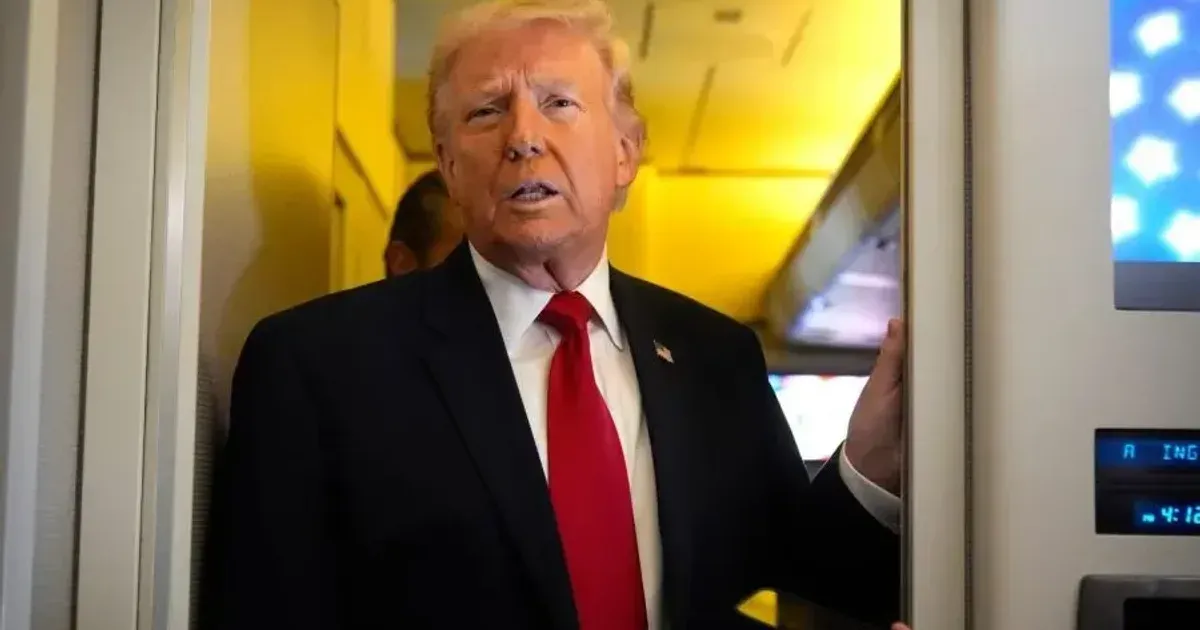
Donald Trump asserted his dominance over Iran during a late-night press gaggle aboard Air Force One. Speaking with reporters as the presidential aircraft cruised at 35,000 feet, the commander-in-chief offered a blunt assessment of his administration's long-standing pressure campaign against the Islamic Republic. He maintained that while the adversary remains in a state of total collapse, he sees no tactical advantage in formally proclaiming the conflict finished. Reporters pressed for clarity on why a triumphant announcement has not been forthcoming despite his own descriptions of the situation. President Trump responded with characteristic directness, stating that there is no reason to take such a step at this juncture. His remarks followed months of escalating language and increased presence in the Persian Gulf, where U.S. naval assets have restricted the flow of illicit petroleum exports. Financial data from the region suggests that the Iranian rial has plummeted to new lows against the dollar. Economic strangulation has left the clerical regime with few options for maintaining domestic order. Military analysts point to a severe degradation in the ability of Tehran to fund its network of regional proxies. Donald Trump told The Hill that he views the country as effectively broken by his policies. According to officials familiar with the briefing, the current strategy involves maintaining maximum pressure until a total realignment of Iranian foreign policy occurs. No, I'm not going to do that. There's no reason to. I just say they're decimated.
Trump Avoids Victory Declaration
Defense spending within Iran has reportedly fallen by 40% over the last fiscal year as the government struggles to provide basic subsidies for food and fuel. U.S. Intelligence suggests that the Revolutionary Guard has been forced to cannibalize its air defense systems for spare parts. This reality has not gone unnoticed by the White House, which continues to monitor for signs of internal instability. Recent strikes on drone manufacturing facilities have further eroded the offensive capabilities of the regime. State Department figures indicate that the blockade on Iranian oil has successfully removed over 2 million barrels per day from the global market. Donald Trump pointed to this loss of revenue as the primary driver of the current crisis in the Iranian capital. The administration remains wary of declaring a mission completion when localized threats persist. Naval skirmishes in the Strait of Hormuz have decreased in frequency, but the threat of asymmetric retaliation remains a concern for Pentagon planners. Aggressive posturing defines the executive strategy in the Middle East. Sanctions have crippled the ability of the Iranian central bank to access foreign currency reserves. Financial experts estimate that the regime has lost access to more than $11 billion in frozen assets across European and Asian banking institutions. The cost of living for average citizens has soared, leading to sporadic protests in major urban centers. Trump argued that these internal pressures are doing the work of a traditional military conflict without the need for large-scale troop deployments.
Iran Pressure Strategy Continues
Allies in the region, particularly Israel and Saudi Arabia, have quietly lauded the reduction in Iranian influence. Intelligence reports shared among partner nations indicate that the flow of complex weaponry to groups like Hezbollah has slowed to a trickle. The White House refuses to ease the pressure, fearing that any relief would allow Tehran to regroup and rebuild its shattered infrastructure. The president believes that a formal declaration of victory might create political pressure to roll back the very sanctions that achieved this result. Advisors within the National Security Council have advocated for a prolonged period of containment rather than a quick diplomatic exit. For instance, the administration has doubled down on its refusal to rejoin any structure similar to previous nuclear agreements. Iran increasingly finds itself isolated as even its traditional trading partners seek to avoid the reach of secondary U.S. Sanctions. Trump characterized this isolation as a necessary early sign of a more favorable regional order.
Victory is a political label the president refuses to wear.
Regional power dynamics have shifted as Iran pulls back its military advisors from several conflict zones. This withdrawal has allowed local governments to consolidate power without the interference of the Quds Force. The Treasury Department has identified new shell companies used by the regime to bypass trade restrictions. Each discovery leads to a new round of blacklisting that further tightens the noose on the remaining productive sectors of the Iranian economy.
Diplomatic backchannels remain largely silent as the White House demands unconditional compliance with a list of twelve stringent requirements. These demands include the total cessation of uranium enrichment and an end to the development of ballistic missiles. Iran has so far refused to meet these terms, citing national sovereignty and the need for self-defense. The stalemate serves the political interests of an administration that campaigned on a platform of toughness.
Global markets have largely priced in the absence of Iranian oil, reducing the risk of a price shock if tensions escalate further. Washington has successfully persuaded other producers to fill the gap, ensuring that the pressure campaign does not harm the domestic American economy. In practice, the rise of domestic shale production has provided the energy independence necessary to sustain this long-term confrontation. Trump emphasized that the United States is now in a position of strength it never enjoyed during previous decades.
Future engagements will likely depend on whether the Iranian leadership chooses survival over ideological purity. The prospect of a new deal seems remote as long as the current executive remains in office. Donald Trump has made it clear that he prefers the status quo of a decimated adversary over the uncertainty of a negotiated peace. The refusal to declare victory is not a sign of failure but a calculated choice to keep the pressure at its maximum level.
Victory Was Kept as Pressure
Why should any leader declare victory when the threat of a cornered animal is most acute?