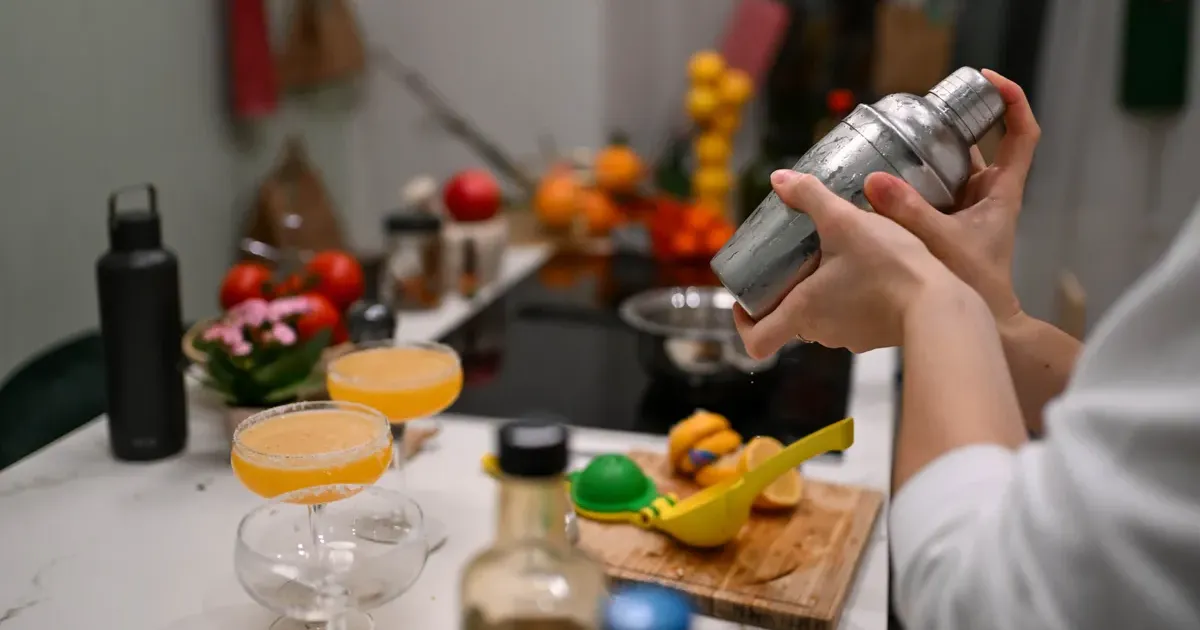
The Era of Tool Free Mixology Arrives
March 13, 2026, finds dinner party hosts across London and New York discarding the elaborate copper shakers and weighted jiggers that dominated the previous decade. Professional grade equipment once served as a gatekeeper to the world of high end spirits, yet the prestige of the home bar is shifting toward effortless execution. Hosts now prioritize the quality of the base spirit over the performance of the pour. This shift reflects a broader exhaustion with performance-based hospitality. Modern entertaining favors the intimate over the theatrical, leading to a resurgence of drinks that require only a glass, a spoon, and a steady hand. Market analysts observe a 15% decline in sales of specialty bar kits since last spring, while high-quality vermouth and artisanal bitters continue to see record growth. People want to spend time with their guests, not their strainers.
Sophistication in a glass no longer requires a degree in chemistry or a chemistry set on the sideboard. The logic of the modern drink rests on the principle of the built cocktail, where ingredients are added directly to the serving vessel. Many classic recipes began this way before the 1920s transformed bartending into a stage craft. Industry data from early 2026 indicates that home hosts are returning to these roots, favoring drinks like the Negroni or the Old Fashioned that rely on simple ratios rather than vigorous agitation. A standard coffee mug or a clean jam jar can act as a measuring device if the ratios remain consistent. Professional bartenders often argue that aeration from shaking is key for citrus-heavy drinks, but for spirit-forward classics, a gentle stir is often superior for maintaining a silky texture.
Simplicity remains the ultimate sophistication in a glass.
The Negroni and the Power of Equal Parts
Negronis represent the pinnacle of the tool-free movement because they utilize the equal parts method. Gin, sweet vermouth, and Campari are poured in identical measurements, removing the need for precision jiggers. While some enthusiasts debate the specific botanical profiles of different gins, the core structure remains indestructible. Any standard drinking glass serves as the mixing vessel. A single large ice cube, easily made in a plastic container, provides the necessary chill without the rapid dilution found in cocktail shakers. Experts at various culinary institutes note that the Negroni is virtually impossible to ruin as long as the ice is clean. It remains a staple because it honors the ingredients rather than the technique. If a host can pour three liquids into a glass, they can serve a world-class aperitif.
Highballs offer another avenue for impressive service without specialized gear. The Gin and Tonic or the Dark and Stormy depend entirely on the carbonation of the mixer and the temperature of the glass. Using a cold glass reduces the need for excessive ice and prevents the drink from becoming watery within minutes. A simple spoon can guide the pour of a carbonated mixer to preserve bubbles, a trick often used in professional settings that requires zero investment. This approach relies on the inherent balance of the ingredients. When the quality of the tonic water matches the quality of the gin, the lack of a silver-plated bar spoon becomes irrelevant. Guests notice the crispness of the lime and the chill of the glass far more than the brand of the shaker sitting unused in the kitchen cabinet.
Equipment often masks a lack of quality in the base spirit.
Economic Impacts of the Minimalist Bar
Consumer spending habits in 2026 suggest a redirection of funds from hardware to software in the beverage world. Instead of spending 200 dollars on a designer bar set, consumers are investing those funds into rare amari and small-batch bourbons. The rise of the home bar was once a pursuit of status through ownership of objects, but it has transitioned into a pursuit of flavor. Retailers report that premium bitters sales have outpaced barware sales for three consecutive quarters. This trend aligns with a wider move toward functional minimalism in domestic life. A bottle of high-quality orange bitters and a jar of Luxardo cherries do more to elevate a drink than a gold-leafed strainer ever could. The focus has returned to the sensory experience of the drink itself.
Old Fashioned recipes further prove that complexity does not require clutter. Traditionally, this drink requires muddled sugar and bitters, but many modern hosts have switched to simple syrups or even maple syrup to streamline the process. A piece of citrus peel, expressed over the surface of the drink, provides the aromatic punch that suggests professional skill. No special knives are required when a standard vegetable peeler creates a perfect swath of zest. The oil from the peel creates a visual sheen on the surface of the liquid that immediately indicates a high-quality cocktail. It is a visual cue that costs nothing and requires only seconds of effort. Such small touches bridge the gap between a casual pour and a curated experience.
Visual cues often dictate the perceived value of a drink more than the actual labor involved in its creation. A Spritz, for example, looks spectacular in a large wine glass despite being one of the easiest drinks to assemble. It follows a 3-2-1 ratio: three parts prosecco, two parts bitter liqueur, and one part soda water. No shaking is involved because the bubbles do the mixing for the host. Using a wine glass eliminates the need for specific cocktail glassware, further reducing the physical footprint of the home bar. It logic applies to the most complex of palates. When a host presents a vibrant orange Spritz with a green olive or an orange slice, the guest perceives a level of effort that belies the simplicity of the assembly.
The Elite Tribune Perspective
Why did we ever allow the barware industry to convince us that a drink is only as good as the steel used to stir it? For years, the mixology movement has functioned as a massive marketing campaign designed to sell heavy copper objects and specialized ice molds to people who just wanted a decent drink after work. The fetishization of the 'craft' became a barrier to entry, turning a simple social lubricant into a stressful technical exam. We should celebrate the death of the home bar kit. It was always a cluttered monument to insecurity. A true host understands that a guest wants a cold drink and a warm conversation, not a ten-minute lecture on the proper torque of a bar spoon. If your cocktail requires more than three tools to produce, you aren't hosting a party; you are running a laboratory. The future of home entertaining is found in the return to the built drink, where the glass in your hand is the only equipment that matters. Let the professional bartenders keep their smoke guns and their liquid nitrogen. At home, the only thing that should be 'shaken' is the host's commitment to unnecessary complexity.