Home kitchen technology and specialized pantry products are testing whether convenience can deliver authentic flavor without professional training. Vanessa Pham and Kim Pham redefined the boundaries of domestic culinary production on April 21, 2026, through a synthesis of high-performance hardware and specialized pantry assets. Modern households now demand professional-grade results without the required decade of professional training. Omsom, an AAPI women-owned enterprise, and Cuisinart, a Connecticut-based kitchen giant, satisfy this craving through disparate but complementary paths. While one focuses on the mechanical precision of frozen desserts, the other simplifies the complex chemistry of regional Asian sauces. Consumer spending patterns indicate a move away from generic convenience toward specific, high-fidelity experiences at home.
Cuisinart ICE-100 Simplifies Professional Frozen Dessert Production
Engineering advancements in the ICE-100 model eliminate the biggest barrier to entry for amateur confectioners: the pre-freezing requirement. Internal compressor technology allows the machine to reach sub-zero temperatures independently. Previous iterations of home ice cream makers relied on gel-filled bowls that required 24 hours of freezer residence. Testing data shows the unit completes a full cycle of ice cream or gelato in under 60 minutes. Users simply pour a base into the mixing chamber and engage the power switch. The stainless steel housing measures 16.7 inches deep and fits beneath standard cabinetry.
Functionally, the appliance includes two distinct kneading paddles designed for specific aeration levels. The ice cream paddle incorporates more air to produce a lighter texture, whereas the gelato paddle maintains a denser consistency. This mechanical distinction mirrors the structural differences found in commercial gelaterias. Transparent lids allow for the addition of mix-ins like chocolate chips or fruit preserves during the final stages of the churning process. Cuisinart provides a three-year warranty to support the long-term durability of the internal motor and cooling system.
Hardware alone cannot define the modern kitchen experience.
Labor-intensive manual methods, such as crank-driven churners or ice cream balls that require physical rolling, have largely migrated to the novelty market. These older systems demand substantial physical exertion and offer inconsistent temperature control. Stand mixer attachments provide a middle ground but still occupy valuable freezer space and lack an independent cooling source. High-end compressor models like the ICE-100 represent the professionalization of the countertop. Reliability in temperature maintenance ensures that the crystal structure of the frozen treat remains small, preventing the gritty texture common in slower freezing methods.
Omsom Starters Bridge the Gap in Asian Pantry Accessibility
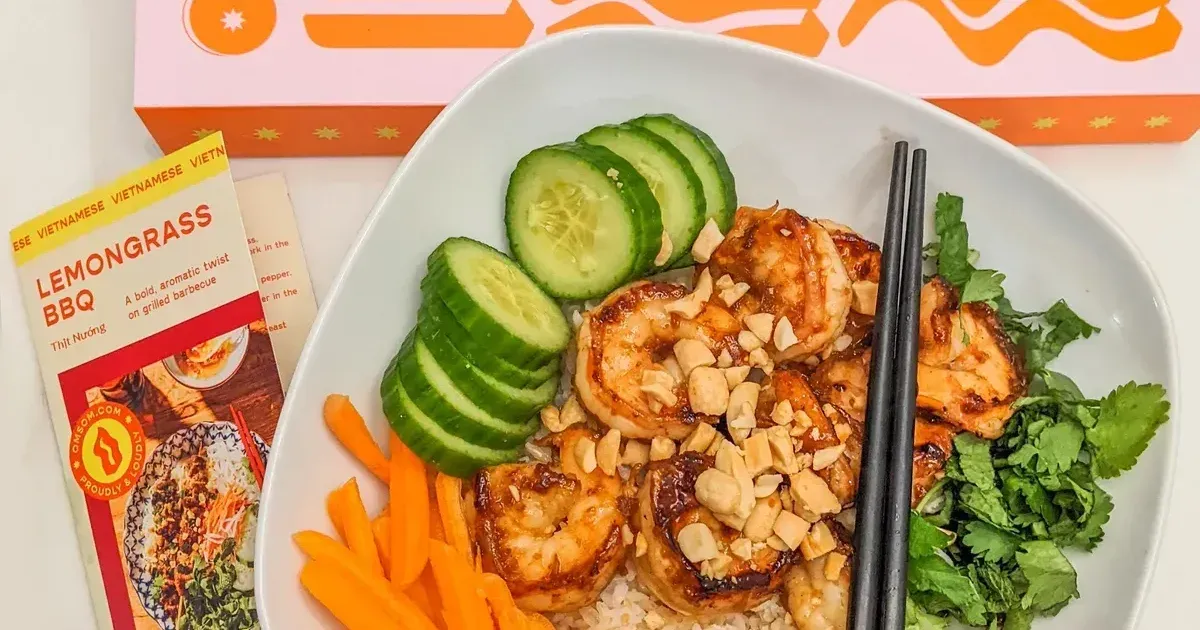
Pantry logistics often prevent home cooks from attempting authentic regional dishes. Vanessa Pham and her sister Kim Pham addressed this friction point by condensing complex aromatics into single-meal sauce packets. Their company, Omsom, derives its name from a Vietnamese term for rambunctious or noisy behavior. This branding reflects a refusal to dilute flavors for a Western palate. The sisters collaborated with award-winning chefs to develop profiles for Filipino sisig, Thai larb, and Vietnamese lemongrass BBQ. Each packet functions as a "starter" that contains all necessary oils, aromatics, and seasonings for a specific dish.
“Omsom actually means rambunctious, riotous, raucous and noisy in their native Vietnamese, and they’re applying that swagger to kitchens across America in a loud campaign for appreciation of Asian culinary culture and diversity.”
Navigating traditional Asian supermarkets presents a challenge for many consumers due to the overwhelming variety of specialized sauces and extracts. Small differences in label descriptions often hide large variances in acidity or salt content. Omsom reduces this confusion by offering bundles like the East Asian Sampler and the Southeast Asian Sampler. These kits allow users to produce restaurant-quality meals in less than thirty minutes. The $55 Omsom Bundle provides a thorough entry point for those looking to expand their culinary range without purchasing dozens of individual jars.
Chefs involved in the development process ensure that the profiles remain true to their cultural origins. Ingredients like fish sauce, calamansi puree, and bird's eye chilies are sourced to maintain specific flavor benchmarks. This precision contrasts with the generic "stir-fry" sauces found in most grocery chains. The packets eliminate the need for peeling ginger, crushing garlic, or balancing sugar and salt ratios manually. By shifting the labor from preparation to assembly, the brand targets a demographic that values time as highly as taste.
Market Convergence of High-Tech Appliances and Direct-to-Consumer Goods
Consumer behavior in 2026 suggests a permanent shift toward specialized home production. Subscription models for high-quality ingredients now pair frequently with one-time investments in durable kitchen hardware. Economically, the cost of a high-end ice cream maker amortizes over a few dozen uses when compared to the price of premium pints. Simultaneously, the rise of chef-vetted pantry shortcuts reduces the financial risk of attempting new cuisines. Families are increasingly treating their kitchens as laboratories for exploration rather than simple utility spaces for sustenance.
Logistical improvements in shipping have allowed companies like Omsom to reach national audiences without the need for placement in every physical retail chain. Direct-to-consumer models provide higher margins that can be reinvested into ingredient quality. Similarly, Cuisinart leverages its legacy of engineering to maintain dominance in the appliance sector. The integration of these two trends creates a feedback loop where better tools inspire the use of better ingredients. The cooperation drives the growth of the "prosumer" kitchen segment across North America and Europe.
Kitchen Brands Chase Repeat Buyers
Luxury is no longer defined by the presence of a professional chef but by the absence of the amateur's struggle. The market for high-end kitchen gadgets and hyper-authentic pantry staples is cannibalizing the middle-tier casual dining sector. Why should a consumer settle for a mediocre, westernized pad thai at a local chain when they can produce a chef-vetted, restaurant-quality version in twenty minutes? The shift extends beyond convenience; it is about the democratization of culinary expertise through chemistry and engineering. Companies like Omsom and Cuisinart are selling more than products; they are selling the eradication of failure in the kitchen.
Will this reliance on pre-mixed perfection erode the fundamental skills of the next generation of cooks? Perhaps. But the market rarely rewards difficulty for difficulty's sake. The demand for frictionless authenticity will continue to drive hardware innovation. We are entering an era where the countertop is the new Michelin-starred venue. The traditional supermarket shelf, filled with generic sauces and manual tools, is a relic of a less discerning past. In the hierarchy of the modern home, results outweigh process every single time. Efficiency is the ultimate ingredient. Gourmet or bust.