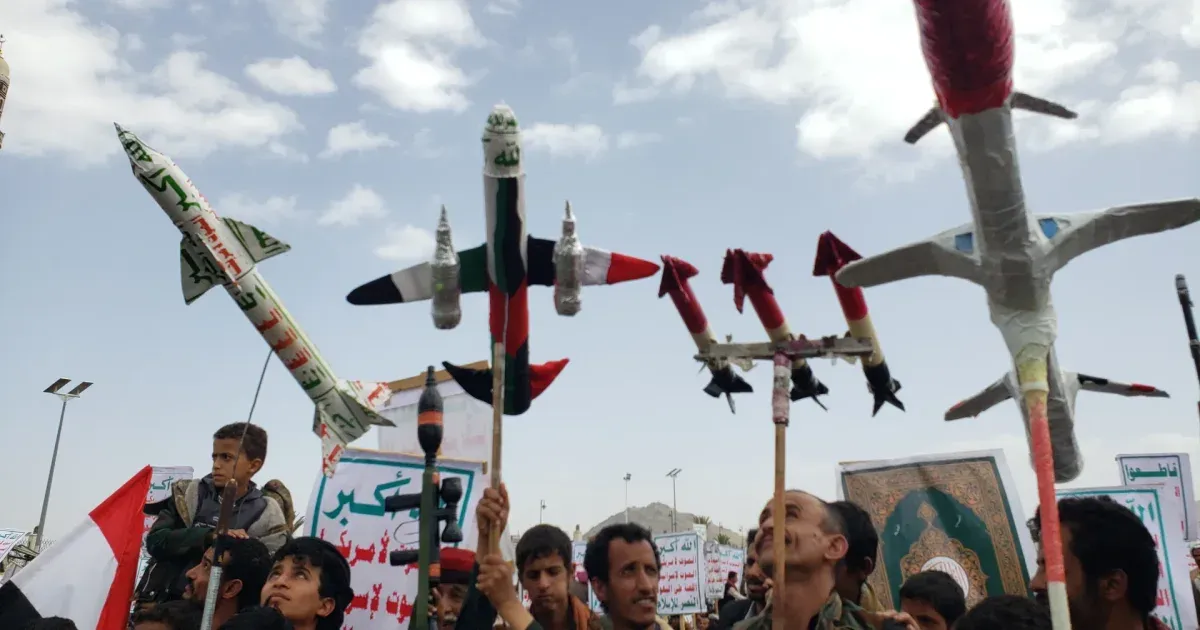
Sanaa-based Houthi forces launched fresh operations in the Red Sea on March 29, 2026, marking a meaningful expansion of their regional military engagement. Maritime security firms recorded several projectiles fired from Yemeni territory toward international shipping lanes. Attacks have moved beyond local skirmishes to target vessels associated with Israel and its primary allies. Military analysts describe this expansion as a direct attempt to leverage Yemen's geography against global supply chains. Missile batteries stationed along the western coast of Yemen now threaten a corridor that handles approximately 12 percent of global trade. Local commanders in Sanaa confirmed their intention to continue these strikes until their regional political demands are met.

Operations began targeting Israeli interests more aggressively in recent weeks, creating a new front in the ongoing regional conflict. Military planners in Tel Aviv have redirected naval assets to the southern theater to counter long-range drone and missile threats originating from Yemen. These attacks represent the first time the Yemeni group has directly engaged in a month-long regional war that previously remained confined to the immediate borders of Israel. Rebel leaders claim they are acting in solidarity with regional partners, though Western intelligence agencies point to a broader strategy coordinated with external sponsors.

Several commercial vessels have already altered their course to avoid the Bab al-Mandeb strait entirely. Cargo ships destined for Mediterranean ports must now choose between the high-risk Red Sea transit or the lengthy journey around the Cape of Good Hope.

Bab al-Mandeb Strait and Global Energy Security

Control over the Bab al-Mandeb strait remains the primary strategic objective for the Houthi leadership. This waterway is only 20 miles wide at its narrowest point, making it a natural bottleneck for oil tankers and container ships. Blockade of the strait would prove disastrous for the global economy, according to maritime analysts tracking the situation. Roughly 4.5 million barrels of oil pass through this passage every day. Any prolonged closure would likely trigger a surge in crude prices across European and American markets. Shipping companies are already reporting serious delays in delivery schedules for consumer goods and industrial components.

"A blockade of the strait, one of the world's busiest maritime routes, would prove disastrous for global economy," stated an Al Jazeera report analysis on the escalating tensions.

Vessels attempting the passage now travel with deactivated AIS transponders to hide their locations from coastal radar stations. Some crews have started broadcasting messages declaring they have no connection to Israel in an effort to avoid being targeted. Rebel forces use a combination of low-cost suicide drones and anti-ship cruise missiles to overwhelm shipboard defenses. These tactics have proved effective against unescorted commercial hulls that lack advanced electronic warfare suites. Naval task forces led by the United States have increased patrols, but the sheer volume of traffic makes complete protection impossible. Every merchant ship is a potential target for shore-based batteries hidden in the rugged Yemeni highlands.

Yemeni Rebels Target Israel Through Maritime Corridors

Israel faces a complex challenge as the Houthi movement opens this maritime front. Eilat, the primary southern port of Israel, has seen a sharp decline in incoming vessel traffic. Port authorities there reported that several car carriers and bulkers have diverted to alternative destinations. Long-range missiles fired from Yemen have also targeted the city itself, forcing the activation of Arrow and Patriot defense systems. Military officials in Jerusalem acknowledge that the threat from the south complicates their ability to focus on other borders. This expansion of the conflict zone forces the Israeli Air Force to maintain constant surveillance over the northern Red Sea. Rebels in Sanaa have stated they will continue to disrupt any ship bound for Israeli docks. Military officials continue to monitor these long-range drone and missile threats as they intensify their focus on Eilat.

Regional stability hinges on the ability of international players to secure these waters. Cairo, which relies heavily on Suez Canal transit fees, has expressed deep concern over the drop in maritime traffic. Revenue from the canal is a foundation of the Egyptian economy and an essential source of foreign currency. If shipping lines decide the Red Sea is too dangerous for regular operations, the economic impact will ripple through North Africa and the Middle East. Diplomatic efforts to de-escalate the situation have so far failed to produce a ceasefire.

Houthi negotiators insist that their maritime campaign is a legitimate response to regional military actions. International law experts, however, argue that targeting neutral commercial shipping constitutes a violation of established maritime treaties.

Economic Fallout and Insurance Premium Surges

Insurance markets have reacted sharply to the increased risk of missile strikes in the Gulf of Aden. Underwriters at Lloyd's of London have raised war risk premiums for any vessel planning to transit the region. Some shipping companies now face additional costs reaching hundreds of thousands of dollars per voyage. These expenses are inevitably passed on to consumers, contributing to inflationary pressures in the West. Logistics giants like Maersk and Hapag-Lloyd have already suspended some services through the Suez Canal. Diverting ships around Africa adds up to 14 days to a standard transit time between Asia and Europe. Fuel consumption increases dramatically on these longer routes, further inflating the carbon footprint of global trade.

Ports in the United Kingdom and the United States are preparing for potential supply-chain disruptions. Retailers have warned that electronics, apparel, and automotive parts may face shortages if the blockade persists. Manufacturers who rely on just-in-time delivery models are particularly vulnerable to these maritime delays. Inventory levels at major distribution centers are being monitored closely by government agencies. Small businesses with thin margins are finding it difficult to absorb the sudden increase in freight rates. Markets remain volatile as traders weigh the possibility of a full-scale closure of the Bab al-Mandeb. Commodity prices for wheat and grain have also seen slight upticks due to the uncertainty surrounding Black Sea shipments that must pass through the region.

Naval Defenses Struggle Against Low-Cost Drone Tactics

Western navies find themselves in a costly war of attrition against Houthi drones. A single interceptor missile fired from a destroyer can cost upwards of $2 million. By contrast, the drones deployed by the Yemeni rebels often cost less than $20,000 to manufacture. This economic imbalance favors the insurgents, who can afford to launch dozens of attacks for every successful intercept. Military planners are now looking for cheaper alternatives, such as laser-directed energy weapons or high-capacity gun systems. Maintaining a constant naval presence in the Red Sea also strains the operational readiness of aging fleets.

Crews must remain on high alert for weeks at a time, watching for small boats and airborne threats. The psychological toll on sailors is a factor that commanders are beginning to address in their strategic planning.

Sanaa continues to refine its targeting capabilities using commercially available satellite imagery and intelligence. Rebel forces have shown a surprising ability to identify ships with specific corporate ties. The level of sophistication suggests a high degree of technical training and external support. International monitors have documented the transport of advanced components into Yemen through clandestine routes. Despite years of blockade and internal strife, the Houthi military apparatus appears more capable than ever. Their ability to project power hundreds of miles from their coastline has fundamentally altered the security equation in the Middle East. No easy solution exists for a conflict that blends ancient regional grievances with modern missile technology.

The Elite Tribune Strategic Analysis

Can a non-state actor with a fraction of the budget of a modern navy successfully hold the global economy hostage? The ongoing crisis in the Red Sea suggests the answer is a decisive yes. The picture emerging is a total collapse of traditional maritime deterrence. For decades, the United States and its allies assumed that the mere presence of a carrier strike group would keep trade lanes open. That assumption has been shattered by cheap, expendable drones and a rebel force that does not fear conventional retaliation.

The West is currently spending millions of dollars in munitions to shoot down thousands of dollars in plastic and lawnmower engines. It is not just a tactical problem; it is a systemic failure of military economics.

Washington and Brussels are terrified of a real escalation, fearing that a direct strike on Houthi infrastructure will spark a broader regional fire. The hesitation is interpreted as weakness in Sanaa and Tehran. While diplomats talk about de-escalation, the shipping industry is voting with its feet by abandoning the Suez Canal. Egypt is the silent victim here, watching its primary revenue stream vanish while the international community offers nothing but hollow statements. The world is witnessing the birth of a new period of asymmetric naval warfare where geography and persistence outweigh technological superiority.

Global trade is now at the mercy of a mountain-dwelling insurgency with a very long memory. Expect higher prices at the pump and the grocery store. The era of cheap, safe shipping is over.