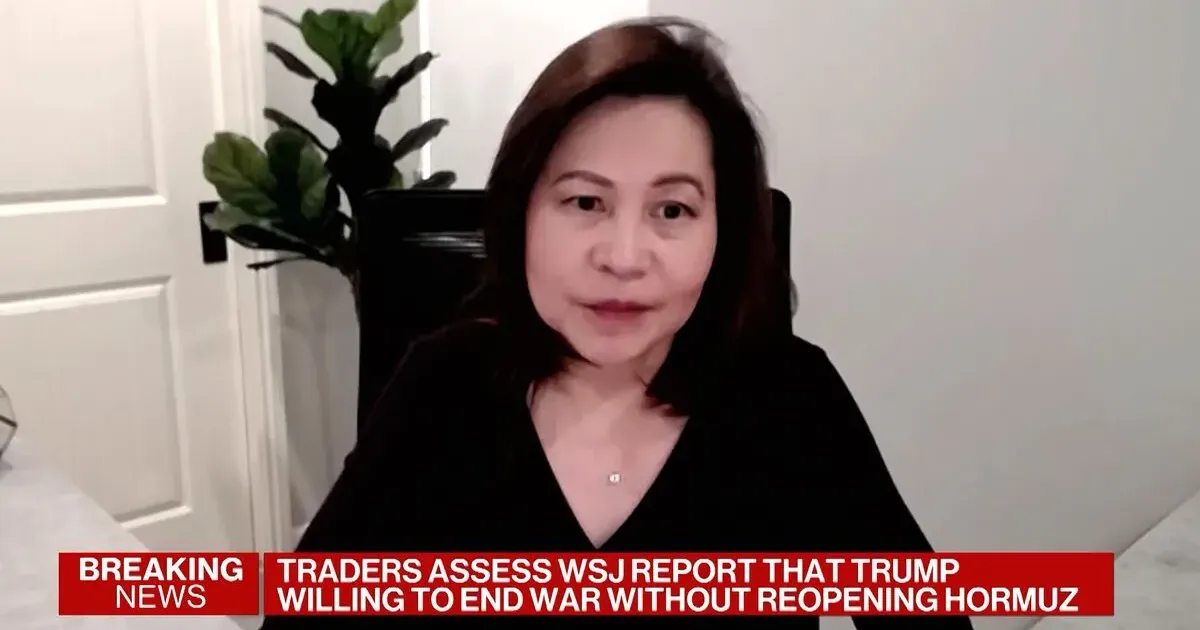
Dina Ting, Head of Global Index Portfolio Management at Franklin Templeton, revealed that an large $12 trillion in market capitalization vanished from global benchmarks during the last thirty days. This severe reduction in equity value constitutes the single largest month of capital destruction in the history of modern finance. Energy markets and shipping disruptions originating from the Iran conflict continue to destabilize traditional valuation models. The Investors Rethink Strategies After $12 Trillion Wipeout report carried a March 31, 2026 time marker for readers following the latest account. Investors across London and New York are now struggling to reconcile these losses with previous growth projections for the fiscal year.
Equity benchmarks throughout Asia and Europe plummeted throughout the month as the intensity of the geopolitical crisis increased. Data provided by Bloomberg indicate that the speed of the sell-off surpassed the initial weeks of the 2008 financial crisis. High-frequency trading algorithms accelerated the decline by triggering automated stop-loss orders across major exchange-traded funds. Market participants now face an environment where traditional safe havens offer limited protection against systemic shocks. The scale of the capital flight has overwhelmed domestic recovery efforts in several emerging economies.
Franklin Templeton Identifies Manic Market Patterns
Ting described the current trading environment as manic during an appearance on the Bloomberg China shows. High volatility levels have detached stock prices from their underlying fundamental values. Corporate earnings reports, while often exceeding expectations, have failed to provide a floor for falling share prices. Sentiment has shifted from cautious optimism to a defensive posture focused on capital preservation. Large institutional funds are liquidating positions in highly leveraged sectors to meet margin requirements. Cash positions among top-tier wealth managers have reached a ten-year peak.
“Diversification is the key to navigating this manic period,” Ting said.
Index management strategies are undergoing rapid recalibration to account for the heightened risk profiles of international assets. Managers at Franklin Templeton are prioritizing liquidity over speculative gains during this period of extreme flux. The concentration of losses in technology and energy sectors has forced a broader reevaluation of growth-oriented portfolios. Many firms are shifting toward defensive clusters that have historically resisted inflationary pressures. Total market capitalization across the S&P 500 and the MSCI World Index reflects a persistent downward trend that shows no signs of immediate reversal.
Global Benchmarks Sustain Unmatched Capital Losses
Regional indices in the Middle East have experienced the most direct impact from the localized conflict. Sovereign wealth funds have stepped in to stabilize local exchanges, yet the outflow of foreign capital persists. Trading volumes in Riyadh and Dubai have spiked as international investors withdraw to more familiar jurisdictions. Despite these interventions, the wider effects have reached the FTSE 100 and the DAX, where industrial firms face rising input costs. Supply-chain delays are now priced into the valuations of manufacturing giants across the continent. The ongoing Iran conflict has triggered notable turmoil, causing systemic portfolio losses and weakened demand for Treasuries.
Capital destruction on this scale alters the long-term trajectory of retirement funds and pension schemes. Publicly traded companies have seen billions of dollars in valuation evaporate in single trading sessions. The volatility index has remained above its long-term average for twenty-two consecutive days. Retail investors are increasingly skeptical of the buy-the-dip mentality that characterized the previous decade. Market analysts at major investment banks are slashing their year-end targets for the third time this quarter. One-day swings of three percent or more have become the new standard for global equity markets.
Diversification Strategies Reduce Geopolitical Volatility
Spreading assets across uncorrelated classes stays the primary recommendation for institutional clients. Ting suggests that a reliance on a single geographic region or sector is a recipe for severe failure in the current climate. Multi-asset funds are seeing renewed interest as investors look to hedge against equity-specific risks. Gold and short-term government debt have attracted notable inflows, though their yields remain under pressure. Institutional frameworks are moving away from the 60/40 portfolio model in favor of more complex, risk-parity structures. These models seek to balance the impact of sudden geopolitical shifts.
Portfolio rebalancing must happen more frequently to keep pace with the changing risk environment. Static strategies are failing to protect against the sharp, sudden reversals seen in recent weeks. Fund managers are using sophisticated derivatives to protect their downside while maintaining exposure to potential recovery. The cost of these hedging strategies has risen sharply as demand for protection increases. Risk management departments are now operating on twenty-four-hour cycles to monitor developments in the Middle East. Every uptick in regional tension triggers an immediate reaction in the futures markets. The loss also changes how institutions think about diversification. Cash, energy exposure and short-duration government debt suddenly look less defensive than they did before shipping lanes and oil benchmarks moved together.
Franklin Templeton’s warning matters because index investors cannot simply leave the market without abandoning their mandate. They have to rebalance inside the storm rather than wait for calm.
The month-long drawdown also exposed the limits of passive allocation during geopolitical shocks. A portfolio that looked diversified by region can still be concentrated in the same energy and transport assumptions.
Risk committees are now asking whether the Iran conflict is a temporary volatility event or the start of a more expensive trading regime. The size of the drawdown also forces a different conversation about liquidity. Investors can tolerate volatility when buyers remain available, but a synchronized rush for exits changes the practical meaning of portfolio protection.
Pension funds and sovereign investors are now reviewing whether monthly rebalancing rules are too slow for a shock driven by war, oil and shipping routes. The harder question is governance: boards that approve allocations quarterly may be unable to respond when liquidity, freight costs and energy exposure all move before the next scheduled meeting.
That constraint makes communication as important as allocation. Investors need to know which risks are being accepted deliberately and which ones are being reduced before another round of forced selling appears.
Portfolio Stress Response
The next pressure point is whether investors reduce risk gradually or wait for another forced selloff. Portfolios exposed to expensive growth stocks, long-duration bonds and crowded trades remain vulnerable if liquidity tightens again.