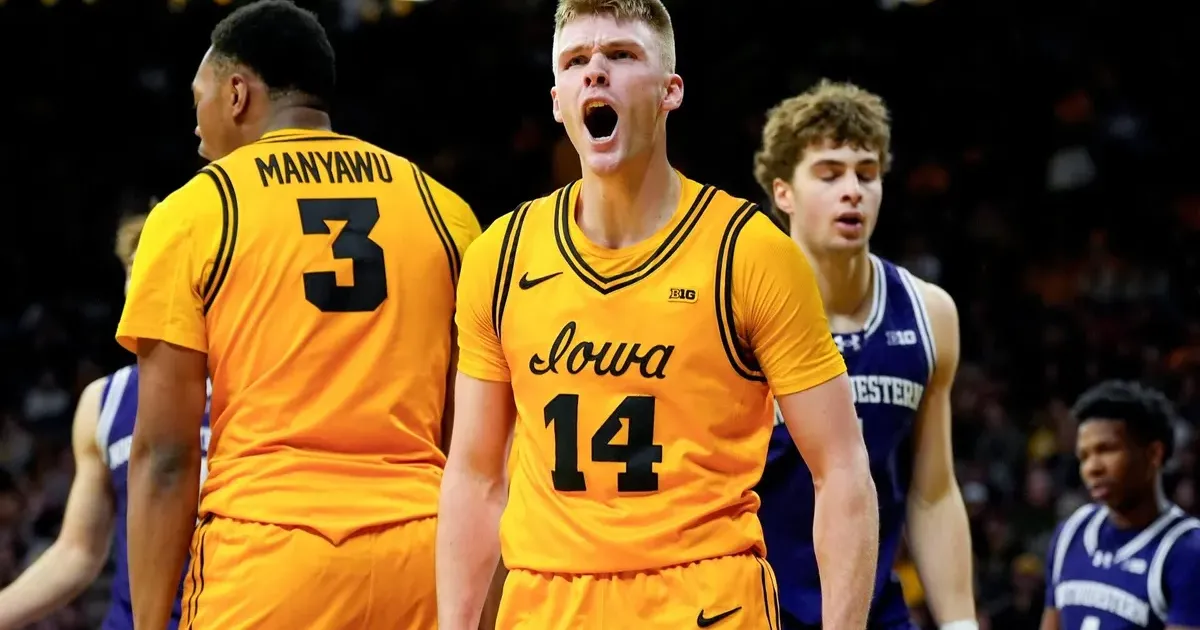
Iowa and Illinois meet to determine which program secures a spot in the Final Four. The matchup gives both programs a business and basketball test at the same time. The update came on March 28, 2026. Expectations for the contest have reached a peak after both teams managed the pressure of the opening week in the NCAA Tournament. Pressure mounts for the coaching staffs because the regional final stage often defines the entire legacy of a collegiate season. Victory on this stage provides a direct path to the national semi-finals in a year where parity has defined the bracket.
Bob Konarski, a recognized analyst from SportsLine, enters the weekend with a striking 44-28 record on college basketball picks. Data models suggest a narrow margin between these two Big Ten rivals. Illinois relies on a high-octane offense that pushed them through the Sweet 16 with double-digit victories. Iowa counters with a disciplined defensive scheme that frustrated opponents throughout the early rounds. The point spread indicates a possession-by-possession battle that will likely be decided in the final two minutes of regulation.
Iowa and Illinois Rivalry Intensifies
Illinois brings a roster featuring several seniors who have played together for three consecutive seasons. Chemistry appears to be their primary advantage when the shot clock winds down. Statistics from the regular season show that Illinois leads the conference in points per possession during transition play. Stopping that momentum requires Iowa to limit turnovers and control the defensive glass. Hawkeye forwards must avoid early foul trouble to keep their defensive rotation intact against a physical Illini frontcourt. Iowa relies on the scoring prowess of Bennett Stirtz to anchor their half-court sets. Stirtz has averaged over twenty points per game during the tournament and remains a threat from beyond the perimeter. Doubling the post has been a common strategy for opponents, yet Iowa has consistently found open shooters on the weak side. Efficiency from the free-throw line will likely play a role if the game remains tight in the closing minutes. Illinois has struggled with perimeter defense in previous rounds, giving Iowa a potential opening to exploit.
SportsLine's expert Bob Konarski reveals his Iowa Hawkeyes vs. Illinois Fighting Illini NCAA Tournament Elite 8 2026 picks for Saturday.
Arizona Confronts Purdue in Physical Battle
Arizona enters the other half of the Saturday bracket with a focus on speed and transition scoring. Their athleticism presents a unique challenge for a Purdue team built around interior size and rebounding dominance. West Coast basketball often emphasizes floor spacing, while the Big Ten style favors attrition in the paint. Purdue has used its height advantage to lead the nation in second-chance points during the 2025-2026 season. Arizona must find a way to negate that size without sacrificing their ability to run the floor.
Purdue guards have improved their ball-handling under pressure, which was a weakness in previous tournament appearances. Transitioning from a post-centric offense to a more balanced attack has made them harder to scout. Arizona defenders will need to stay disciplined on pump fakes to avoid giving up easy trips to the charity stripe. Foul management is a critical factor for the Wildcats, as their bench depth is thinner than the Boilermakers' rotation. One or two early whistles against Arizona starters could shift the tactical balance of the entire game. Television executives expect the Arizona and Purdue matchup to draw one of the largest audiences of the tournament. The clash of styles provides a narrative that appeals to casual viewers and hardcore analysts alike. Arizona head coaches have historically prioritized recruiting international talent, resulting in a diverse roster with multiple ball-handlers. Purdue maintains a more traditional recruiting base but has integrated modern analytics to optimize their shot selection. Neither team has reached the Final Four in several years, adding another layer of tension to the proceedings.
Bob Konarski Analyzes Saturday Betting Lines
Betting markets have seen heavy action on the over-under totals for both Saturday games. Bob Konarski notes that the historical trend for Elite Eight games favors lower-scoring affairs due to the immense pressure on the shooters. Tired legs after three weeks of travel and high-intensity play often result in a lower shooting percentage from the arc. Professional gamblers are closely watching the injury reports for any late changes to the starting lineups. Illinois reported a minor ankle tweak for one of their starting guards, though team officials expect him to play.
SportsLine models integrate thousands of data points, including travel distance and historical performance under specific officiating crews. Konarski has highlighted the importance of bench scoring in his latest report. If the starters for Iowa or Arizona get into early foul trouble, the depth of the reserves will be tested immediately. Illinois has a bench that contributes an average of fifteen points per game, which could be the deciding factor in a close contest. Purdue also boasts a deep rotation that allows their primary scorers to rest during the middle of each half.
Analysis of recent trends shows that teams with a higher free-throw attempt rate tend to advance in the regional finals. Officials tend to call the games tighter when a trip to the Final Four is at stake. Players who can draw contact and get to the line provide their teams with easy points while the clock is stopped. Illinois have shown a proficiency for this, often attacking the rim rather than settling for contested jumpers. Iowa must stay vertical and avoid reaching if they hope to keep the Illini away from the stripe.
Broadcasting rights for the 2026 tournament are split between CBS Sports and Turner Sports. Saturday coverage begins in the early afternoon with pre-game analysis from the New York studios. Games will be aired across TBS, TNT, and truTV to ensure that every minute of action is available to a national audience. Streaming services have also prepared for high traffic volumes by upgrading their server capacities. Viewers in the United Kingdom can follow the action through dedicated sports channels that pick up the American feed.
Tip times are staggered to allow fans to watch the conclusion of the first game before the second one begins. This scheduling maximizes advertising revenue and ensures that the strongest moments do not overlap. $1.1 billion in annual revenue is generated by this tournament, with a meaningful portion coming from these high-stakes weekend broadcasts. Corporate sponsors have bought out every available slot, featuring new campaigns designed specifically for the March Madness audience. The economic impact on the host cities is equally major, with hotels and restaurants reporting full capacity.
Tournament Business Pressure
The Elite Eight exposes the contradiction at the center of college basketball. Iowa and Illinois have spent four months building serious teams, yet the season now turns on a few possessions inside a broadcast product worth more than $1 billion a year.
That pressure is the business model. Arizona and Purdue will play under the same bargain: players carry the emotional weight, coaches carry the employment risk, and television partners collect the certainty that a one-game knockout can still command a national audience.