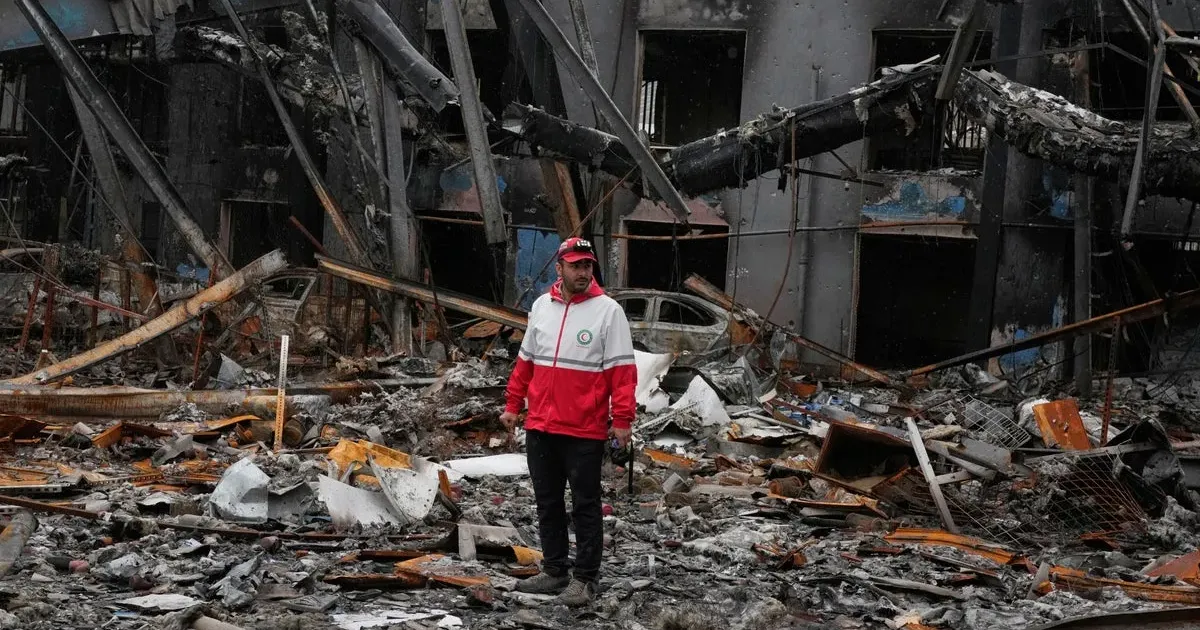
Iranian strikes on Saudi and Kuwaiti targets widened the regional war and put US personnel and Gulf infrastructure under direct pressure. The most serious immediate report came from Saudi Arabia, where an Iranian attack on Prince Sultan Air Base injured at least 15 US troops.
The strikes showed how quickly the conflict could spread beyond direct US-Iran exchanges. Bases, ports, airports and air-defense sites across the Gulf are now part of the same battlefield, even when local governments try to limit public details about damage and casualties.
For Washington, the problem is strategic as much as tactical. The United States can reinforce the region, but every additional base, radar site and logistics hub becomes another target in Iran's effort to raise the cost of American presence.
Saudi Base Attack Injures US Troops
The attack on the Saudi airbase undercut the assumption that US facilities in the Gulf can operate behind a reliable defensive shield. Iranian missiles and drones do not need to destroy a base outright to change military calculations. Injuries, runway disruption, damaged hangars and pressure on air-defense crews are enough to alter tempo.
Prince Sultan Air Base has long mattered to US regional operations because of its role in surveillance, air defense and force projection. A successful or partially successful strike there sends a message to every host government: partnership with Washington now carries visible local risk.
That is the coercive logic behind the attack. Tehran does not have to defeat the US military in a conventional contest. It can try to make the regional footprint more expensive, more politically controversial and harder for Gulf partners to justify.
Kuwait Infrastructure Adds A Second Front
Kuwait has also faced Iranian missile and drone pressure during the war, including attacks on transport and port infrastructure. Local reports described material damage in some strikes, while Iranian claims have often been more expansive than independently confirmed accounts.
That gap matters. Iranian state media has an incentive to exaggerate battlefield success, while Gulf governments have an incentive to contain panic. The responsible reading is that Kuwait's infrastructure is under real pressure, but the details of damage and casualties require caution.
Ports and airports are especially vulnerable because they sit at the intersection of military logistics and civilian commerce. A strike that damages radar, fuel storage, docks or loading infrastructure can slow commerce even if it does not produce dramatic casualties.
Houthi Fire Links Israel To The Gulf Fight
The conflict widened further when Houthi forces in Yemen fired toward Israel. Israeli defenses intercepted the projectile, and no casualties were reported, but the launch mattered because it tied Yemen more directly into the regional fire pattern.
The Houthis had already used missiles and drones to pressure shipping and regional adversaries. Firing toward Israel during the Iran war signaled alignment with Tehran's broader strategy of stretching air-defense systems across multiple fronts.
That creates a numbers problem for US and allied planners. Every missile or drone may be cheaper than the interceptor used against it. Over time, the economics of defense become part of the battlefield.
Regional Presence Becomes A Liability Test
The hard question for the United States is whether its Gulf presence still deters more than it attracts. Bases in Saudi Arabia, Kuwait, Bahrain, Qatar and elsewhere remain central to US power projection. They are also fixed targets in a missile and drone war.
Iran's strategy appears designed to exploit that contradiction. By hitting or threatening facilities tied to US operations, Tehran can pressure host governments while forcing Washington to spend heavily on defense, reinforcement and repair.
The old psychological shield around Western bases is weaker than it used to be. If Iranian missiles can injure US troops in Saudi Arabia and disrupt infrastructure in Kuwait, the region's security architecture looks less like a fortress and more like a web of exposed nodes. That does not end American power in the Gulf, but it makes every day of presence more expensive.