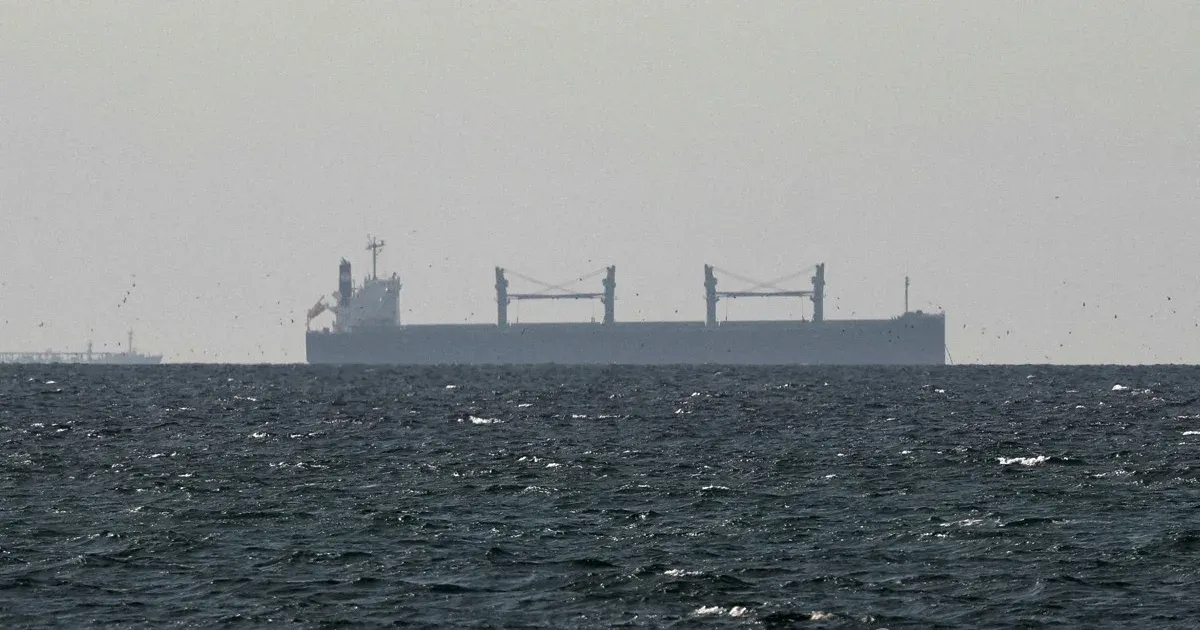
The fight over charging ships in the Strait of Hormuz has turned maritime law into an energy-market weapon. Iran's claim that it can control or charge passage was already enough to unsettle shippers. President Donald Trump's brief 20 percent cargo-fee proposal made the problem more unstable by blurring the U.S. message on freedom of navigation.
The issue is not only whether any toll would survive legal scrutiny. It is whether shipowners, insurers, refiners and import-dependent governments believe the world's most important energy chokepoint is becoming less predictable. In Hormuz, that belief can move prices before a single tanker is stopped.
The Toll Idea Changed the Signal
Iran had argued that security, sovereignty and postwar conditions justified some form of charge or control over passage. Washington had traditionally opposed such a claim, treating open transit through international straits as a core maritime principle.
Trump's short-lived proposal to charge cargoes for U.S. protection complicated that position. Even after he backed away and pointed instead to Gulf investment discussions, the damage to the signal remained. If the United States rejects Iranian tolls while floating its own fee, every future argument over Hormuz becomes easier for Tehran to muddy.
Law and Pricing Now Move Together
International shipping depends on predictable transit rights. Lawyers can debate sovereignty, customary law, UNCLOS principles and the rights of coastal states. Markets operate faster. If insurers think a ship could be delayed, challenged, billed, seized or caught in military escalation, premiums move.
A toll proposal therefore matters even if it is never enforced. It tells the market that passage is becoming negotiable. Negotiable passage is more expensive than routine passage, and the cost travels quickly into crude, freight, airline fuel, petrochemicals and inflation expectations.
Hormuz Does Not Need to Close
The strait does not have to shut completely to hurt importers. A partial slowdown, a paperwork dispute, a disputed escort system, a warning shot or a denial of insurance can all reduce effective capacity. Shipping is built on schedules. Refining is built on expected arrivals. A chokepoint that becomes uncertain forces companies to buy protection, reroute, delay cargoes or pay more for replacement barrels.
Administrative pressure gives both Iran and Washington leverage short of a formal closure. It also creates danger. Administrative pressure can escalate in ways that look less dramatic than a missile strike but still produce the same market fear.
Importers Have Few Clean Alternatives
China, India, Japan, South Korea and European buyers all have exposure to Gulf flows. Pipelines can reduce some risk, and producers can shift some cargoes, but there is no easy substitute for Hormuz at full scale. The strait handles a huge share of globally traded oil and liquefied natural gas, so even limited disruption travels well beyond the Gulf.
Longer routes tie up tankers. Higher insurance costs reach cargo owners. Refiners that depend on particular crude grades cannot always swap barrels quickly. Airlines and shipping firms then absorb fuel pressure or pass it through to customers.
The Precedent Is the Prize
For Iran, a successful fee would convert geography into recurring leverage. For the United States, a protection fee was framed as cost recovery for security. For the market, both versions raise the same question: if great powers or coastal states can charge for passage through an international chokepoint, what prevents the next crisis from becoming another invoice?
The precedent would reach beyond Hormuz. It would weaken the assumption that strategic waterways remain open under shared rules even during political crises. Once confidence in shared rules weakens, every cargo contract carries more politics inside it.
The Invoice Is Really for Fear
The Hormuz fee fight is dangerous because it dresses coercion in administrative language. A toll sounds bureaucratic. In this context, it is a pressure tool aimed at the arteries of the oil market.
The answer cannot be outrage alone. Importers, naval powers and Gulf states need a clear legal position, credible routing and escort plans, insurance coordination and a diplomatic path that does not reward every new demand. Otherwise Hormuz stops functioning as a shipping lane under predictable rules and becomes a recurring bill for geopolitical fear.