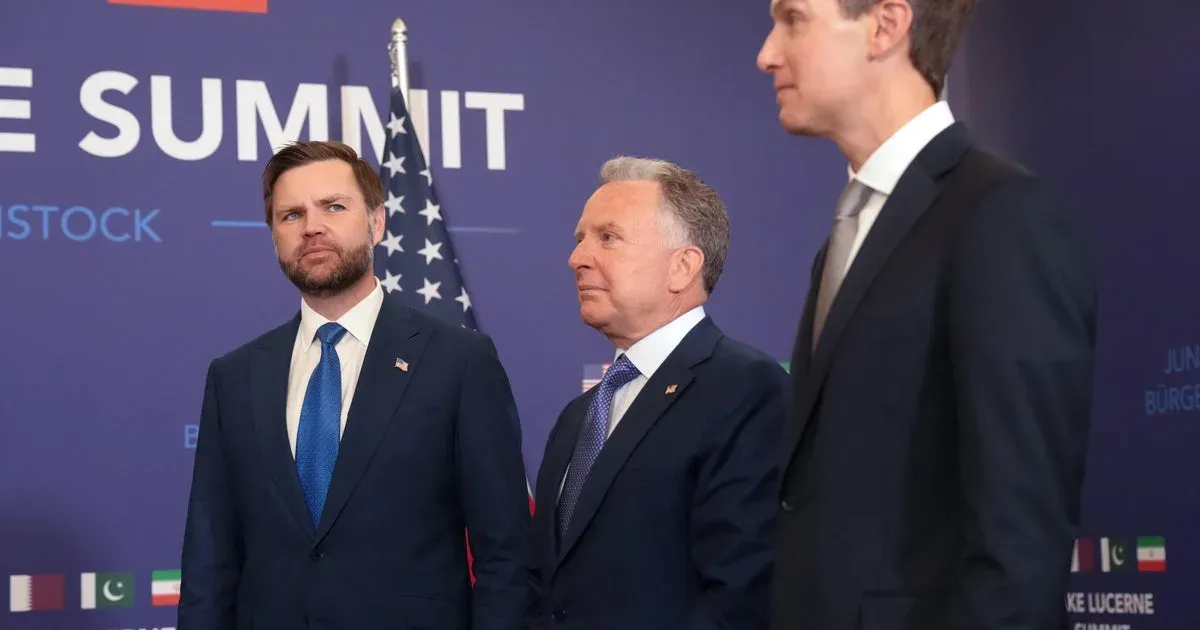
U.S. and Iranian negotiators have opened a narrow diplomatic lane by putting nuclear inspections back at the center of their first high-level talks in Switzerland. The opening is narrow, but it gives negotiators a concrete verification item before the harder sanctions and regional-security disputes return.
Vice President JD Vance said on June 22, 2026, that Tehran had agreed to allow International Atomic Energy Agency inspectors back into the country, a step Washington had treated as an early test of whether the talks could produce more than a temporary pause in tensions.
The announcement does not settle the hardest issues. It does, however, give both sides a measurable first benchmark after months in which nuclear access, oil sanctions, regional attacks and Lebanon deconfliction had been tied together in a single, unstable negotiation.
Inspection Access Becomes the First Test
The practical question is not only whether inspectors return, but where they are allowed to go and how quickly they can resume meaningful work. Axios reported that the talks followed the breakdown of inspections after the 2025 war, when Iranian cooperation with the IAEA had stopped and several sensitive sites became central to the dispute.
IAEA access matters because it turns broad diplomatic language into something that can be checked. Without inspectors, outside governments are left to rely on intelligence estimates, satellite imagery and political assurances. With inspectors, even limited access creates a record that negotiators can use to test compliance.
The hardest part will be matching the political announcement to inspection mechanics. Inspectors need entry permissions, security guarantees, travel routes, sampling rights and a process for resolving disputes when a site is delayed or narrowed. Each of those details can become a separate argument if the framework is not written tightly.
CBS News reported that Vance framed the inspection opening as one of the most important outcomes of the Switzerland round. The tone was deliberately cautious: progress was presented as real, but not final, and technical teams were expected to keep working after the senior delegations left.
Sanctions and Regional Security Stay Linked
The inspection issue is moving alongside sanctions relief and regional ceasefire questions. The Guardian reported that the talks involved mediators from Qatar and Pakistan, with discussions also touching on Lebanon and oil restrictions.
That linkage gives the process leverage but also makes it fragile. If Iran sees inspection access as disconnected from sanctions relief, it may slow implementation. If Washington sees inspections as too narrow or delayed, it may treat the opening as tactical rather than substantive.
Oil sanctions add another timing problem. A waiver or partial license can create immediate economic relief, while nuclear verification usually moves more slowly. That mismatch can produce political pressure in Washington if critics argue that Tehran is receiving benefits before inspectors have produced enough evidence.
Switzerland talks therefore become less a breakthrough than a sequencing problem. Inspectors, sanctions waivers, oil sales, frozen assets and Lebanon deconfliction all create separate deadlines. A failure in one lane could spill into the others before negotiators can lock down a broader deal.
Why the Opening Is Still Fragile
The immediate diplomatic value is that both sides now have a concrete next step. Inspectors can return, technical teams can define access, and mediators can test whether the 60-day process has enough structure to survive domestic and regional pressure.
The next documents will matter more than the press conference. A credible framework has to define which sites are covered, how disputes are escalated and what happens if inspectors report incomplete access. Without that detail, each side can claim progress while preserving a different interpretation of the same promise.
The risk is that an inspection announcement creates expectations faster than the parties can meet them. Iran can point to sovereignty and security concerns; the United States can point to verification and congressional pressure; regional actors can try to shape the process through Lebanon, oil markets or military signaling.
For the IAEA, the return would also be institutional. The agency has to show that it can re-establish monitoring without becoming a prop in a political ceremony. Its reports, even if technical, will quickly become the evidence base for sanctions decisions, allied consultations and any future claim that Iran is either complying or obstructing.
Allied governments will also watch whether the inspection track reduces military risk. Verification does not automatically settle Lebanon, oil flows or regional missile pressure, but it can lower the chance that every intelligence dispute becomes a trigger for escalation.
The inspection track is also a credibility test for Vance's diplomacy. If the United States can show that a narrow verification demand produced a real Iranian concession, it gains leverage for the next round. If the access proves symbolic, critics will argue that Tehran used the talks to buy time. That is why the next phase will be judged less by the language of the announcement than by the first inspection schedule. If inspectors enter quickly and receive credible access, the talks gain a working floor. If access becomes partial, delayed or disputed, the diplomatic opening could narrow before a broader nuclear deal is even drafted.