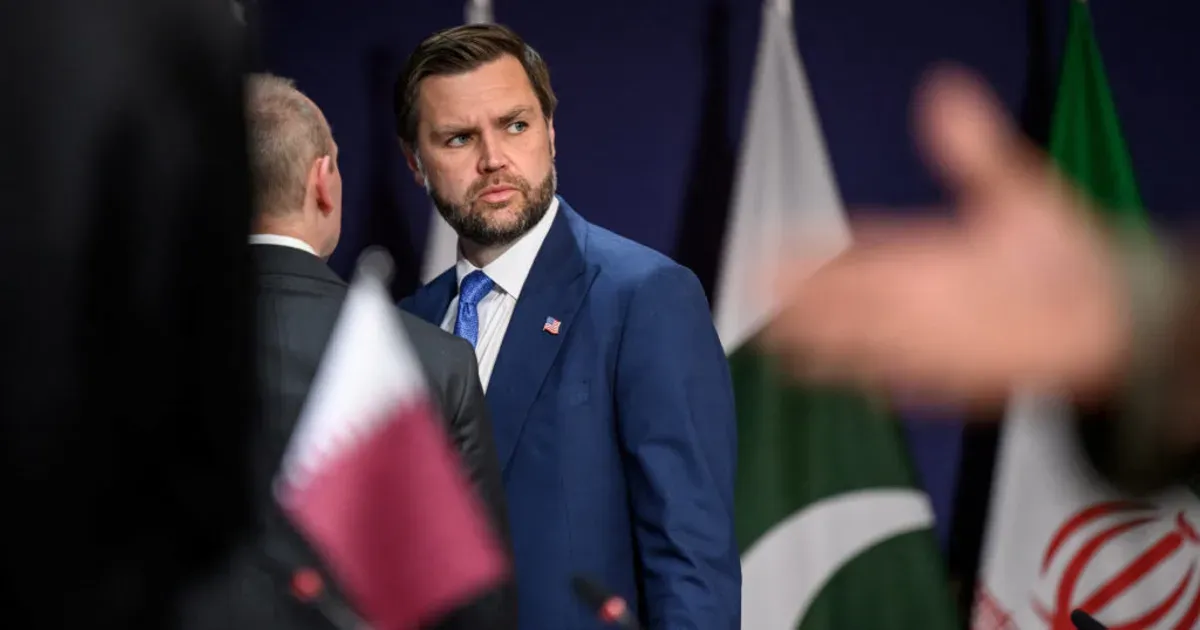
US-Iran talks in Switzerland opened with Vice President JD Vance urging a diplomatic reset, even as President Donald Trump threatened renewed strikes if Tehran escalates through Hezbollah or the Strait of Hormuz.
The meeting at the Burgenstock resort overlooking Lake Lucerne took place on June 21, 2026, with US, Iranian, Qatari and Pakistani officials trying to turn an interim understanding into a longer negotiation. Vance framed the moment as a chance to turn the relationship in a different direction, while Trump used public threats to keep pressure on Tehran from afar.
The Switzerland talks matter because they combine four volatile issues that do not move at the same speed: Iran's nuclear program, sanctions relief, Hezbollah-Israel fighting in Lebanon and freedom of navigation through Hormuz. Any one of those issues can derail the others if negotiators cannot keep the agenda disciplined.
Diplomacy Opens Under Pressure
PBS NewsHour, citing Associated Press reporting, said Vance met Iranian officials as Washington sought to build on an interim deal after the latest phase of the Iran war. The US side presented the talks as a way to test whether Tehran would accept longer-term nuclear limits and a more stable regional arrangement.
Al Jazeera reported that Iranian concerns centered heavily on Lebanon and Israel's military actions there. That makes the talks more complicated than a narrow nuclear negotiation. Tehran can treat Lebanon as a condition for trust, while Washington can treat nuclear restrictions and Hormuz access as the core test of Iranian intent.
The same tension appeared in Trump's warnings. He threatened to strike Iran again if Tehran continued backing Hezbollah attacks or moved to close the strategic waterway. That pressure may strengthen Vance's bargaining position with some audiences, but it also gives Iranian officials a reason to question whether the diplomatic channel can survive the president's public posture.
The practical risk is sequencing. If the sides try to solve nuclear oversight, oil sanctions, Hezbollah conduct and shipping security all at once, each dispute can become a veto over the whole process. If they separate the tracks too much, either side can accuse the other of pocketing concessions while delaying the hardest commitments.
That is why the first communiques and technical follow-up matter as much as the opening handshake. A durable process would need a written timetable, named working groups and a way to manage incidents in Lebanon or the Gulf before they become excuses to abandon the table.
Hormuz Keeps the Stakes High
The Strait of Hormuz is the pressure point that turns a diplomatic dispute into a market and security problem. A credible threat to shipping can move oil prices, trigger naval planning and pull outside powers into a negotiation they might otherwise watch from a distance.
Iran's Hormuz closure claim showed why even disputed statements about the waterway carry weight. Traders, militaries and regional governments do not wait for perfect clarity when the route is tied to global energy flows.
Freedom of navigation through Hormuz is therefore not a side issue. It is the enforcement test for any broader agreement. If ships move without disruption, diplomats gain room to argue over nuclear inspections and sanctions. If shipping becomes a bargaining chip, the talks can quickly shift from diplomacy to crisis management.
Lebanon adds another layer. Trump wants Iran to restrain Hezbollah, while Iran wants Israel's actions in Lebanon treated as part of the same regional equation. That creates a triangle in which the US and Iran are negotiating over behavior by actors that are not fully inside the room.
Markets will watch the language around Hormuz because even a partial disruption can affect insurance, freight costs and crude pricing before any physical shortage appears. Diplomats will watch it because maritime stability is one of the few outcomes that can be verified quickly.
What Would Keep the Channel Alive
The most realistic near-term goal is not a sweeping peace deal. It is a durable negotiating channel with clear tests: continued access through Hormuz, no acceleration of nuclear activity, a working mechanism for Lebanon-related incidents and a calendar for technical talks.
That is why Vance's conciliatory message and Trump's threats cannot be judged separately. Together they form a pressure-and-offer strategy, but the balance is fragile. Too little pressure may let Tehran delay; too much can give hardliners a reason to walk away.
The next decision point is whether the sides can define a narrow first package that both can defend at home. For Washington, that would likely mean nuclear visibility and maritime stability. For Tehran, it would mean sanctions relief signals and a claim that Lebanon was not ignored. If either side demands total sequencing in its favor, the Swiss talks may become another diplomatic photo opportunity that leaves the same military risks in place.
The strategic value of the meeting is that both governments still showed up. That does not guarantee an agreement, but it does show that each side sees some cost in letting the confrontation run without a channel. In a crisis shaped by oil routes, proxy forces and nuclear suspicion, keeping that channel open may be the first measurable success.