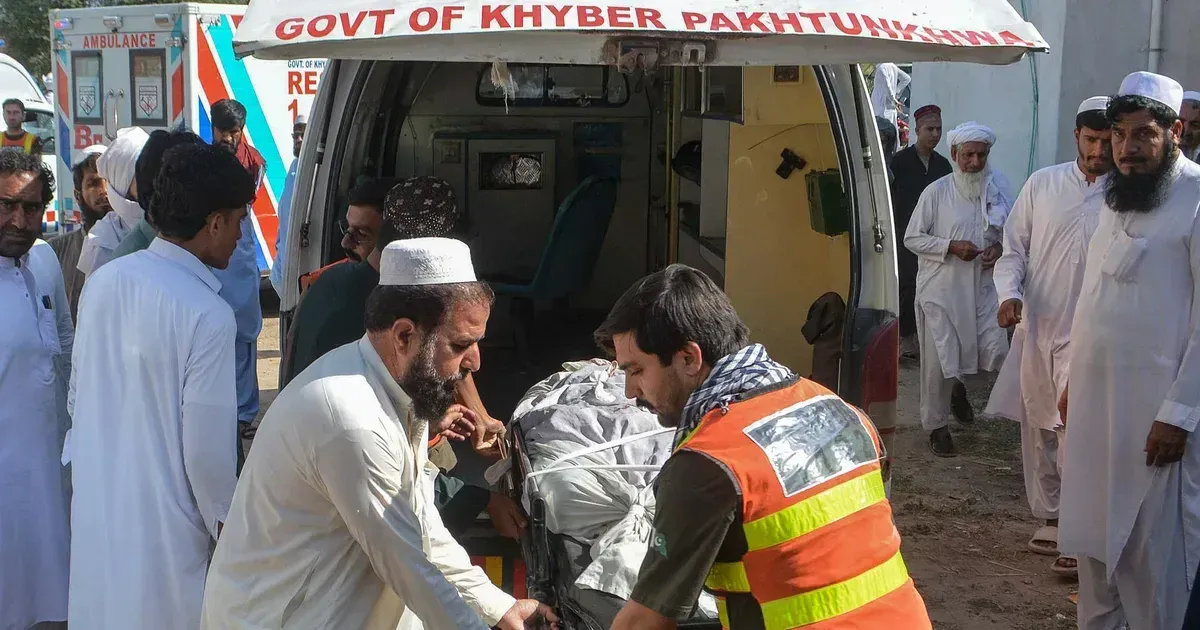
Two roadside bomb blasts killed at least seven people in northwest Pakistan, deepening security concerns in a province already shaped by militant violence and border instability. Police said the explosions targeted vehicles in Khyber Pakhtunkhwa, where attacks on civilians and security-linked movement have repeatedly strained local authorities.
The blasts happened on June 20, 2026, in the Bannu area, according to reports carried by Al Jazeera, Asharq Al-Awsat and Xinhua. The first explosion hit a vehicle, while the second detonated as people moved toward the scene to help, police said.
The Pakistan roadside blasts fit a dangerous pattern in which attackers use a first device to stop traffic or draw attention, then a second device to hit rescuers, bystanders or security personnel. That tactic increases casualties and makes emergency response slower and more dangerous.
Second Blast Raised the Rescue Risk
The reported sequence is important because it changes how the event should be understood. A single roadside bomb is already lethal, but a follow-up explosion aimed at the response zone turns the aftermath itself into part of the attack.
Al Jazeera reported that police described a second detonation as rescuers responded. That means local residents and first responders had to balance the instinct to help with the risk that the area had not yet been cleared.
The second explosion made the emergency response part of the danger, not just the recovery.
In regions where improvised explosive devices have been used before, police and rescue teams often have to assume there may be another device nearby. That caution can save lives, but it also delays treatment for people already injured. It also places pressure on local hospitals, which may receive victims before police have a complete picture of how many devices were used or whether roads remain safe for ambulances. The human cost is immediate for families in Bannu. Funerals, medical bills and the loss of wage earners can ripple through households long after the security cordon is lifted. In attacks on ordinary vehicles, the victims are often people whose only exposure was routine travel. The operational cost is broader because every delayed rescue, road closure and security sweep affects movement, commerce and daily life in communities that already live with uncertainty. For local officials, the challenge is to keep roads usable while treating each suspicious object or stalled vehicle as a possible threat.
Khyber Pakhtunkhwa Remains Exposed
Khyber Pakhtunkhwa borders Afghanistan and has seen waves of attacks linked to militant networks, local armed groups and cross-border instability. The province's geography can make policing difficult, especially when roads connect rural settlements, market towns and security-sensitive areas.
Bannu district has appeared repeatedly in security reporting over the years. That does not make every attack identical, and officials had not immediately assigned responsibility in the latest blasts, but the location explains why police treat roadside explosions as part of a wider security problem. The investigation will have to separate confirmed evidence from the familiar assumptions that often follow violence in the province.
Xinhua reported that the blasts targeted passenger vehicles and left several people injured in addition to those killed. Those details matter because the victims appear to have been caught in normal movement, not in a battlefield setting.
The absence of an immediate claim of responsibility also leaves room for caution. Early speculation can distort the investigation, especially in a region where multiple groups, rivalries and local disputes can overlap with militant tactics.
Accountability Starts With the Timeline
The first task for investigators is to establish the exact timing, device placement and target. Investigators will also need to determine whether the explosives were planted shortly before the attack or left in place along a route that attackers expected vehicles to use. The second is to identify whether the second explosion was triggered remotely, timed or placed to exploit predictable rescue behavior.
Those answers matter for public safety. If the devices were placed along a predictable route, authorities may review road checks and patrol patterns. If the second explosion was aimed at responders, emergency teams may need different staging rules before entering future blast scenes. If attackers can anticipate how residents respond to a first blast, authorities may need to change road-clearing procedures, emergency staging and public warnings after similar incidents.
The broader pressure is on Pakistan's security system to show that it can protect ordinary movement, not only high-profile sites. Roadside bombs work by making routine travel feel unsafe. The response has to restore confidence without treating local communities as if they are permanently under lockdown. That confidence depends on visible arrests, safer roads and accurate public updates after each security sweep. That is a difficult balance: too little security leaves roads exposed, while too much disruption can deepen the sense that everyday movement has become impossible.