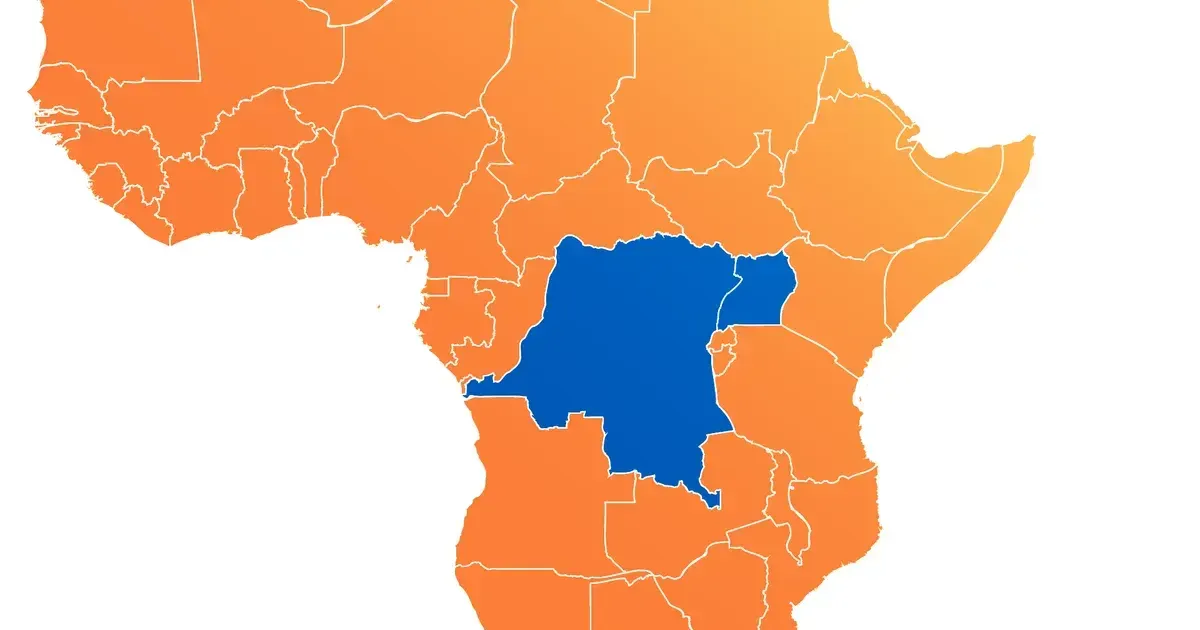
The Ebola outbreak in the Democratic Republic of the Congo is approaching 900 confirmed cases, sharpening concern that a difficult response environment could allow the disease to spread further. Public health agencies are warning that case counts, deaths and response gaps now have to be read together.
CDC listed 896 confirmed cases and 232 confirmed deaths in DR Congo as of June 17, 2026. WHO says the outbreak was confirmed in May and involves the Bundibugyo species, a form for which there is no licensed vaccine or specific treatment.
The DR Congo Ebola outbreak is unfolding in a setting shaped by insecurity, humanitarian pressure and population movement. Those conditions make contact tracing, isolation, testing and community communication harder than they would be in a stable response zone. They also increase the risk that a confirmed figure trails the real transmission picture, because people may move before symptoms are identified or before health teams can reach them.
Case Counts Are Only Part of the Risk
The rising confirmed-case total is alarming, but the response challenge is broader than the number itself. Ebola control depends on speed: identifying cases, tracing contacts, isolating possible infections and maintaining trust with communities before rumors or fear block access. Delays at any one step can reset the clock for dozens of exposed contacts, especially in households where caregiving often happens before formal care is available.
WHO has described the outbreak area as remote, densely populated and affected by insecurity. That does not make containment impossible, but it does mean outside support has to arrive in forms local teams can use immediately: transport, diagnostics, trained staff, protective equipment and practical help for families asked to isolate. That combination can delay sample transport, restrict health worker movement and make it harder to keep suspected cases away from household or market contacts.
The warning signal is not just that Ebola is spreading, but that the response is being asked to work in one of the hardest possible settings.
Africa CDC has also raised concern about the outbreak's potential trajectory. Al Jazeera reported that the agency's leadership warned the outbreak could become worse if response deficits are not closed quickly.
Bundibugyo Strain Limits the Toolbox
The species involved matters because Ebola response is not one-size-fits-all. Vaccines and therapeutics developed for other Ebola species do not automatically solve a Bundibugyo outbreak, even when researchers have candidate tools under study.
Bundibugyo Ebola leaves response teams more dependent on classic outbreak control: rapid detection, protective equipment, isolation, safe burials and community cooperation. Those measures can work, but they require consistent access and clear local messaging.
The absence of a licensed vaccine also affects public confidence. It leaves officials asking communities to accept difficult behavioral changes while also explaining that the medical toolkit is narrower than it was in some better-known Ebola responses. In recent outbreaks, vaccination campaigns helped give communities a visible intervention. Here, officials have to explain risk and prevention without the same ready-made medical shield.
The Response Test Is Trust
The immediate public health task is to slow transmission. The political and humanitarian task is to keep trust from breaking under the pressure of deaths, restrictions and fear. Communities are more likely to report illness when they believe health teams are accurate, respectful and useful.
International agencies can provide money, laboratories and technical expertise, but local cooperation determines whether those tools reach the right people in time.
That cooperation can be fragile when communities have already lived through conflict, displacement or previous health emergencies. Officials have to explain why a contact should stay home, why a burial must be handled differently and why a patient should enter an isolation unit before symptoms become severe. That is why messaging, burial practices and contact follow-up are not secondary details. The outbreak's direction over the next several weeks will show whether DR Congo and its partners can turn surveillance into containment. A credible response will need visible case isolation, steady public updates, protected health workers and enough local participation to keep contacts from disappearing from follow-up lists. If response gaps remain open while cases keep rising, the numbers will become less a snapshot than a warning of a larger public health failure. The central issue is whether the response can move faster than the virus in places where security and logistics are already slowing everything else.