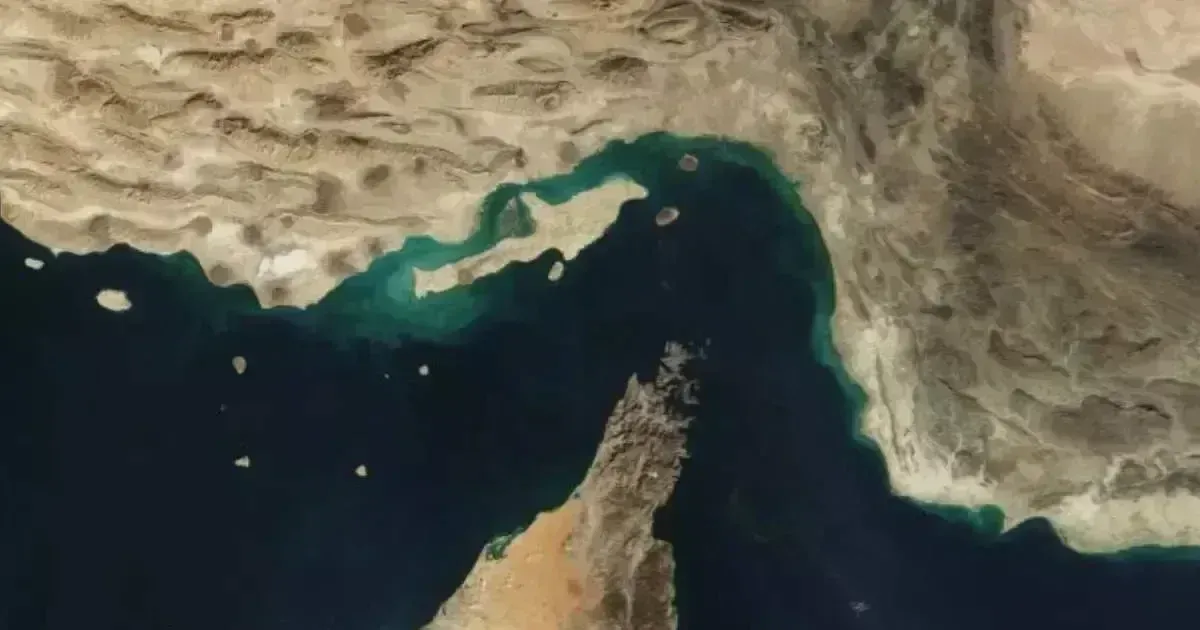
President Donald Trump announced a tentative breakthrough in negotiations with Tehran, asserting that a draft agreement to end the current conflict and reopen the Strait of Hormuz is largely complete. White House officials characterized the progress as a significant step toward de-escalating a maritime crisis that has disrupted global energy supplies for weeks. Diplomatic communications on May 24, 2026, revealed a stark contrast between the American optimism and the official response from the Islamic Republic.
Fars News Agency, a semi-official outlet in Iran, released a series of denials regarding the American president's assessment within hours of his social media posts. Iranian authorities described the White House claims as incomplete and inconsistent with reality. This discrepancy highlights a fundamental disagreement over the terms of the maritime blockade and the future administration of the waterway.
The White House version says the draft agreement is largely negotiated and would reopen the Strait of Hormuz to international traffic.
Ali Hashem, reporting for Al Jazeera, indicated that Iranian sources are highlighting specific failures in the American account of the text.
Those sources suggest that while technical discussions have occurred, the characterization of the deal as largely negotiated overlooks substantial friction regarding regional sovereignty. Documentation from Tehran indicates that the Iranian military expects to maintain its oversight of the shipping lane regardless of any commercial reopening. Local reports say the Iranian Revolutionary Guard treats controls over the narrow passage as a non-negotiable point.
One of the world's most critical maritime shipping lanes now sits at the center of a public relations battle between Washington and Tehran. While the American administration suggests a return to normalcy is near, Tehran continues to reiterate that the latest version of the proposal exchanged between the two nations does not strip Iran of its defensive posture. Conflict over the specific language of the draft appears to involve whether the Strait will be open under international monitoring or remain under exclusive Iranian jurisdiction. This disagreement follows recent efforts where Tehran continues to review the latest US proposal regarding the maritime impasse.
Success in these negotiations would involve a complex verification process that neither side has yet finalized. Reports from CBS News World suggest that while the president remains confident, his assertions have not been met with a corresponding sign of de-escalation from Iranian naval forces. Negotiations involve multiple layers of sanctions relief that the Iranian government claims have not been sufficiently addressed in the American draft. Current drafts of the agreement reportedly focus on a timeline for the withdrawal of naval assets, but the sequence of these actions continues to be a point of contention.
Shipping insurance rates and global energy prices reacted with volatility following the conflicting reports from both capitals. Most commercial carriers have maintained their detour around the region, waiting for a formal signing rather than relying on social media announcements. Efforts to secure the passage have been complicated by recent incidents involving drone surveillance and localized maritime standoffs. Security analysts in London and Washington suggest that the distance between a largely negotiated draft and a signed treaty may be wider than the White House indicates.
The Disputed Plan for the Strait
Imtiaz Tyab of CBS News noted that the disconnect between the two sides centers on the definition of a reopening. Washington interprets the agreement as a return to the pre-crisis status quo where international law governs the passage. Contrary to this view, Iranian media outlets have reiterated that the waterway will remain under Iranian control according to the latest version of the proposal. Sovereignty over the territorial waters adjacent to the Strait remains a primary obstacle for negotiators seeking a long-term solution.
Official statements from the Iranian foreign ministry have avoided the term breakthrough, instead focusing on the need for the United States to return to previous commitments. This position complicates the American narrative of a fresh deal being brokered under new terms. Iranian sources told Al Jazeera that the draft mentioned by the president contains several clauses that have not been agreed upon by the supreme leadership in Tehran. Military commanders in the region have not received orders to stand down, and the maritime blockade persists despite the diplomatic rhetoric.
Washington's push for a resolution comes as domestic pressure mounts to lower energy costs ahead of the summer season. President Trump's focus on the economic benefits of the deal matches his previous diplomatic strategies, but the technical details of the maritime security arrangements remain opaque. Iranian negotiators have historically used the Strait of Hormuz as leverage in broader sanctions discussions, and there is little evidence they are prepared to surrender that leverage without serious concessions. Each side appears to be using the public disagreement to satisfy domestic audiences while the actual text remains in flux.
Maritime Risk Remains
Can a shipping lane survive on disputed diplomatic claims alone? The gap between the American narrative of a resolved crisis and the Iranian insistence on continued control creates a dangerous environment for miscalculation. If commercial vessels return to the Strait of Hormuz based on White House assurances only to encounter a defiant Iranian navy, the risk of a direct kinetic engagement increases sharply. Such a scenario would likely result in a secondary, more severe closure that could last months.
Reliance on semi-official media denials like those from Fars News Agency suggests that the Iranian government is not yet ready to commit to a de-escalation that mirrors the American timeline. It creates a vacuum where shadow actors or hardline factions within the military could act independently to sabotage the progress. Until both nations produce a joint communique with matching technical specifications, the maritime corridor remains a high-risk zone for global trade. The divergence in rhetoric is a warning that the crisis has moved from a tactical standoff to a war of narratives. Tactical stability on the water requires more than a largely negotiated draft; it requires a singular, undisputed reality.