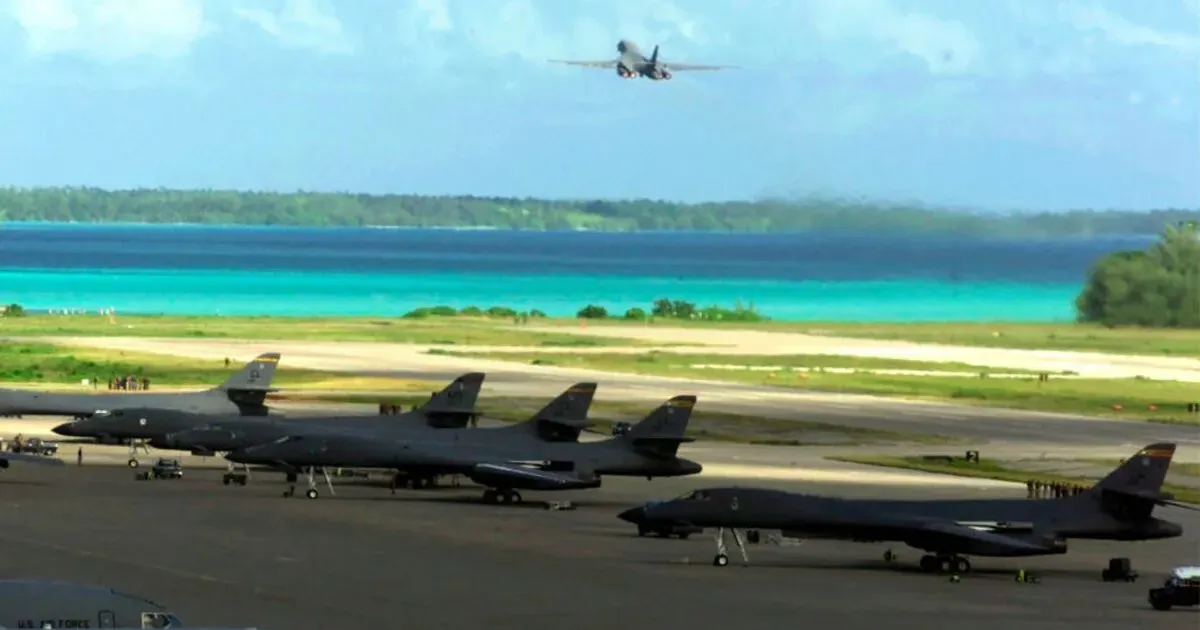
March 21, 2026, marked a major expansion of the conflict in the Middle East as Iran launched ballistic missiles at the joint United States and United Kingdom military base in Diego Garcia. Military analysts noted that this strike demonstrates a weapons range far exceeding previous Western intelligence estimates. Located approximately 2,500 miles from the Iranian coast, the base in the Chagos Islands provides a critical staging ground for B-2 stealth bombers and other strategic assets. Initial reports from personnel familiar with the situation indicate the facility suffered no physical damage during the barrage. SCMP Business confirmed the missiles failed to impact sensitive infrastructure despite the reach required to cross the Indian Ocean.
Intelligence officials in London and Washington are now re-evaluating the reach of the Iranian arsenal. Bloomberg reports that the weapons capability demonstrated on Friday goes beyond what Tehran was known to have possessed. Previously, Iranian missile ranges were thought to be capped at roughly 1,200 miles, sufficient to strike regional targets but insufficient to threaten deep-ocean naval hubs. This flight path required the missiles to travel double that distance. Naval commanders in the region have increased readiness levels while assessing the specific propulsion systems used in the flight.
Diego Garcia Strategic Military Analysis
Diego Garcia is the primary logistical hub for long-range air operations in the Indian Ocean and the Persian Gulf. Its isolation was once considered its primary defense against regional powers. Friday morning changed that perception when Iranian ballistic units fired from domestic soil. The British government immediately condemned the targeting of the joint facility. While the Financial Times suggests the attack stoked fears in European capitals, the Pentagon maintained a posture of operational continuity. Commanders confirmed that stealth aircraft remained protected within reinforced hangars.
But the psychological impact on Western military planners cannot be ignored. Tehran has successfully signaled that no US or UK asset in the Indian Ocean remains outside its strike envelope. Military technicians are currently analyzing debris collected by naval vessels to determine if North Korean or Russian technology assisted in this range extension. By contrast, the Iranian leadership has remained defiant regarding their right to respond to ongoing airstrikes on their sovereign territory. Abbas Araghchi, the Iranian Foreign Minister, told Japan’s Kyodo news service that his nation seeks a complete end to hostilities. He explicitly stated that temporary pauses are no longer on the table.
“not a ceasefire, but a complete, thorough and lasting end to the war.”
Meanwhile, the tactical reality on the ground in Israel remains volatile. Fragments from an Iranian missile recently slammed into an empty kindergarten near Tel Aviv, prompting fresh outrage from the Israeli government. Israeli army spokesman Nadav Shoshani released footage showing the structural damage to the school building. No casualties were reported because the facility was vacant at the hour of impact. Even so, the incident provided political momentum for a harsher military response from the Israel Defense Forces. Israel Katz, the Israeli Defense Minister, released a video statement on Saturday promising that the intensity of attacks against the Iranian theocracy would increase greatly next week.
Natanz Nuclear Site Hit in Overnight Strikes
Reports from Iranian state media confirmed that the Natanz nuclear enrichment facility was hit in a heavy airstrike early Saturday. Officials in Tehran claimed there was no radiation leakage following the explosion at the high-security site. This facility has long been a focal point for international concerns regarding Iranian nuclear ambitions. Fortune reported that the strike occurred just as the war entered its fourth week of active combat. Residents in the capital city also reported hearing massive explosions as airstrikes targeted military infrastructure throughout the night.
Yet the Iranian government has not signaled a retreat in its technological or military postures. Intelligence units suggest that the strike on Natanz may have targeted centrifuges or research laboratories deep underground. Israeli and American officials have offered shifting rationales for these operations. Some statements focus on the immediate need to eliminate missile programs, while others suggest the goal is to foment an uprising against the ruling theocracy. To that end, no visible signs of a domestic Iranian uprising have emerged despite the increasing economic and military pressure. Workers at the Natanz facility reportedly returned to their shifts within hours of the fire being extinguished.
In fact, the resilience of the Iranian military command structure has frustrated Western expectations of a quick collapse. The missile launch toward the Indian Ocean required sophisticated satellite guidance and staged rocket technology. For instance, maintaining accuracy over a 4,000-kilometer flight path suggests a level of inertial navigation that few countries possess. Separately, the Iranian navy has increased its presence near the Strait of Hormuz, threatening to disrupt one of the most essential oil transit routes in the world. Shipping insurance rates have already doubled for tankers operating in these waters.
Global Economic Fallout and Regional Shipping
Global markets responded to the escalation with immediate volatility in the energy sector. Brent crude futures jumped as traders weighed the risk of a broader blockade in the Indian Ocean. If Diego Garcia is within range of Iranian missiles, every commercial vessel managing the Chagos region must now consider the risk of collateral damage. Shipping giants like Maersk and Hapag-Lloyd have begun rerouting vessels around the Cape of Good Hope, adding twelve days to standard transit times. Increased fuel costs and longer delivery schedules are expected to drive up inflation across the United Kingdom and the European Union.
For one, the disruption to the global supply chain comes at a time of fragile economic recovery. The Indian Ocean is a corridor for nearly 40 percent of the world’s seaborne oil trade. According to Bloomberg, the sudden realization that Iranian missiles can reach the heart of the Indian Ocean has forced underwriters to reconsider war-risk premiums for the entire region. Banks in London have frozen several credit lines for regional traders until the security situation stabilizes. By contrast, Asian markets showed a mixed response as some refineries increased their reliance on Russian and West African crude to avoid the Persian Gulf.
And the financial strain is not limited to the private sector. The United States government is currently struggling with the enormous costs of maintaining a multi-front military presence. President Donald Trump indicated on Friday that he was considering winding down some military operations in the Mideast. This statement appeared to contradict the administration's active moves to strengthen firepower in the region. Discrepancies between executive rhetoric and military action have left both allies and adversaries guessing about the long-term US strategy. The White House continues to push for massive defense spending increases despite talk of an exit strategy.
Congressional Funding for Middle East Operations
Congressional leaders received a formal request from the administration for $200 billion in emergency military funding. The massive sum is intended to cover the costs of expanded carrier strike group deployments and the replacement of munitions used in the ongoing strikes against Iran. Republican and Democratic lawmakers have expressed skepticism about the duration of the engagement. While some argue the funding is necessary to protect American interests, others worry about the impact on the national deficit. The request includes specific allocations for enhancing the defenses at Diego Garcia and other overseas bases now vulnerable to long-range fire.
To that end, the geopolitical alignment of the region is shifting in response to the American military buildup. Middle Eastern states that previously cooperated with the US are now expressing concern about being caught in the crossfire. Iranian diplomats have been actively engaging with regional neighbors to warn them against allowing their territory to be used for American airstrikes. The threat to Diego Garcia has proven that distance is no longer a guaranteed safeguard for Western assets. Base personnel at the facility have been ordered to remain in high-alert status for the foreseeable future.
The Elite Tribune Perspective
Washington is currently entangled in a dangerous paradox where the rhetoric of withdrawal meets the reality of an expensive, expanding war. Claiming a desire to wind down operations while simultaneously requesting a staggering $200 billion from Congress is not merely a policy contradiction; it is a symptom of a grand strategy that has lost its internal logic. The strike on Diego Garcia has shattered the illusion that the West can wage a low-cost, distant war of attrition against Tehran without risking its own strategic crown jewels.
If Iranian missiles can now accurately threaten the Chagos Islands, the geographic buffer that once protected Anglo-American interests in the Indian Ocean has effectively vanished. The development renders the B-2 bomber fleets and naval logistics hubs sitting ducks for a regime that clearly has nothing left to lose. The White House must decide whether it is truly prepared for the economic carnage that a full-scale blockade of the Indian Ocean would trigger. Continuing to hit sites like Natanz while hoping for a phantom uprising is not a strategy; it is a gamble with the global economy as the stake.
Stability will not return to the oil markets until the US decides if it is an offshore balancer or an active belligerent in a conflict it can no longer afford to ignore.