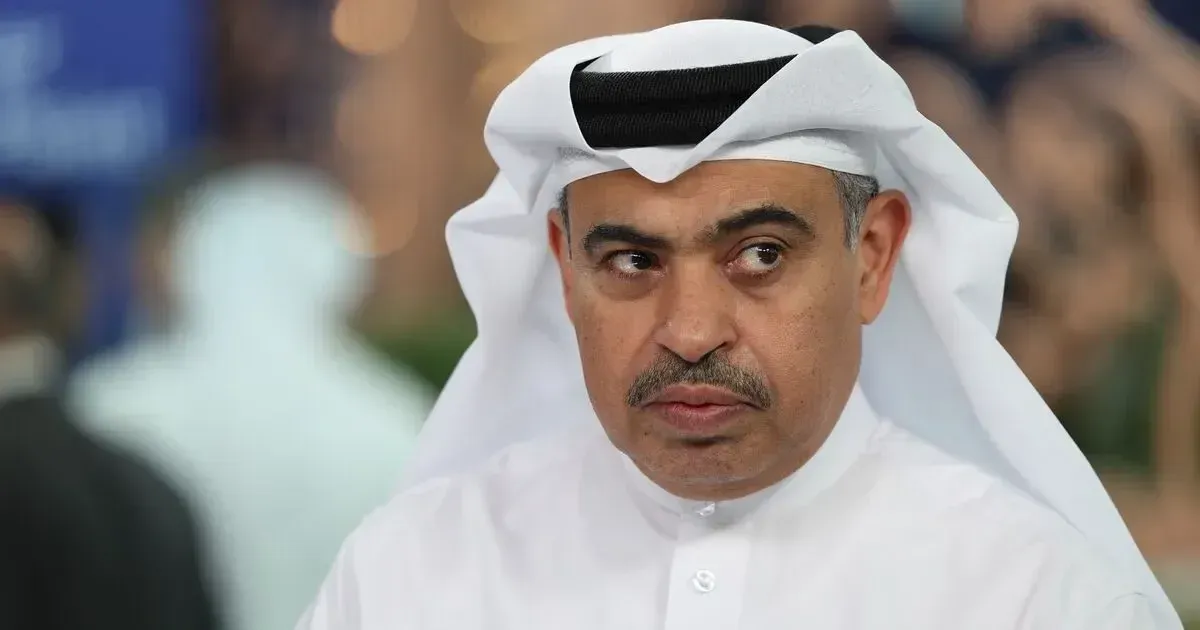
Qatar’s finance minister warned that the global economy faces a worsening crisis as the war in Iran intensifies. That timing turned the warning into a market signal. The April 15, 2026, warning focused attention on trade routes, sovereign wealth funds and energy supply. These hostilities have effectively shuttered the Strait of Hormuz, creating a bottleneck for commodities that power industrial sectors across Europe and Asia. Blockades now prevent the transport of liquefied natural gas, specialized fertilizers, and rare gases. Supply chains for these essential materials remain paralyzed while military activity persists in the Persian Gulf.
Financial analysts at Bloomberg Economics warn that the current trade restrictions will lead to a broader economic fallout in the coming months. Investors are monitoring the situation closely as tankers sit idle outside restricted maritime zones. Costs for shipping insurance have increased tenfold since the first week of the conflict. Regional stability depends on whether these transit routes can be secured before the second quarter concludes.
Strait of Hormuz Closure Halts Essential Trade
Commercial traffic through the Strait of Hormuz represents roughly 20% of the world’s liquefied natural gas supply. Roughly 21 million barrels of oil pass through this waterway daily under normal conditions. While tankers are often redirected around the Cape of Good Hope, such journeys add 14 days to delivery schedules. Disruption at this scale creates a structural deficit in the global energy market that alternative pipelines cannot bridge.
Qatar’s finance minister issued a blunt assessment of the situation during a press briefing in Doha. He emphasized that the restriction of trade hurts countries reliant on Qatari fertilizers and helium. Qatar provides nearly 35% of the world’s helium supply, a gas required for manufacturing semiconductors and operating MRI machines in hospitals. Manufacturers in South Korea and Taiwan have already reported inventory shortages of these critical gases.
Trade routes through the region are now largely impassable for commercial vessels without military escort.
Sovereign Wealth Funds Face Record Liquidity Pressure
Gulf monarchies currently control a combined $6 trillion in sovereign wealth assets, according to a report from The Economist. These funds provide a financial cushion for nations like Saudi Arabia, Kuwait, and the United Arab Emirates. Prolonged conflict, however, forces these custodians to liquidate international holdings to cover domestic defense spending and emergency subsidies. Selling pressure from these enormous funds could destabilize global equity markets in New York and London. The recent Iranian attack on a Qatari gas plant illustrates the vulnerability of critical regional energy infrastructure.
Investment strategies that previously focused on 30-year diversification projects are now shifting toward immediate liquidity. Managers at the Public Investment Fund and the Abu Dhabi Investment Authority must navigate a landscape where regional risk premiums have reached record highs. Domestic infrastructure projects, including ambitious city-building initiatives, face delays as capital is diverted to security needs. Credit rating agencies have placed several regional entities on negative watch.
Rising military costs are draining the very treasure chests meant to ensure a post-oil future for the region.
The pressure is not limited to crude prices. Liquefied natural gas, shipping insurance, fertilizer inputs and industrial gases all move through contracts that react quickly when the Gulf looks unsafe. That makes the disruption visible to manufacturers and food producers as well as energy traders.
For Gulf governments, sovereign funds become both cushions and policy tools. They can absorb market losses, support domestic budgets and help stabilize strategic companies, but they cannot remove the physical risk created when ships wait outside restricted lanes.
The timing matters because many contracts do not wait for a formal shortage before repricing risk. A few days of uncertainty can change freight quotes, hedge positions and import planning for companies that rely on Gulf cargoes. That is why the story is still an economy story, not only an energy-price story.
Trade Shock Reaches Sovereign Funds
Wealth does not buy immunity from geography. The current crisis in the Persian Gulf exposes a fatal flaw in the modernization strategies of the Gulf monarchies. They spent decades building a $6 trillion financial fortress while their physical exports remained tethered to a single, easily choked waterway. This strategic mismatch has become more visible as the war in Iran turns wealth funds into sources of emergency liquidity. Financial buffers have limited value when the physical infrastructure of trade is under attack. Western leaders must account for the limits of the Gulf states' resilience. Their reliance on high-tech exports like helium and specialized fertilizers makes them more vulnerable to kinetic warfare than during the simpler oil shocks of the 1970s. If the Strait of Hormuz stays closed, the transition to a green economy in the West will stall alongside the traditional industrial base. The longer the strait remains closed, the greater the pressure on both industrial supply chains and Gulf financial reserves.