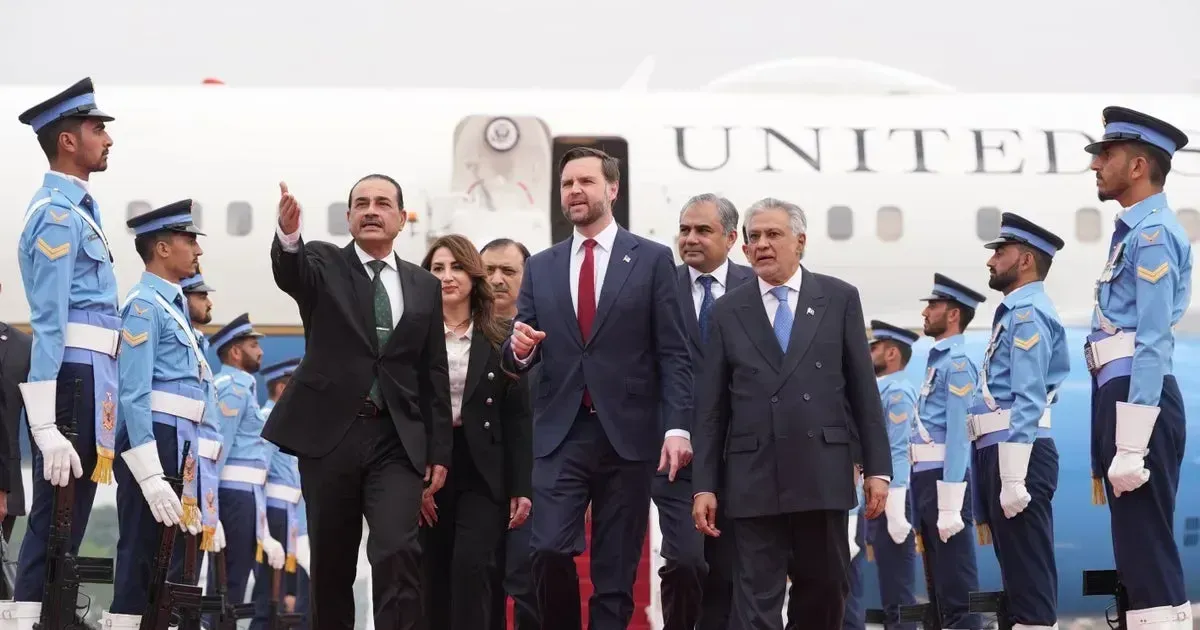
Islamabad officials welcomed senior American and Iranian diplomats for the first direct bilateral negotiations in more than a decade. These consultations represented the highest level of diplomatic engagement between Washington and Tehran since the 1979 revolution. The April 11, 2026, session began under heavy Pakistani security as JD Vance arrived at the meeting site with a senior U.S. delegation. The initial session started at approximately 17:00 local time.
Naval movements in the Persian Gulf provided a contrasting backdrop to the diplomatic theater in Pakistan. American warships entered the Strait of Hormuz earlier that morning in a move the Pentagon described as a routine patrol. The timing of this maritime deployment complicates the narrative of de-escalation that both delegations attempted to project in Islamabad. Energy markets responded to the naval presence with immediate volatility. Brent Crude prices fluctuated sharply before settling near $85 per barrel.
Islamabad Security Perimeter and Delegation Arrivals
Security measures in the Pakistani capital reached historic levels as the delegations convened at a secure government facility. Pakistani police cordoned off the diplomatic enclave and restricted civilian access to the surrounding Red Zone. Surveillance drones patrolled the airspace while snipers took positions on the roofs of adjacent administrative buildings. This security operation involved over 5,000 personnel from various intelligence and law enforcement agencies. The Ministry of Foreign Affairs in Pakistan described the logistics as a matter of national priority. Local news outlets reported that the city remained under a high alert status throughout the evening.
Iranian representatives landed at Nur Khan Airbase before being transported to the meeting site in armored convoys. The delegation included senior negotiators who previously served during the Joint Comprehensive Plan of Action implementation phase. Their arrival signals a willingness to engage in technical discussions regarding uranium enrichment levels and centrifuge operations. Negotiators brought dossiers detailing specific economic sanctions they expect Washington to lift in exchange for nuclear concessions. The Iranian government maintains that any agreement must include a guarantee against future unilateral withdrawals. The airbase was closed to commercial traffic for three hours.
Maritime Tensions Shadow Diplomatic Efforts
While diplomats exchanged opening statements in Islamabad, the situation in the Strait of Hormuz grew increasingly complex. Two Arleigh Burke-class destroyers moved into position near the shipping lanes that carry a fifth of the world's oil supply. This maneuver occurred without the usual public notification from the Bahrain-based Fifth Fleet. Iranian coastal defense units reportedly monitored the American vessels from the island of Qeshm. Satellite imagery confirmed the presence of fast-attack craft trailing the American warships at a distance of two nautical miles. The Pentagon issued a statement clarifying that the maneuvers were independent of the talks in Pakistan.
Global shipping companies expressed concern regarding the proximity of naval assets to commercial lanes. Insurance premiums for oil tankers traveling through the region increased by 12 percent within hours of the reports. Analysts in London suggested that the naval presence is a leverage point for American negotiators. By demonstrating military readiness, Washington signals that diplomacy is not its only available tool for managing regional instability. This tactical positioning creates a dual track strategy of dialogue and deterrence. Vessel tracking data showed three tankers diverted from their original routes. The administration's decision to send JD Vance to Islamabad highlights the high stakes of these negotiations.
Five-Hour Session Tests Preliminary Frameworks
Consultations in the secure Islamabad facility lasted for more than five hours. The length of the meeting indicates that the parties moved beyond formalities into substantive policy discussions. Sources close to the American delegation revealed that the agenda focused on monitoring mechanisms at Iranian nuclear sites. The International Atomic Energy Agency has frequently requested expanded access to facilities in Natanz and Fordow. Negotiators discussed the possibility of reinstalling surveillance cameras that were removed in late 2024. The session concluded shortly after 22:00 local time.
The delegations held two rounds of talks in Islamabad and plan to continue these discussions to address the complex layers of the current deadlock.
Iranian officials focused their demands on the unfreezing of oil revenues currently held in foreign banks. Iranian state media reported that the talks were professional but difficult. Tehran seeks a phased approach where each nuclear restriction is met with an immediate and verifiable lifting of a specific sanction. The American side, however, insists on front-loading nuclear compliance before providing substantial economic relief. The disagreement on the sequencing of actions has stalled previous negotiation cycles. The Iranian central bank estimates that $20 billion in assets are currently inaccessible.
Future Scheduling and Regional Stability
Diplomatic activity will continue on April 12, 2026, with a new round of consultations scheduled for the evening. The decision to hold consecutive sessions suggests that enough common ground was found during the initial five hours to justify further dialogue. Iranian state media confirmed that the Saturday evening round will focus on the legal framework for a potential memorandum of understanding. Both sides have agreed to maintain a media blackout regarding the specific terms being discussed. The strategy aims to prevent domestic political opposition in either country from derailing the progress. The next session is expected to begin at 19:00 local time.
Regional powers such as Saudi Arabia and Israel are monitoring the Islamabad talks with varying levels of skepticism. Riyadh has requested a briefing from the Pakistani government on the nature of the security guarantees discussed. Israeli officials expressed concern that a partial deal might allow Iran to maintain its breakout capacity while receiving a financial windfall. The Pakistani leadership views its role as a bridge between two hostile states. Successful mediation would elevate Pakistan's diplomatic standing in the Islamic world and the West. The Prime Minister of Pakistan is expected to meet with both delegation heads on Sunday. History shows that direct talks between these adversaries are rare and fragile. Diplomatic sources confirmed the delegations will remain in the capital for at least 48 more hours.
Negotiations Under Military Pressure
Negotiating at the end of a gun barrel is rarely a recipe for lasting peace, yet this is precisely the theater Washington and Tehran have constructed in Islamabad. The optics of warships entering the Strait of Hormuz while diplomats discuss enrichment levels reveal the true nature of these talks. It is not a pursuit of friendship but a cold, transactional attempt to avoid a regional fire that neither side can currently afford. Washington needs to lower oil prices and stabilize the Middle East to focus on Pacific interests. Tehran requires an economic lifeline to suppress growing domestic discontent. The choice of Pakistan as a venue is a calculated insult to traditional Arab mediators, signaling a shift in the regional diplomatic architecture.
A five-hour meeting is unlikely to dismantle decades of institutionalized hostility. The evidence points to the establishment of a hotline to manage a crisis, not to a solution to the nuclear question. The American naval presence ensures that Tehran understands the limits of its provocation, while the Iranian demands for financial relief highlight the biting success of the sanctions regime. If Saturday evening produces a signed document, it will likely be a temporary freeze rather than a comprehensive treaty. It is management, not resolution. The Islamabad talks are a desperate exercise in buying time. Failure here would not just mean a return to the status quo but a rapid slide toward a maritime conflict that could paralyze global trade. The stakes are too high for anything other than a cynical, measured success. A hollow victory is the likeliest outcome.