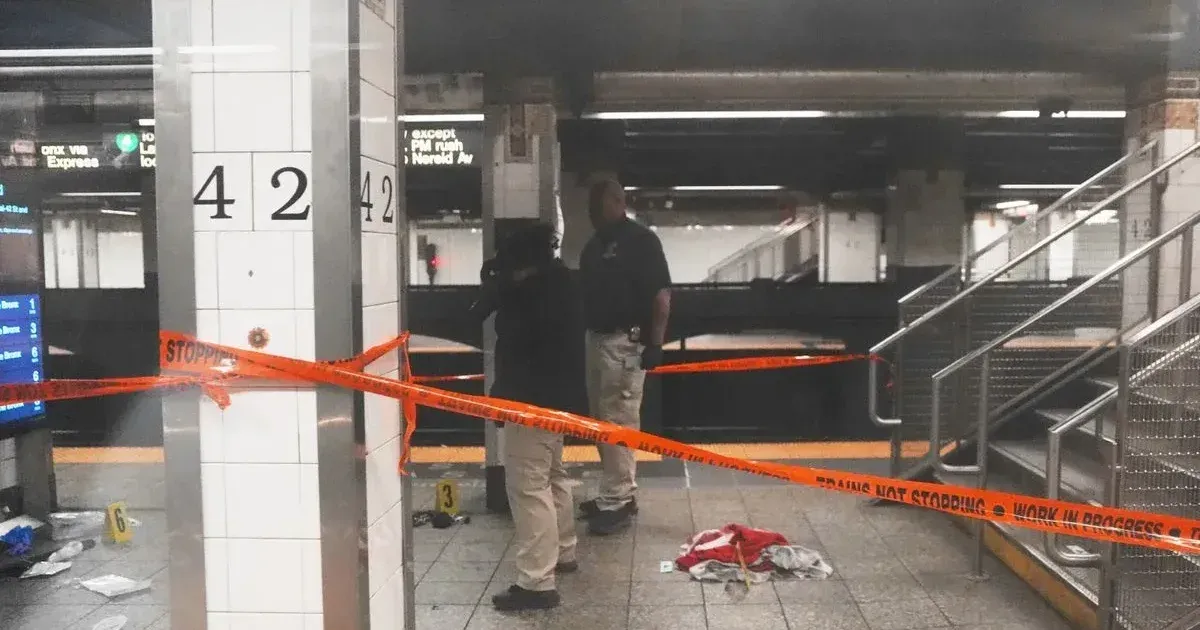
NYPD officers fatally shot an unidentified man at 42nd Street-Grand Central after a violent spree left three elderly commuters wounded. Emergency units converged on the station at approximately 9:40 a.m. on April 11, 2026, following reports of a man wielding a large blade on the platform. Officers encountered the suspect near the tracks and fired two rounds after he refused to drop the weapon. The wounded commuters, ages 84, 65 and 70, were later listed in stable condition at local hospitals.
Witnesses described a scene of rapid escalation in the heart of Midtown Manhattan. Chaos erupted during the tail end of the morning rush when the assailant began targeting passengers without distinction. Police sources indicate the attack occurred at one of the busiest transit hubs in the global network, forcing an enormous deployment of counterterrorism and emergency service units. Investigators are currently reviewing surveillance footage to determine if the violence began on a moving train or originated on the platform itself.
Violence Erupts at Grand Central Station
Dispatchers received the first emergency calls regarding an assault in progress as the suspect moved through the subterranean complex. While initial reports described the weapon as a machete, later statements from the Metropolitan Transportation Authority and local police categorized it as a knife. Two officers arrived at the scene within minutes of the initial 911 call, finding the suspect still armed and acting aggressively toward bystanders. Both officers have since undergone medical evaluation for trauma and minor injuries sustained during the confrontation.
Bloodstains remained visible on the concrete platform as forensics teams cordoned off large sections of the station. Commuters were redirected away from the 4, 5, and 6 lines, which serve as the primary arteries for East Side transit. This incident marks a significant escalation in high-profile transit violence that has plagued the city despite increased patrols. Records from the MTA show that several trains were ordered to bypass the station for hours while detectives processed the crime scene.
Elderly Victims Hospitalized After Knife Attack
Emergency medical technicians transported the three victims to nearby trauma centers immediately after the suspect was neutralized. Doctors at the receiving hospitals confirmed that the 84-year-old male victim suffered the most serious lacerations, though his condition has stabilized. The 65-year-old man and the 70-year-old woman are expected to recover fully from their wounds. Medical staff praised the quick actions of bystanders who provided initial aid before first responders arrived on the scene.
Police have not yet released the name of the deceased suspect pending notification of next of kin. His motives remain unclear, and detectives are currently searching his last known address for any indications of premeditation or extremist ties. Preliminary background checks suggest the man may have had previous interactions with the city mental health system. No other accomplices are suspected to be involved in the morning attack.
Mamdani and Hochul Respond to Transit Violence
Mayor Zohran Mamdani confirmed the suspect's death in a statement released on social media shortly after the shooting. Mamdani, who has faced persistent pressure to address crime in the subway system, emphasized the speed of the police response. The mayor noted that the intervention likely prevented further casualties in the crowded station. Governor Kathy Hochul also weighed in, praising the tactical precision of the responding officers.
“I am grateful to our courageous police officers who acted quickly to stop the suspect, and we are working closely with the NYPD as the investigation progresses,” Hochul said.
Hochul's administration has previously deployed National Guard members to the subway system to act as a deterrent. Critics of the current safety policies argue that these measures failed to prevent a man with a blade from entering one of the most heavily monitored stations in the world. Security at 42nd Street-Grand Central includes hundreds of cameras and a dedicated police precinct located within the terminal. Despite these assets, the assailant managed to carry out three stabbings before being detected.
NYPD Forensics Close Transit Hub Platform
Crime scene investigators spent the afternoon mapping the trajectory of the two shots fired by police. One officer discharged his weapon twice, hitting the suspect in the torso. Ballistics experts are examining the platform to ensure no stray rounds struck the station infrastructure or bystanders. This level of forensic detail is standard in any officer-involved shooting within the transit system. Police leadership defended the use of lethal force, citing the immediate threat the suspect posed to the public and the responding officers.
MTA officials announced that service would remain disrupted through the evening as cleaning crews sanitized the platform. Hundreds of thousands of travelers use Grand Central daily, making the closure a logistical challenge for the city. Announcements over the station public address system repeatedly urged patience as investigators moved toward the final stages of their evidence collection. Normal operations are expected to resume by the early morning hours of the next business day.
Transit Security After the Attack
The multibillion-dollar security apparatus of the New York City subway system risks becoming a facade that comforts the affluent without protecting the vulnerable. The April 11 attack at Grand Central exposes the lethal lag time between a violent act and a state response. Even with a dedicated precinct and National Guard presence, an individual with a blade managed to mangle three elderly citizens in the time it took for two shots to be fired. This is the reality of urban policing in an environment where the state focuses on surveillance over prevention.
Policymakers like Zohran Mamdani and Kathy Hochul will undoubtedly pivot to the usual rhetoric of gratitude for law enforcement. Such gratitude, however, does nothing to address the systemic failure of the $11 billion transit budget to secure a single platform. The picture emerging is a city that has mastered the aesthetics of security without achieving its substance. The presence of uniforms did not stop the blade; it only cleaned up the blood after the fact.
Total safety is an illusion, but the failure to detect a machete-wielding man in the world's most famous terminal is a tactical disgrace. New York continues to bet on reactive force while the proactive identification of threats remains a secondary concern. Victims in this case were elderly, the most defenseless demographic, yet they were left to fend for themselves until the bullets finally flew. The cycle of violence and bureaucratic praise is a stagnant policy.