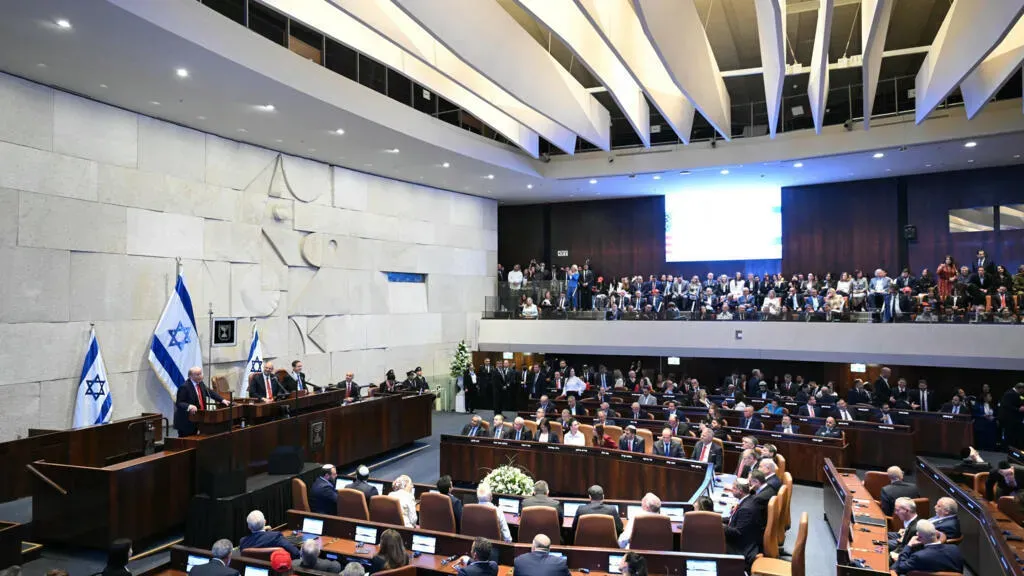
Israel's death penalty law has turned security prosecution into a larger rights crisis. The Knesset passed the measure on March 30 by a 62-48 vote, allowing capital punishment for Palestinians convicted of deadly attacks against Israelis. Supporters, led by far-right National Security Minister Itamar Ben-Gvir, framed it as justice and deterrence. Critics called it discriminatory, legally dangerous and diplomatically explosive.
The controversy is not only about capital punishment in the abstract. It is about who is likely to face it, which courts will impose it and whether an irreversible sentence can be reconciled with a legal system already criticized for unequal treatment of Palestinians in the occupied West Bank.
The Law Targets A Specific Reality
Formally, the statute is written around terror-related killings. In practice, rights groups and legal experts argue it is designed to fall mainly on Palestinians tried under Israeli military jurisdiction. The structure drew immediate criticism from Palestinian advocates, Israeli human-rights organizations and European governments.
The equality question is central. Jewish Israeli suspects and Palestinian suspects do not generally move through the same legal systems in the West Bank. A death penalty attached to that split structure cannot be analyzed as a neutral sentencing change.
Military Courts Raise The Risk
The West Bank military-court system is already contested because Palestinians face Israeli military authority rather than the civilian courts available to Israeli citizens. Critics point to conviction rates, limited procedural protections, restricted movement and the power imbalance between occupying authority and occupied population.
Adding execution to that system raises the standard of scrutiny. Any capital case requires maximum due-process protection because the punishment cannot be undone. Opponents argue that the military-court framework cannot provide that legitimacy, especially when the law is politically framed around one national group.
Hanging Carries Symbolic Force
Reports on the law described hanging as the prescribed method in covered cases. The prescribed method is not incidental. It gives the law a punitive symbolism that goes beyond ordinary sentencing policy and makes every future case a political event.
Israel has rarely used capital punishment. Adolf Eichmann's 1962 execution remains the best-known exception in public memory. Moving from that historical exception to a security-law framework for Palestinians marks a sharp break in how the state presents punishment, deterrence and justice.
Deterrence Is Disputed
Supporters argue that life sentences and prisoner exchanges have failed to deter attackers, and that the harshest punishment should be available for ideological murder. The argument has emotional force for families of victims and politicians promising strength.
The security counterargument is also serious. Executions can create martyrs, harden militant recruitment, complicate hostage or prisoner negotiations and reduce incentives for suspects to cooperate. Israeli security officials have often treated capital punishment cautiously for those reasons. A law that satisfies political anger may not improve security outcomes.
Legal Challenges Were Built In
The law was expected to face petitions in Israeli courts. Opponents argue it violates principles of equality, proportionality and the right to life, while also exceeding legitimate legislative reach in occupied territory. International-law criticism will not disappear because the Knesset voted.
The built-in challenges mean the first cases under the statute could become tests of Israel's judiciary as much as tests of the defendants. If courts narrow or strike parts of the law, the coalition can blame judges. If courts allow it, Israel's rights record faces another major international flashpoint.
The Diplomatic Cost Is Predictable
Allies can support Israel's right to protect civilians and still object to an execution regime that appears to apply through unequal systems. Britain, France, Germany and other governments have already warned against the direction of the law. Human-rights scrutiny of Israeli detention and prisoner treatment has also intensified, making the death penalty harder to separate from the wider detainee debate.
The surrounding conflict matters. A capital statute passed in a calm legal environment would still be controversial. Passed during deep conflict over occupation, prisons, courts and coalition politics, it becomes a signal about state power.
The First Execution Would Not Close Anything
The law may satisfy a demand for vengeance, but it weakens Israel's claim that security justice is applied equally. Capital punishment is irreversible, politically combustible and likely to turn each case into a regional and international test.
If Israel carries out an execution under this framework, it will not close a file. It will open a new front over occupation, discrimination and the limits of security law. The promise of deterrence hides that lasting cost.