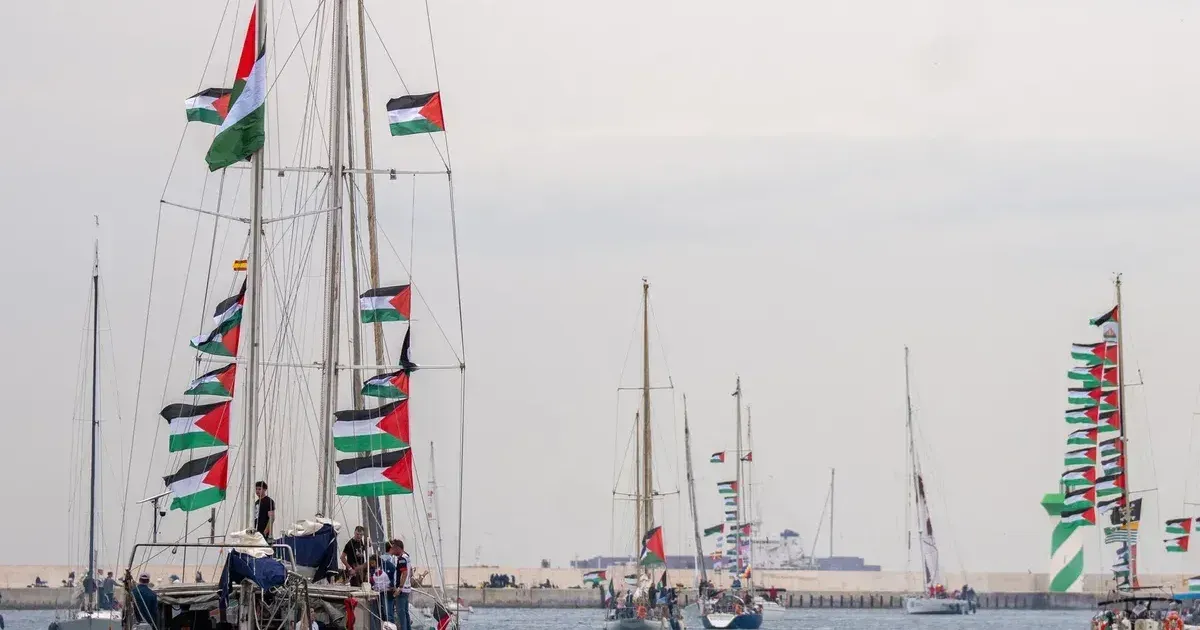
The Gaza aid flotilla interception widened a maritime dispute far from the enclave itself. By acting near Crete, Israel placed humanitarian activists, Greek authorities and international lawyers into the same confrontation. The distance from Gaza made the operation harder for organizers to portray as routine coastal enforcement. Israeli naval units intercepted a flotilla of 22 boats attempting to reach Gaza through the Mediterranean Sea. Security forces boarded the vessels on April 30, 2026, near the Greek island of Crete, hundreds of miles from Gaza and Israel. Initial reports said the ships carried humanitarian aid for residents of the Gaza Strip. Personnel from the Israeli Navy executed the boarding operation in the early morning hours as the flotilla moved east across the Mediterranean. The interception also creates a detainee question. Israel must decide whether to deport activists quickly, hold them for immigration processing or pursue any security-related claims connected to the vessels. Organizers, meanwhile, can use the detentions to keep attention on Gaza aid access even if the cargo never reaches shore. That dynamic is why flotilla cases often continue politically after the ships are stopped: the legal handling of passengers becomes part of the campaign.
Commandos disabled or damaged the engines of several ships, according to activists, to stop them from maneuvering away from the interception zone. 175 activists were detained during the operation and moved to Israeli vessels for transport. Organizers claimed the interception occurred in international waters and accused Israel of violating maritime sovereignty. Military officials in Jerusalem confirmed the enforcement action and did not report casualties among passengers or soldiers.
Video footage released by activists shows specialized naval units approaching the flotilla using fast boats. Athens maritime authorities had monitored the vessels since they departed from regional ports earlier in the week. Greek officials noted that the flotilla was outside Greek territorial waters shortly before the Israeli intervention. Documentation from the activists suggests the ships were registered in several countries, a structure that could complicate jurisdictional claims and the handling of detainees.
Records indicate the fleet included cargo ships and passenger vessels carrying medical supplies and food. According to tracker information cited in source reporting, 36 other vessels were still sailing by midday Thursday after the 22 interceptions. Organizers had said the wider campaign could include more than 70 boats and roughly 1,000 people from multiple countries. Pro-Palestinian groups maintained that the mission was humanitarian and aimed at highlighting conditions under the blockade. Israeli leadership countered that maritime restrictions are necessary to prevent weapons and dual-use materials from reaching Gaza.
Boarding Operations Near the Coast of Crete
Naval units used disabling tactics to halt the larger ships without reporting major structural damage. The operation required coordination between tracking assets and surface vessels as Israeli forces moved against more than 20 boats. Activists said communications were disrupted as commandos boarded, leaving parts of the fleet unable to broadcast live updates to supporters. Sailors on the civilian ships were ordered to stop operations and assemble on deck.
Authorities moved the seized vessels toward Ashdod for inspection and processing of the detainees. The 175 people aboard represented several nationalities, including European observers and rights campaigners. Each passenger is expected to undergo security screening before possible deportation or further legal action. Israeli officials described the interception as enforcement of the maritime exclusion zone, while activists said the distance from Gaza undercut that argument.
International Reactions to Blockade Enforcement
Legal experts are analyzing the location of the incident to determine whether the boarding complied with international maritime law. Supporters of the flotilla argue that seizing civilian ships in international waters is unlawful. This confrontation marks another high-profile attempt to challenge naval restrictions around Gaza. Israel maintains that it can intercept vessels bound for a hostile territory when it says national security is at stake.
Ship manifests are being scrutinized by Israeli customs officials to verify the cargo. Israel dismissed those on board as "attention-seeking agitators," while organizers said the mission was designed to deliver aid and draw attention to Gaza's humanitarian situation. Officials said aid could be delivered through established crossings once it passes safety inspections. Supporters of the activists insist those crossings remain insufficient for the population's needs.
Diplomatic fallout will depend on how quickly Israel processes the detainees and whether European governments challenge the boarding. When a state intercepts civilian vessels in international waters, it tests the limits of the San Remo Manual on International Law Applicable to Armed Conflicts at Sea. Any prolonged detention of foreign officials or campaigners could strain relations with Mediterranean neighbors.
Regional stability depends on the balance between security imperatives and humanitarian access. If Israel transfers verified aid through Ashdod or land crossings, it may reduce some immediate criticism. Repeated maritime challenges still show that the blockade remains a central point of friction in the Eastern Mediterranean, especially when activist fleets keep sailing after partial interceptions and governments must respond to detentions involving citizens, lawmakers or rights observers.