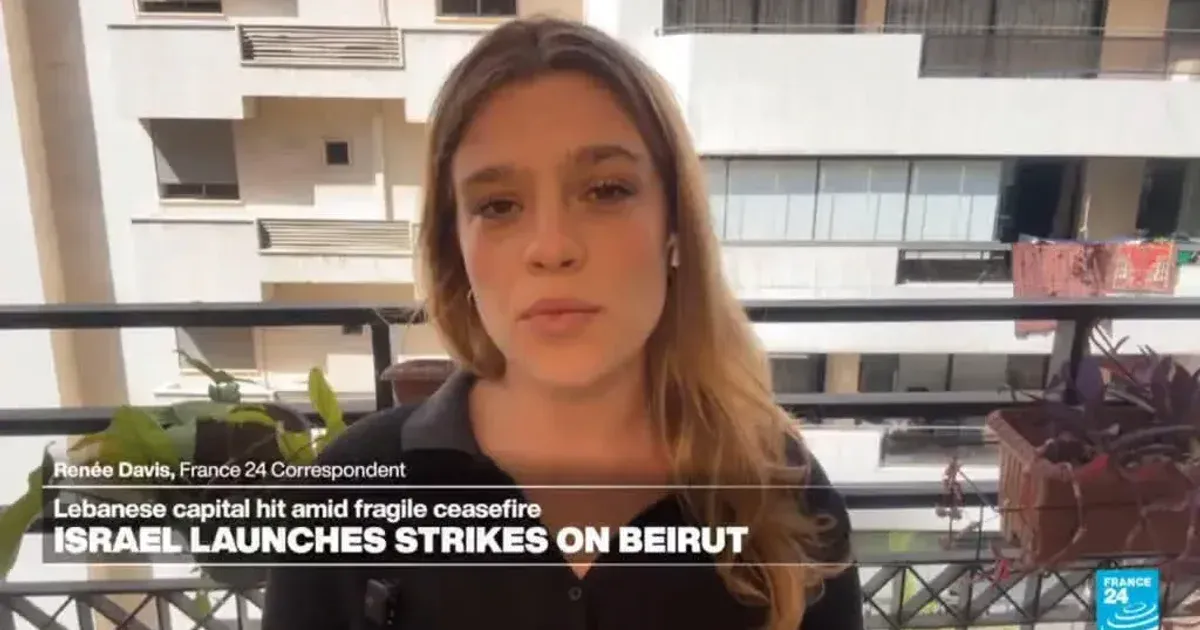
Israeli aircraft struck a building in Beirut hours before a planned round of Washington diplomacy, injecting new uncertainty into an already fragile ceasefire process. The strike hit the southern suburb of Dahieh, an area closely associated with Hezbollah but also home to dense civilian neighborhoods.
The operation took place on May 28, 2026, as negotiators were preparing for talks in Washington, D.C. Israeli officials described the action as a targeted strike, while Lebanese responders worked to assess damage and determine whether anyone was trapped or killed inside the building.
Renee Davis reported from Beirut that the strike hit an apartment building and that it was not immediately clear who might have been targeted.
That uncertainty is important. In a crowded capital, the difference between a precise military target and civilian harm can shape whether a limited strike remains contained or becomes the reason for a broader exchange.
Beirut Strike Tests the Ceasefire
Beirut had largely been spared from the most visible strikes since the latest ceasefire arrangement took hold. Hitting the capital now changes the political atmosphere even if Israel argues that the target was operationally urgent. Lebanese officials have repeatedly accused Israel of violating airspace and conducting surveillance flights, while Israel has accused Hezbollah of moving weapons and rebuilding positions in the south. Those competing claims have already weakened trust in the truce.
Washington Talks Face New Pressure
The timing creates a direct problem for U.S. mediators. Delegations were expected to discuss border security, Lebanese army deployments and a more durable mechanism for preventing cross-border attacks. A strike in Beirut before those talks gives hard-liners on both sides a reason to question whether diplomacy can restrain military decisions. It also raises the political cost for any Lebanese faction that appears to negotiate while the capital is under threat.
Why Dahieh Matters
Dahieh is not just a military symbol. It is a crowded urban district where any strike can carry civilian risk, damage local infrastructure and revive memories of earlier rounds of heavy fighting.
Israel may believe that acting before the summit strengthens its leverage. The danger is that the same action could weaken the diplomatic process by making the ceasefire look conditional or easily overridden.
Hezbollah's Response Could Decide the Fate of the Talks
Regional governments will watch whether Hezbollah responds directly or waits to see what happens in Washington. A limited response could leave room for talks. A larger retaliation could push the ceasefire toward another round of cross-border fighting.
The immediate challenge is to keep the summit from becoming a forum for blame rather than a path toward restraint. For Washington, the goal is no longer only to preserve a diplomatic calendar. It is to show that diplomacy can still matter while military pressure is reshaping events on the ground.
U.S. officials are likely to press both sides to avoid public steps that would make attendance politically impossible. That could mean urging Israel to explain the military basis for the strike while pressing Lebanese representatives to keep a channel open even if they condemn the operation.
The humanitarian dimension will also shape the talks. Any strike in a dense district raises questions about civilian protection, emergency access and whether residents can trust evacuation guidance if operations return to the capital.
For Hezbollah, the decision is whether to respond immediately or preserve leverage for the Washington process. A rapid military answer could satisfy domestic pressure but make it easier for Israel to argue that the ceasefire is no longer restraining armed activity.
For Israel, the risk is that a tactical strike produces diplomatic isolation if allies conclude that the timing weakened a process they were trying to support. That does not mean the talks will collapse, but it gives negotiators less room for ambiguity.
The next twenty-four hours will therefore matter as much as the strike itself. If the delegations still travel and the agenda remains intact, Washington may be able to turn the crisis into a test of ceasefire enforcement. If one side withdraws, the Beirut strike could become the moment the diplomatic track lost momentum.
The strike also changes how residents judge official assurances. A ceasefire that leaves Beirut vulnerable to sudden air activity may feel unreliable even if diplomats continue to describe it as active. That public perception can matter because civilian movement, school openings, business activity and emergency planning all depend on whether people believe the pause in fighting is real.
For now, the safest conclusion is narrow: the Washington talks are still possible, but they will begin under heavier pressure than planned. The first signal will be whether the parties keep the Friday agenda focused on enforcement mechanisms, or whether they spend the opening session arguing over the legitimacy of the Beirut operation itself and the risks now facing civilians in Beirut and southern Lebanon in the coming days.