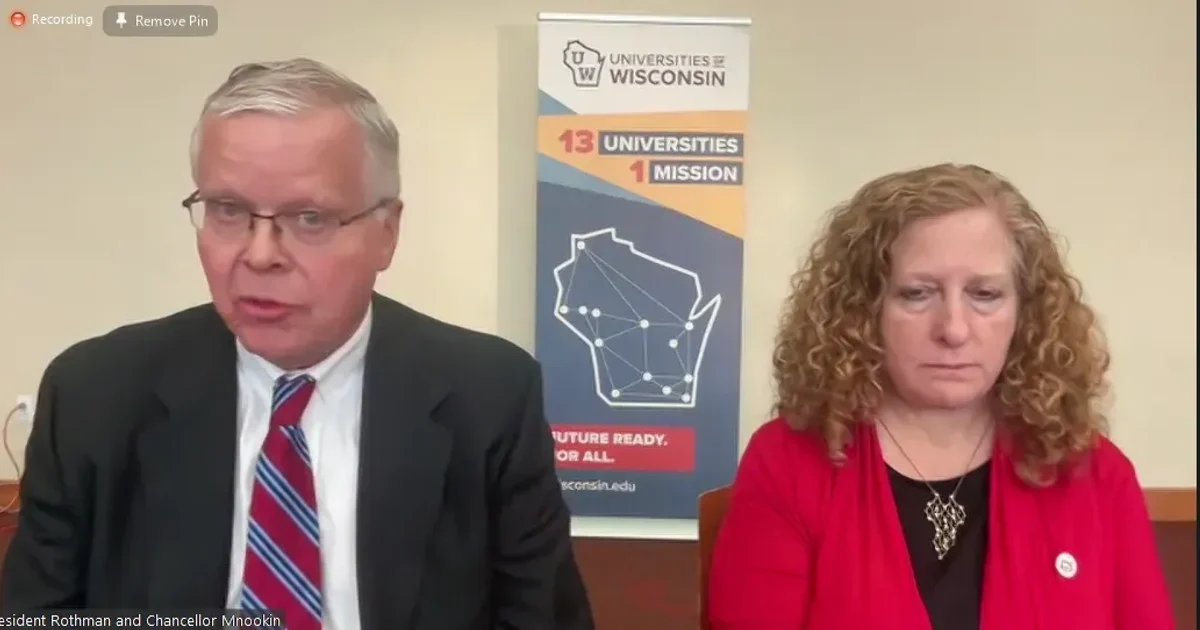
Jay Rothman faced intensifying demands to resign his post as University of Wisconsin System president on April 3, 2026, while faculty groups across the state challenged his administrative record. Pressure mounted after several branch campuses announced total closures or shifts to online only models, leaving thousands of students in rural districts without local access to traditional classroom instruction. This leadership crisis follows years of friction between Jay Rothman and the Wisconsin Legislature over funding levels and social programming.

Budgetary shortfalls forced the closure of multiple two-year satellite locations including UW Platteville Richland and UW Milwaukee at Washington County. Faculty senates argue these closures represent a failure to uphold the university mission to serve every corner of the state. Critics suggest the president prioritized political appeasement over the stability of the 13 university system. Financial records indicate that $33 million in immediate cuts triggered the initial wave of campus contractions during the current fiscal cycle.

Financial Deficits and Branch Campus Eliminations

Wisconsin higher education entered a period of extreme volatility when structural deficits began to outpace state tax appropriations. Analysts point to a decade of tuition freezes as a primary driver of the current fiscal instability. While the freeze kept costs low for students, it simultaneously starved the system of the revenue needed to maintain aging infrastructure at rural outposts. Administrative decisions to consolidate these locations met fierce resistance from local municipal leaders who view the campuses as economic anchors.

Enrollment figures at the branch campuses fell by nearly 50 percent over the last ten years. This demographic shift created a situation where the cost per student at smaller locations became three times higher than at the flagship campus in Madison. Rothman defended the consolidation efforts as a mathematical necessity. He argued that maintaining empty buildings was a disservice to the broader institutional health. Many instructors, however, viewed the move as a betrayal of the Wisconsin Idea which dictates that the boundaries of the university are the boundaries of the state.

Legislative leaders in Madison remained skeptical of requests for increased funding throughout the 2024 and 2025 sessions. Robin Vos, the Speaker of the Wisconsin State Assembly, frequently conditioned budget increases on the elimination of diversity, equity, and inclusion positions. Rothman eventually brokered a deal that traded several dozen staff positions for the release of hundreds of millions of dollars in stalled pay raises and building projects. That compromise alienated large segments of the faculty who felt their core values were used as bargaining chips.

Legislative Deadlock and DEI Funding Wars

Political divisions in the state house created a functional blockade for university operations. Republicans argued the system had become top heavy with administrators who did not contribute to classroom learning. Democrat lawmakers countered that the GOP was intentionally defunding public education to favor private alternatives. The resulting stalemate left the system in a state of perpetual uncertainty regarding its long-term solvency. Rothman attempted to navigate this middle ground but found supporters on neither side of the aisle.

Our branch campuses have reached a point where the status quo is no longer sustainable for the students or the taxpayers, stated Jay Rothman during a 2024 budgetary hearing regarding the necessity of reorganization.

Staffing levels across the system reached a twenty year low following the most recent round of layoffs. Tenure protections offered little defense for professors at the two-year campuses which were simply shuttered. Displaced students were told to transfer to four year institutions often located hours away from their homes. Such requirements proved impossible for non traditional students with local jobs or family obligations. Public outcry intensified when it became clear that no plan existed to revitalize the abandoned facilities.

Faculty Votes of No Confidence

Faculty members at several top institutions including UW Oshkosh and UW River Falls have already passed formal votes of no confidence in the president. These symbolic gestures reflect a deep seated resentment toward the corporate style management currently dominating the system. Professors claim that shared governance, an enduring tradition in Wisconsin, has been discarded in favor of top down mandates. Rothman maintains that the speed of the financial crisis required swift executive action rather than months of committee debate.

Education experts suggest the Wisconsin crisis is an indicator for other Midwestern university systems. Similar enrollment declines and legislative hostility are visible in neighboring states. The difference in Wisconsin is the sheer intensity of the partisan divide. Every budgetary decision becomes a proxy battle for larger cultural conflicts. Rothman, a former law firm executive with no prior experience in academic administration, was initially hired for his presumed ability to talk to the business community and the legislature. That experiment is now under scrutiny as the system continues to shrink.

Public trust in the university system has declined according to recent state wide polling. Residents in northern and western Wisconsin feel increasingly disconnected from the Madison based administration. They see the closure of local campuses as a sign that the state is abandoning rural communities. Rothman tried to address these concerns by promoting online degree programs, but rural broadband limitations make that a hollow promise for many. The President continues to hold his position despite the calls for his departure.

Enrollment Realities in Rural Wisconsin

Demographic data indicates that the number of high school graduates in the region will continue to drop until 2030. This so called enrollment cliff makes the expansion of physical campuses nearly impossible under current funding models. System leaders must decide whether to maintain a large network of small campuses or concentrate resources in a few urban hubs. The current strategy appears to favor the latter, much to the chagrin of rural advocates. 13 campuses currently make up the unified system, but that number is expected to dwindle further by the end of the decade.

Administrative bloat remains a point of contention for both faculty and the legislature. While campus instructors were laid off, the number of vice presidents and assistant deans at the central office in Madison stayed relatively stable. The disparity fueled the narrative that the leadership is protecting itself at the expense of the educational mission. Rothman has not yet announced a plan to reduce central office costs. He remains focused on the ongoing negotiations for the 2027-2029 biennial budget.

Students organized several protests on the Madison campus this morning to support their colleagues at the branch locations. They carried signs demanding that the Board of Regents replace the president with an educator. The Regents, appointed by the governor, have the sole authority to fire the system president. Governor Tony Evers has expressed frustration with the campus closures but has not yet called for a leadership change. The board is scheduled to meet later this month to discuss the future of the remaining two-year sites.

Legislative pressure shows no sign of abating as the next election cycle approaches. Lawmakers realize that criticizing the university system is a winning strategy with their base. The environment makes it nearly impossible for any president to achieve long-term stability. Rothman remains the face of the unpopular decisions required to keep the system afloat. His tenure is now defined by the very cuts he was hired to prevent.

The Elite Tribune Strategic Analysis

Public higher education in the Midwest is currently being cannibalized by a management philosophy that treats universities like failing retail chains. Jay Rothman is not the designer of the demographic cliff or the legislative hostility, but he has become the enthusiastic liquidator of the Wisconsin academic heritage. By trading DEI positions for basic operational funding, he signaled to the legislature that the university core values are for sale if the price is right. The transactional leadership has destroyed the morale of the faculty and the trust of the students.

The strategy of closing branch campuses is a short-sighted attempt to balance the books that ignores the long-term social cost. Once a university leaves a rural community, the intellectual and economic vacuum is rarely filled. The retreat into urban enclaves effectively disenfranchises the very taxpayers who fund the system. It creates an educational desert in the heart of the state. The administration argues that online learning is a substitute for a physical presence, but anyone who has tried to teach a lab science or a technical trade through a screen knows this is a lie. Wisconsin needs a defender, not a bookkeeper.

Failure to protect the 13 campus model will eventually lead to a system that serves only the elite and the urban. If the Board of Regents continues to support this path, they are complicit in the slow motion dismantling of one of the finest public institutions in the world. The time for corporate compromises has ended. Wisconsin needs a leader.