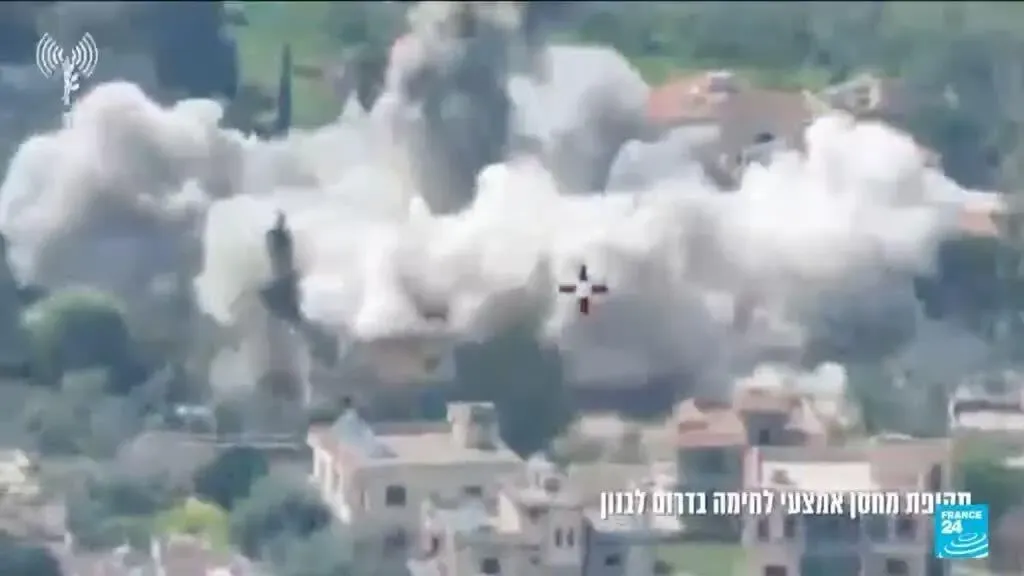
Israel Katz stated that his nation will maintain long-term military control over serious portions of southern Lebanon. On March 31, 2026, Katz’s announcement suggested Israel was preparing for a longer border presence. Defense Minister Katz confirmed the military plans to establish a security buffer that prevents residents from returning to villages near the border. Military commanders under Katz began implementing a strategy to demolish entire residential blocks within this newly declared zone.
Reports from the ground indicate that the scale of destruction mimics recent urban warfare seen in the Gaza Strip. UN officials describe the situation as a clear expansion of territorial control rather than a temporary security measure. Pressure on the Lebanese government has increased as the humanitarian costs of the offensive continue to mount.
Casualties have mounted rapidly since the offensive began in early March. Lebanese health officials report that more than 1,200 people have been killed in the violence. Relief agencies estimate that 1.2 million citizens have fled their homes to escape the advancing ground forces. Displacement on this scale has strained the infrastructure of Beirut and northern provinces. Thousands of families are currently sleeping in public parks and temporary shelters. Security experts note that the speed of the displacement mirrors the fastest refugee crises in modern history.
Israel Katz Details Border Demolition Plans
Specific directives issued by the defense ministry target villages located within three miles of the Israeli border. Israel maintains that these locations served as launch sites for Hezbollah rockets and anti-tank missiles. Satellite imagery confirmed the systematic leveling of structures in multiple border districts. Engineers have used controlled detonations to clear sightlines for armored units. Defense officials argue these measures are necessary to ensure the safety of northern Israeli communities. Residents of these border towns, however, face the prospect of permanent exile.
Parallels to the Gaza conflict have become undeniable to international observers. Beit Hanoun and Rafah are frequently cited by Israeli officials as models for the tactical clearing required in southern Lebanon. Destructive patterns observed in these Palestinian cities are now being replicated in Lebanese agricultural hubs. Entire orchards and farmsteads have been bulldozed to create open fire zones. This operational shift suggests a transition from counter-insurgency to territorial reshaping. Hardline ministers in Jerusalem have openly supported the idea of long-term settlement or military outposts in the area.
United Nations Warns of Southern Lebanon Instability
United Nations aid chief Tom Fletcher asked during a press briefing how the international community would prepare for a new addition to occupied territory. Fletcher warned that the indefinite nature of the military presence violates existing international agreements. Humanitarian access to the southern districts has been restricted by the ongoing demolition operations. Logistics teams struggle to deliver water and medicine to the few civilians remaining in the combat zone. Previous diplomatic frameworks, such as UN Resolution 1701, appear increasingly irrelevant. Peacekeeping forces have been sidelined by the intensity of the Israeli ground maneuver. The ongoing ground invasion has intensified risks for personnel, recently resulting in the death of three UN peacekeepers during border explosions.
The world must decide how it will respond to this new addition to occupied territory, as the expansion of military control threatens to redefine regional borders for generations.
Tom Fletcher stated that the destruction of private homes constitutes a potential war crime under international law. Legal experts at the United Nations are currently documenting the demolition of schools and clinics in the border region. Occupation forces have not provided a timeline for a withdrawal or a civilian handover. Instead, the focus remains on fortifying temporary bases with permanent infrastructure. Power lines and water pipes connecting the south to the rest of Lebanon have been severed. Restoring these services would require military cooperation that does not currently exist.
Permanent Displacement Patterns Emerge in Border Conflict
Lebanese families from the south are finding it nearly impossible to secure housing in the overcrowded capital. Rent prices in Beirut have tripled since the start of the March 2026 invasion. Schools have been converted into mass dormitories for the displaced. Social tensions are rising as resources like bread and fuel become scarce. Despite these hardships, the Israeli government insists the military zone is a closed area. Soldiers have been authorized to use lethal force against any individual attempting to cross back into the buffer zone.
Military analysts suggest the creation of this zone aims to push Hezbollah beyond the Litani River. Achieving this goal requires a total absence of civilian populations that could provide cover for fighters. Every standing structure is viewed as a potential tactical asset for the opposition. Because of this perception, the destruction of civilian property is seen as a military necessity by the IDF. Lebanon's sovereign claims over its southern territory are being methodically eroded by the physical changes on the ground. Infrastructure once used for commerce is now being repurposed for military logistics.
Southern districts face a future of total isolation from the Lebanese state. The permanence of the Israeli installations suggests a multi-year occupation is now the baseline scenario. Protests in Europe and North America have targeted the demolition policies with little effect on the ground operations. Diplomats in Washington continue to call for restraint while providing the munitions used in the clearing operations. Total control of the border area remains the primary objective of the current cabinet. No negotiations are scheduled to address the status of the displaced millions.
Lebanese officials will also have to manage residents who want guarantees before returning to damaged border areas.
Permanent Zone, Permanent Displacement
A permanent military zone would make temporary wartime displacement harder to reverse. Villages can be rebuilt after a ceasefire, but only if civilians are allowed back and basic security returns.
The UN warning matters because southern Lebanon already sits between state authority, armed groups and Israeli military pressure. Formalizing the zone could turn a border crisis into a long-term political fracture.