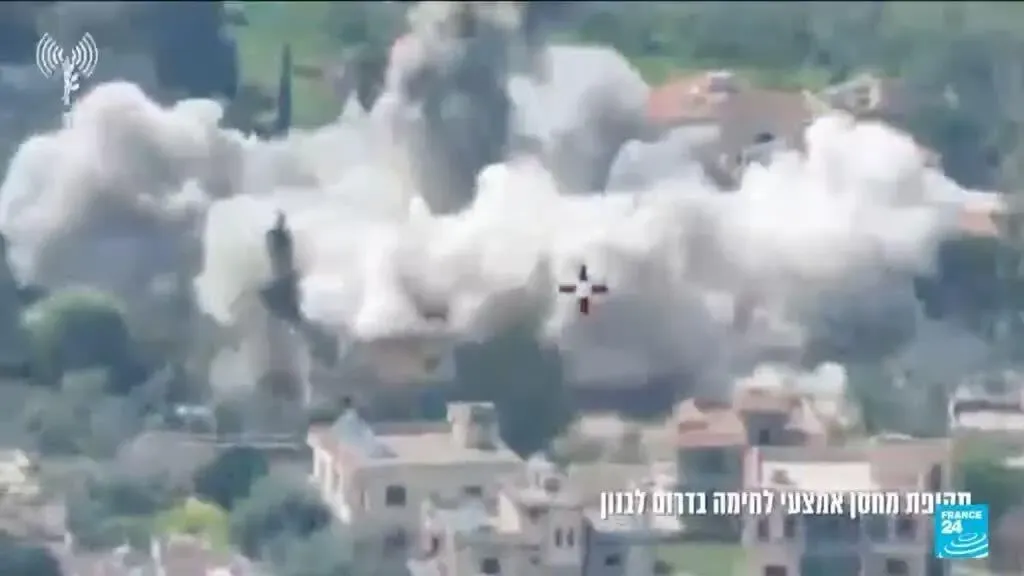
Israel Katz's southern Lebanon security-zone plan turned a battlefield objective into a political and legal test over displacement. Israel framed the zone as necessary to push Hezbollah away from the border and protect northern communities. Lebanese officials, aid groups and human rights organizations warned that the same policy could turn temporary wartime evacuation into a longer condition: villages emptied, roads controlled, homes damaged or destroyed, and civilians unsure whether return would ever be allowed.
The return question has become even sharper as U.S.-mediated talks try to convert fighting into a withdrawal-and-deployment framework. July discussions in Rome and earlier U.S. efforts centered on Israeli withdrawal from parts of southern Lebanon, Lebanese Armed Forces deployment and pressure to dismantle Hezbollah's armed infrastructure. The zone therefore is not only a military line. It is the ground on which Lebanon's sovereignty, Hezbollah's weapons and civilian return rights are now being argued.
Buffer Zones Change Civilian Life
A buffer zone can sound technical from a government podium. On the ground it means farms, homes, schools, clinics, roads and border villages become restricted, destroyed or too dangerous to use. Even if Israel's stated purpose is to remove Hezbollah infrastructure, the civilian effect can be the removal of ordinary life from the border area.
Return policy therefore matters as much as battlefield control. If displaced families are not allowed back after fighting slows, the security zone becomes a demographic and political instrument. A house can be called a tactical risk, but it is also a family's anchor to land, inheritance and local authority. Once that anchor is gone, displacement begins to harden into a new fact.
Lebanon's State Authority Is Being Tested
Southern Lebanon has long sat between Lebanese state institutions, Hezbollah's armed presence, UN peacekeeping arrangements and Israeli military pressure. A declared or de facto Israeli zone makes that balance more unstable. Beirut has to answer residents demanding return, parties demanding resistance, foreign mediators demanding order and an Israeli government demanding guarantees.
The U.S.-brokered framework makes the dilemma explicit. Israeli withdrawal is linked to Lebanese Armed Forces deployment and Hezbollah disarmament. For Lebanon's government, that could be a path toward restoring state authority in the south. For Hezbollah and its allies, it can look like an imposed formula that asks Lebanon to disarm under Israeli pressure while displacement continues. The imposed formula is why the issue has fed fears of internal fracture as well as cross-border war.
The Return Question Is the Core
The central civilian question is simple: when can people go home, and who decides? Israel argues that border communities cannot be secured if Hezbollah remains embedded near the frontier. Human rights groups argue that broad evacuation and no-return orders can become unlawful forced displacement if they are not tied to immediate, specific military necessity.
Amnesty International and other organizations have warned that repeated mass evacuation and no-return orders in Lebanon risk violating international humanitarian law. Israel rejects the idea that it is targeting civilians as policy and says its actions are tied to military necessity against Hezbollah. The legal dispute will continue, but the practical harm is immediate. Families cannot rebuild livelihoods while access to villages remains uncertain.
Bulldozers Create Evidence as Well as Facts
Destruction in a border zone has two effects. It changes the physical reality for civilians, and it creates a record for future legal and diplomatic fights. Satellite imagery, aid reports, military statements, evacuation orders, demolition footage and witness accounts will all become part of the argument over whether the zone was legitimate security policy or collective punishment by another name.
Documentation therefore matters. A ceasefire can stop fire. It does not automatically settle responsibility for what happened while people were away. If villages remain closed after the immediate security rationale weakens, the legal pressure will grow. If residents return safely under Lebanese state control, the zone may be framed as temporary. The difference will be measured in access, not language.
The Military Logic Has a Political Cost
Israel's security concern is real. Northern Israeli communities have lived with rocket, drone and infiltration threats, and no government can ignore the demand to keep armed forces away from the border. But turning that concern into a lasting military zone inside Lebanon carries a cost. It gives Hezbollah a displacement narrative, weakens Lebanese state credibility if Beirut cannot secure return, and complicates any international framework that depends on sovereignty.
The policy can therefore succeed tactically and still damage the political end state. A border emptied of civilians may reduce immediate threats. It can also create anger, legal claims and a longer conflict over land and return. Security achieved through prolonged displacement rarely stays limited to security.
The Zone Will Define the Ceasefire
The future of southern Lebanon will not be decided only by whether guns fall quiet. It will be decided by whether Israeli forces withdraw, whether the Lebanese army can hold ground, whether Hezbollah is actually constrained, and whether civilians can return without becoming bargaining chips. Those are practical tests, not slogans.
Katz's zone plan matters because security zones are easier to declare than to dismantle. Once roads, homes and village access are reorganized around military control, the burden shifts to displaced civilians to prove that normal life should resume. The burden shift is the severe danger. A temporary operation can become a permanent border arrangement unless the ceasefire explicitly protects return, reconstruction and Lebanese authority on the ground.