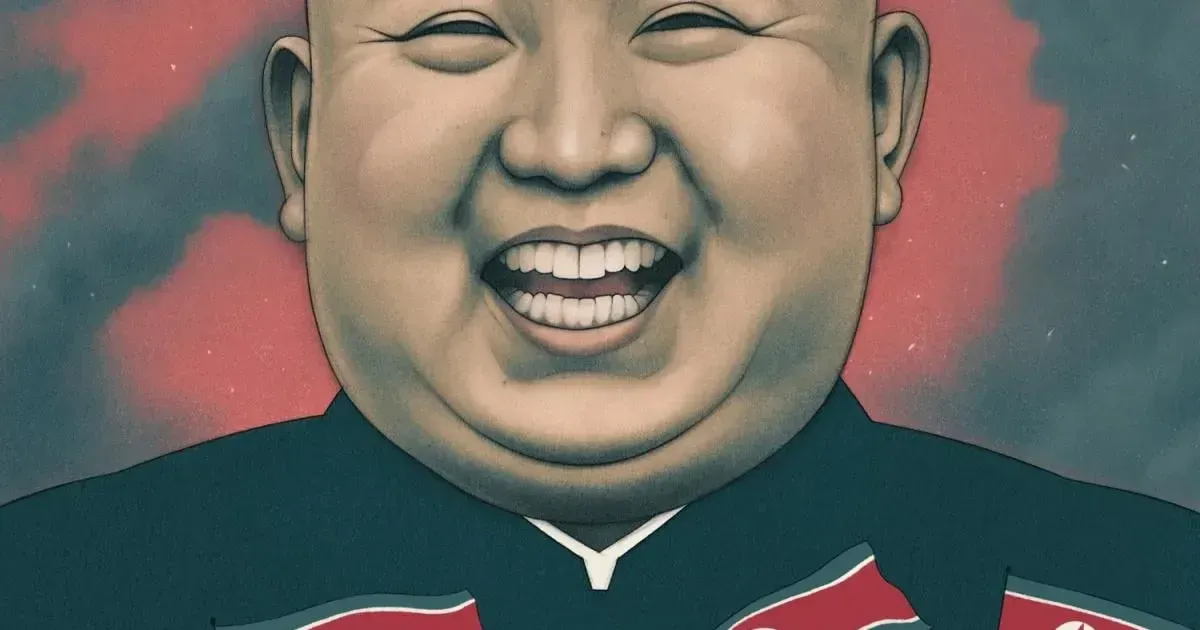
Kim Jong Un’s nuclear status claim signals that denuclearization language is losing practical force. The message is aimed at Washington as much as domestic audiences. It also narrows room for future talks to start from old assumptions. Kim Jong Un finalized a series of thorough military reviews on April 21, 2026, to solidify his nation's standing as a permanent nuclear power. Pyongyang now operates with a degree of strategic autonomy that was previously considered impossible under the weight of global sanctions. Foreign Affairs reports that the regime has achieved a strange triumph by modernizing its arsenal while simultaneously insulating its economy from external shocks. Successive American administrations failed to prevent this outcome, leaving Washington with few options beyond managing a nuclear-armed neighbor. Military parades in the capital now feature Hwasong-18 missiles that use solid fuel for rapid deployment.
Strategic analysts at Foreign Affairs describe the current situation as a cold peace. Negotiators once prioritized the complete, verifiable, and irreversible denuclearization of the Korean Peninsula, but that goal has become a relic of a previous geopolitical era. Kim Jong Un focused on survival through technical advancement rather than diplomatic compromise. He correctly gambled that the international community would eventually grow tired of maintaining a high-pressure campaign without clear results. Satellite imagery shows expanded enrichment facilities at the Yongbyon nuclear site.
Kim Jong Un and the Failure of Denuclearization
Diplomatic efforts dating back to the 1994 Agreed Framework and the later Six-Party Talks failed to curb the growth of the North Korean program. Pyongyang withdrew from the Nuclear Non-Proliferation Treaty in 2003 and conducted its first nuclear test only three years later. Every subsequent attempt to trade economic aid for disarmament only provided the regime with more time to refine its delivery systems. Kim Jong Un accelerated this process upon taking power, conducting more missile tests than his father and grandfather combined. The regime successfully miniaturized warheads to fit atop intercontinental ballistic missiles.
Western intelligence agencies overestimated the efficacy of financial blockades. While the United Nations Security Council passed numerous resolutions to choke the flow of capital, North Korea developed a strong shadow economy. Cyber operations became a primary source of revenue, targeting cryptocurrency exchanges and global banks to fund military research. Experts estimate that these digital heists have generated over $11 billion for the Supreme Leader's weapons programs. This financial independence allowed the regime to ignore traditional diplomatic incentives.
"The strange triumph of Kim Jong Un," according to analysts at Foreign Affairs, "marks a period when the regime successfully decoupled its survival from Western approval."
Internal stability remains high despite the lack of formal trade with most of the world. Kim Jong Un restructured the domestic market to allow for limited private enterprise while maintaining strict political control. Food security remains a concern, yet the elite in Pyongyang continue to enjoy luxury goods smuggled through porous borders. Centralized authority has not buckled under the weight of isolation. The military remains the ultimate guarantor of the Kim family dynasty.
Pyongyang Economic Resilience Under Sanctions
Global trade patterns shifted in favor of the regime as tensions between major powers increased. Russia and China provided a diplomatic shield at the United Nations, frequently vetoing new sanctions or refusing to enforce existing ones. Moscow's need for conventional artillery shells during its own conflicts opened a new revenue stream for the Kim regime. Cargo trains regularly cross the border at Tumangang, carrying military hardware in exchange for oil and grain. This partnership has effectively neutralized the impact of American-led isolation efforts.
Technological transfers from foreign partners likely accelerated the development of solid fuel engines. Unlike older liquid-fueled rockets, the Hwasong-18 can be launched with almost no warning, making it difficult for preemptive strikes to succeed. Kim Jong Un observed the fate of leaders like Muammar Gaddafi and Saddam Hussein, who abandoned their weapons programs only to be overthrown. Nuclear weapons are seen by the regime as the only reliable insurance policy against regime change. Recent tests include underwater drones capable of carrying nuclear payloads.
Washington Policy Shift Toward Cold Peace
American policymakers are now forced to consider a shift toward risk reduction instead of elimination. Accepting North Korea as it is requires a transition to a cold peace where the primary goal is preventing accidental escalation. Defense planners in Seoul and Tokyo are increasingly skeptical of the American nuclear umbrella. Calls for independent nuclear deterrents in South Korea have reached record highs in recent polling. The current reality is a tripolar nuclear standoff in Northeast Asia that involves China, Russia, and North Korea.
Limiting the spread of nuclear technology to non-state actors is now a higher priority than total disarmament. Pyongyang has a history of selling missile technology to various regimes in the Middle East and Africa. Keeping these weapons within the borders of the peninsula is a core objective for the Pentagon. Diplomacy is no longer a tool for disarmament but a theater for recognition. Kim Jong Un seeks to be treated as an equal to the leaders of other nuclear states.
North Korea Military Integration with Global Powers
Joint military exercises between the United States and South Korea continue to draw sharp rebukes from the North. Pyongyang views these drills as a rehearsal for invasion and responds with its own displays of force. Tactical nuclear weapons are now part of the regime's frontline defense strategy, intended for use against incoming naval armadas. Kim Jong Un has authorized his commanders to use nuclear weapons automatically if the central leadership is decapitated. This doctrine makes any kinetic intervention extremely risky for the West.
Future stability depends on the ability of Washington and Beijing to find common ground on regional security. China remains wary of a collapsed state on its border but is also frustrated by Kim's provocative behavior. Beijing prefers the status quo of a divided peninsula to a unified Korea aligned with the United States. Economic ties between China and North Korea have rebounded to pre-pandemic levels. The bridge over the Yalu River is an essential artery for the survival of the regime.
Nuclear Status Tests Washington Policy
Western leaders have spent three decades chasing a fantasy of a denuclearized Korean Peninsula while the Kim dynasty built a fortress of atoms. The failure of the United States to prevent this outcome is not a result of poor intelligence but a failure of will. Washington consistently chose the path of least resistance, applying sanctions that were easily avoided by a regime that views survival as a zero-sum game. North Korea did not win because of a superior ideology or a stronger economy; it won because it was more committed to its goals than the West was to its own stated principles.
Accepting a cold peace is not a diplomatic breakthrough but a surrender to reality. By allowing Pyongyang to reach this stage of technical maturity, the international community has effectively rewarded nuclear proliferation. Other aspiring nuclear states are watching and learning that if you can survive the first decade of sanctions, the world will eventually grant you a seat at the table. It is a dangerous precedent that will haunt global security for the remainder of the century. Diplomacy has failed, and the only remaining question is how long the current stalemate can hold before the next inevitable crisis. The era of CVID is dead.