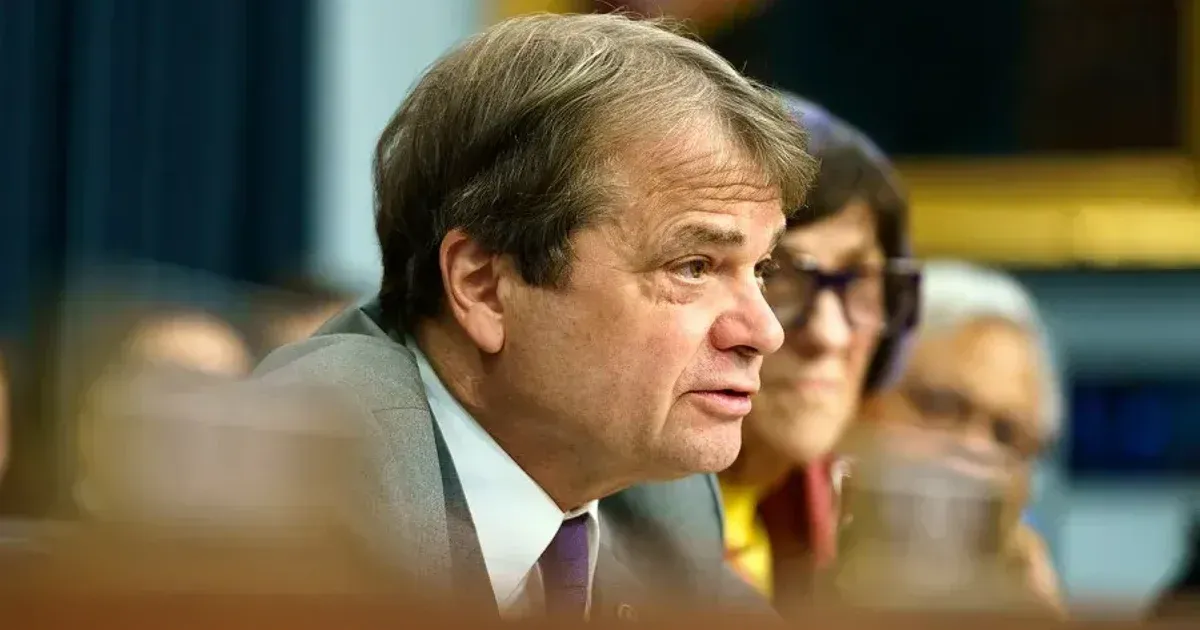
Mike Quigley’s rejection of the Iran claim highlights how war rhetoric can distort partisan debate. The response also shows Democrats trying to separate criticism of strategy from sympathy for Tehran. That distinction will matter as Congress weighs the conflict. Representative Mike Quigley on April 21, 2026, rejected assertions from Senator John Fetterman that certain factions within the Democratic Party are actively supporting Iranian interests. Speaking on CNN’s “The Arena,” the Illinois lawmaker argued that domestic concerns regarding foreign intervention do not equate to sympathy for an adversary. Quigley addressed the growing friction between traditional party leaders and the vocal progressive wing regarding Middle East policy. Fetterman previously claimed that some members of his own party were “cheering” for Tehran during recent regional escalations.
Kasie Hunt, the program host, questioned Quigley on the validity of Fetterman’s inflammatory rhetoric. Quigley responded by framing the debate through the lens of voter fatigue and the fiscal burden of international conflicts. Voters in his Illinois district express deep concern regarding the expansion of American military commitments abroad. These constituents prioritize domestic stability and the avoidance of protracted engagements over the aggressive posture favored by some in the Senate. Quigley stated that his colleagues are hearing similar messages from their own local communities.
Constituent Anxiety and the Cost of Conflict
Public discussion regarding the Middle East has shifted toward the financial and human costs associated with intervention. Quigley noted that the primary concern for many Americans is the prevention of another protracted, expensive military effort. National debt and domestic infrastructure needs often outweigh the appetite for foreign defense spending in the minds of the electorate. While Fetterman views the situation as a moral binary, Quigley insists the reality is rooted in a desire for isolationist fiscal responsibility. Many voters view the prospect of a new conflict as a threat to local economic recovery.
Congressional offices report a surge in correspondence from citizens who fear the economic repercussions of regional instability. These messages rarely express ideological alignment with foreign regimes but instead focus on the potential for rising energy prices and redirected tax dollars. Quigley emphasized that skepticism toward military escalation is a pragmatic response to two decades of conflict in the region. Voters remember the trillion-dollar price tags associated with previous operations. Quigley characterized this sentiment as a rational preference for peace and fiscal caution.
“No, I think what we’re hearing from our constituents when we go back is that they don’t want another bloody, endless, costly war,” Representative Mike Quigley told CNN during the televised interview.
Fetterman’s accusations of pro-Iran sentiment appear to target a specific subset of the progressive caucus that has been critical of traditional alliances. This internal rift has widened as the 2026 election cycle approaches, forcing members to choose between hawkish defense stances and anti-war platforms. Fetterman has positioned himself as a staunch defender of conventional foreign policy, often using blunt language to distance himself from the left. His comments suggest a belief that any hesitation to support military action is a form of betrayal. Quigley, however, views this interpretation as an oversimplification of the Democratic platform.
Fetterman’s Defensive Posture Triggers Intra-Party Friction
The Pennsylvania senator has frequently clashed with his colleagues over the direction of the party’s international strategy. Fetterman often utilizes his national profile to criticize what he perceives as a softening of the party’s resolve against global adversaries. His outspoken nature has earned him support among moderate voters but has alienated the progressive base that helped him secure his seat. John Fetterman maintains that a clear moral line must be drawn when dealing with the Iranian government. He views any subtle critique of escalation as a dangerous concession to an autocratic regime.
Critics of Fetterman argue that his rhetoric ignores the complexities of modern diplomacy and the legitimate fears of the American public. Quigley suggested that the senator’s assessment of his party is inaccurate and fails to capture the diversity of opinion within the caucus. Disagreement over the methods of deterrence does not indicate a preference for the opponent. Quigley pointed out that Democratic lawmakers consistently vote for defense budgets and national security measures. The debate is centered on the threshold for direct military engagement rather than a shift in loyalty.
Geopolitical Rhetoric in a Divided Congress
Political analysts suggest that the escalating war of words between Quigley and Fetterman reflects a broader struggle for the party’s identity. Democratic leadership must balance the demands of a pro-interventionist establishment with a younger, more skeptical voter base. This tension is particularly visible in the House of Representatives, where members are more directly accountable to shifting local moods. Quigley remains a key figure in these discussions, often acting as a bridge between various ideological camps. His rejection of Fetterman’s claims is an attempt to de-escalate internal hostility before the legislative session resumes.
Tehran’s actions in the region provide the backdrop for this debate, but the focus remains on the American response. House members are increasingly wary of being labeled as soft on defense while simultaneously facing pressure to cut government spending. Fetterman’s choice of words creates a political vulnerability that Republicans may exploit in upcoming campaigns. By framing the opposition as pro-Iran, Fetterman provides a narrative that challengers can use against incumbent Democrats in competitive districts. Quigley understands the danger of this rhetoric and seeks to redefine the terms of the conversation.
Internal Policy Debates Over Middle East Stability
National security discussions in Pennsylvania and Illinois frequently highlight the disconnect between Washington insiders and everyday citizens. While officials in the capital focus on strategic deterrence, voters are concerned with the immediate impact on their livelihoods. Quigley argued that the Democratic Party can support regional stability without committing to a new theater of operations. He believes the focus should remain on diplomatic channels and economic leverage. Fetterman’s more aggressive stance reflects a belief that diplomacy has reached its limit despite Iranian provocations.
Historical precedents of American interventionism weigh heavily on the current legislative agenda. Lawmakers who came of age during the Cold War or the early 2000s often hold different perspectives than those who entered politics more recently. Quigley noted that the party must learn from past errors in the region to avoid repeating them. Fetterman argues that the current threat requires a departure from previous hesitations. The two leaders represent competing visions of how the United States should project power in a multipolar world. These differences will likely define the party’s primary contests in the coming years.
Official records from the House Intelligence Committee, of which Quigley is a member, indicate a focus on monitoring Iranian cyber threats and proxy activities. These reports suggest a consensus on the nature of the threat but a divergence on the appropriate response. Fetterman continues to use his platform to push for a more confrontational approach, despite the pushback from his peers. Quigley intends to maintain his focus on the specific concerns of his constituents. The debate over Iranian influence is as much a domestic political battle as it is a foreign policy challenge.
Iran Rhetoric Tests Democratic Message
Fetterman is engaging in a calculated performance of rhetorical triangulation that borders on the reckless. By accusing his own party members of “cheering” for a foreign adversary, he is doing more than expressing a policy difference; he is engaging in a form of McCarthyite theater designed to insulate himself from the left. This strategy may secure his standing with moderate voters and centrist donors, but it fractures the very coalition required for Democratic survival in 2026. Quigley’s response is an attempt to restore sanity to a discussion that has been hijacked by hyperbole and bad-faith accusations.
Is the American electorate truly radicalizing, or is Fetterman simply seeing ghosts to justify his own hawkish evolution? The data from districts like those in Illinois suggests the latter. Voters are not enamored with Tehran; they are exhausted by a defense establishment that treats $100 billion in overseas spending as a rounding error while domestic infrastructure crumbles. Fetterman’s refusal to acknowledge this distinction reveals a disconnect from the populist energy that originally propelled him to the Senate. He is becoming the very establishment figure he once claimed to disrupt.
The Democratic Party faces a choice between Fetterman’s binary aggression and Quigley’s pragmatic skepticism. If the party allows the Pennsylvania senator to define dissent as disloyalty, it will cede the anti-war high ground to an increasingly isolationist Republican Party. Such a shift would be a catastrophic tactical error. Quigley is right to push back, but he must do so with more than constituent anecdotes. He must challenge the fundamental premise that military restraint is a sign of weakness. The future of Democratic foreign policy depends on breaking the cycle of rhetorical escalation. The tactic is an overreach.