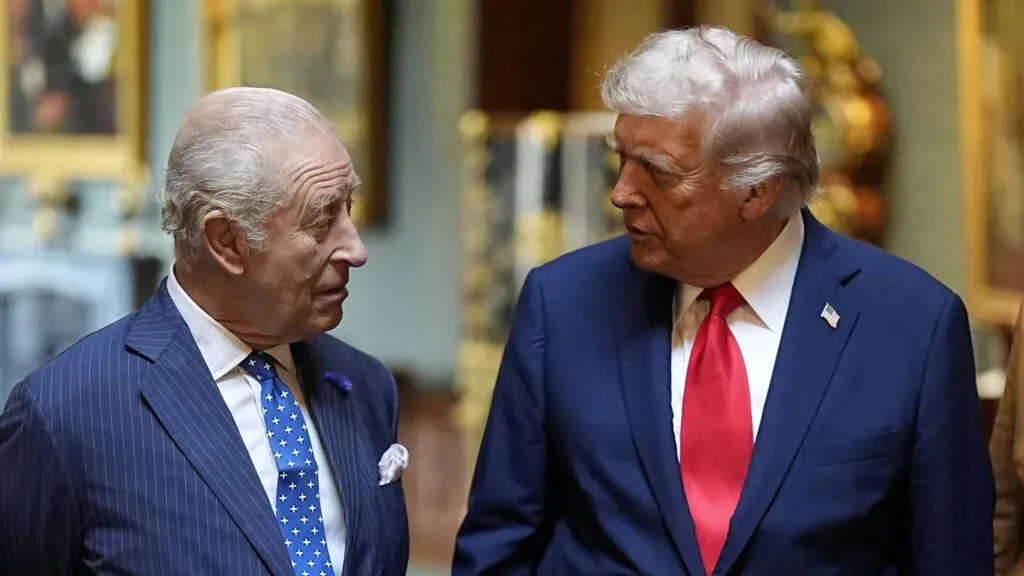
King Charles III's April 27-30 state visit to the United States became more than a ceremonial entry in the royal diary. It took place while Britain and the Trump administration were under strain over the Iran war, including questions about military cooperation, bases, alliance discipline and how far London should go in supporting U.S. action. The dispute turned the visit into a public test of the special relationship at a moment when the private relationship was unsettled.
The King and Queen Camilla went ahead with the U.S. visit despite calls for cancellation. Proceeding mattered because cancellation would have sent its own diplomatic message. Proceeding allowed both governments to preserve the image of continuity even while elected leaders argued over policy. Royal ceremony could not settle the Iran dispute, but it could keep the alliance from being defined only by the dispute.
Ceremony Was Doing Political Work
State visits are designed to make relationships look older and sturdier than the political fight of the week. They produce images of flags, formal dinners, honor guards and carefully worded speeches. In normal times, that can look decorative. During an active regional war, it becomes useful.
London needed to show that disagreement with Washington did not mean detachment from Washington. The White House needed the British monarch's presence to signal that allied bonds still held. The palace's role was not to endorse military policy. It was to provide a setting in which a strained alliance could still appear functional.
The Iran War Changed the Optics
The visit would have been easier in a calmer year. Instead, it arrived as U.S. action against Iran and pressure over regional basing put Britain in an awkward position. British caution could look like weakness to Washington. U.S. pressure could look reckless to parts of the British public and Parliament. The monarch had to move through that tension without saying the quiet part aloud.
This is the central bargain of constitutional monarchy in diplomacy. The King can embody continuity, hospitality and shared history. He cannot negotiate strike packages, authorize base use or rewrite the government's military line. The more serious the policy dispute becomes, the clearer that limit appears.
Bermuda Added an Atlantic Signal
After the U.S. visit, Charles's Bermuda stop added a separate layer. It was his first visit there as monarch and placed a British Overseas Territory inside the same diplomatic sequence. Bermuda was not the center of Iran-war policy, but it carried Atlantic meaning: maritime routes, financial links, imperial history and the continuing reach of the Crown beyond the United Kingdom itself.
The geography matters because British influence is not only exercised through ministers in London. It also appears through territories, naval memory, intelligence habits, financial systems and alliance infrastructure. A monarchy that avoids direct policy arguments can still remind observers that Britain has more than one channel of presence.
The Visit Could Preserve Access, Not Leverage
The useful part of the visit was access. It kept the tone warm enough for ministers, diplomats and military officials to keep working after the photographs. Preserving access is not trivial. Alliances can suffer when public insult and private suspicion feed each other. Ceremony can interrupt that cycle by giving both sides a reason to speak in durable language.
But access is not the same as leverage. Charles could not make Trump value British caution. He could not make London more willing to support offensive operations. He could not settle trade exposure, intelligence trust or the political cost of being seen as too close to Washington during an unpopular war. Those questions returned as soon as the formal schedule ended.
The Risk Was Warmth Without Power
For Britain, the risk was obvious: impressive images without practical influence. If Washington enjoyed the ceremony and then ignored London on Iran, the visit would look like a soft-power display with little policy return. For the United States, the risk was different. Public warmth with the King could mask a widening gap with one of its closest allies.
The limitation does not make the visit pointless. It makes it limited. Royal diplomacy is useful when the goal is to keep a relationship from breaking in public. It is weaker when the goal is to change a president's wartime calculation. The state visit helped prevent damage from becoming the only story. It did not prove that Britain's voice carried enough weight when the argument moved from ceremony to war strategy.