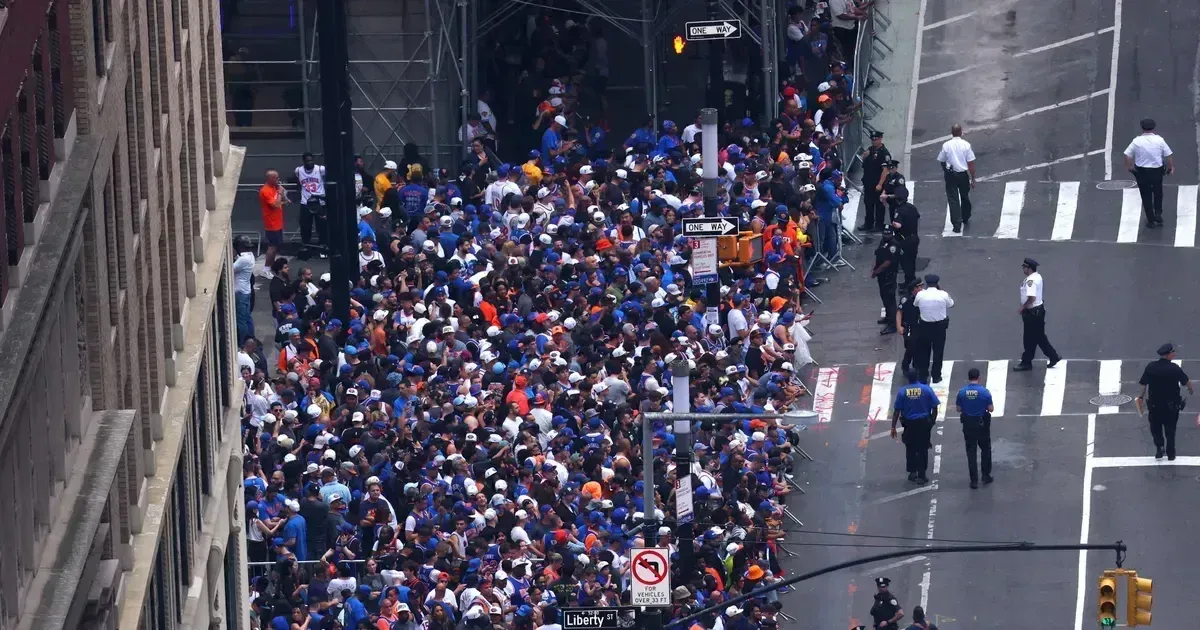
The parade doubled as a civic pressure test for police, transit officials and city schools. Fans treated the morning as a public holiday even though the city kept classrooms open. New York City residents flooded the financial district hours before the first floats began their journey through the Canyon of Heroes. Celebrations surrounding the New York Knicks victory drew hundreds of thousands to lower Manhattan on June 18, 2026, marking the franchise's first title in over half a century. Police officers struggled to manage the surge of fans who arrived before dawn to secure positions along the historic route. High-rise windows provided a secondary gallery for office workers who prepared to rain paper down on the passing motorcade. NYPD officials issued a public notice at 7:30 a.m. stating that all designated viewing areas reached full capacity. This early arrival forced latecomers to seek vantage points blocks away from the primary ticker-tape corridor. Spectators stood on bus stop shelters and balanced on scaffolding to catch a glimpse of the team bus. Security cordons remained tight at every intersection as the crowd size exceeded initial department projections.
James Dolan, the owner of the Knicks, confirmed shortly before the event that the team accepted an invitation to the White House. This visit will mark the first time an NBA championship team has met with the president during the current administration. Dolan stated he felt very proud to bring the trophy to Washington. His announcement ends an enduring pattern of championship teams declining such invitations over the last decade.
"We are excited to celebrate this achievement on a national stage and bring the trophy to Washington," James Dolan said during a morning press briefing.
Dolan's decision arrived as the city prepared for the largest public gathering since the turn of the decade. Professional basketball analysts suggest the move clarifies the team's stance on traditional protocols that had recently fallen out of favor. The roster is expected to travel to the capital before players disperse for their various summer schedules.
Political and Educational Tensions
Mayor Eric Adams faced heavy pressure from the public to declare a municipal holiday for the occasion. Students and teachers across the five boroughs launched petitions asking for school cancellations, arguing the parade was a once-in-a-lifetime experience. City Hall refused the requests, insisting that the academic calendar must remain the priority. Officials maintained that schools would follow a normal schedule despite the logistical hurdles facing commuters. Frustration grew among parents who felt the city missed an opportunity to foster community spirit. One teacher noted that many classrooms would likely see high absence rates regardless of the official policy. Adams stood by his decision to keep schools open despite the large logistical disruptions expected across the transit system. Thousands of teenagers were spotted in the crowds wearing jerseys over their school uniforms.
Fans unable to reach the parade route turned to digital platforms to witness the festivities. Media outlets rebranded the metropolitan area as Knick York City to capture the local fervor surrounding the win. Live streams provided high-definition coverage of the ticker-tape showers and player speeches for those trapped at work or school. Virtual viewing parties allowed fans across the country to participate in the Manhattan-centric celebration.
Broadcasters reported record-breaking viewership numbers for the morning coverage. Seeing confetti raining down on the championship roster provided a long-awaited bookend to decades of postseason disappointment. Even without a school holiday, the energy in the streets remained electric. Local businesses reported a surge in sales of blue and orange merchandise that depleted inventories in minutes.
Security Measures and Economic Impact
Security measures reached high levels throughout the morning as the NYPD coordinated with federal agencies. Officers established checkpoints at major intersections to prevent overcrowding in the narrow streets of the financial district. Large screens were erected in nearby parks to accommodate the overflow crowds. Despite the density of the gathering, no major security incidents were reported during the early hours of the procession.
Official itineraries for the White House trip are already underway. The visit is expected to take place later this month before the players depart for their off-season schedules. Sources indicated that the entire active roster and coaching staff plan to attend the ceremony in Washington. The presence would represent the most complete championship delegation at the executive mansion in several seasons.
Analysts suggest the victory could reshape the team's long-term market influences. Ending a drought that lasted since 1973 sharply increased the value of the franchise. Merchandise sales across the city hit record levels in the 48 hours leading up to the parade. Commercial sponsors have already begun bidding on increased exposure opportunities for the upcoming season.
New York will spend the next several days clearing tons of paper from the pavement.
Sanitation crews were staged at the end of the route to begin work immediately after the final float passed. Sanitation officials estimated the amount of ticker-tape used surpassed previous celebrations for other local sports teams. Economic impacts of the event on local businesses in lower Manhattan are expected to be large. Financial district restaurants reported full reservations for the entire afternoon following the parade's conclusion.
A Title With Civic and Political Weight
The return of the Knicks to the championship ranks is a huge economic driver for New York City. Beyond the immediate surge in tourism and retail sales, the team's decision to visit the White House indicates a shift in the relationship between professional sports leagues and the executive branch. The visit restores a traditional protocol that had become increasingly politicized over the last decade. It indicates a pivot toward institutional engagement that could influence other major sports leagues.
For the city administration, the refusal to cancel school reflects a commitment to institutional stability over populist gestures. While the decision angered many, it maintained the city's operational rhythm during a period of extreme logistical strain. The enormous turnout proves that the team's brand remains a potent cultural force in the city, regardless of the years spent in the lottery. New York's identity as a basketball capital is no longer a matter of nostalgia.