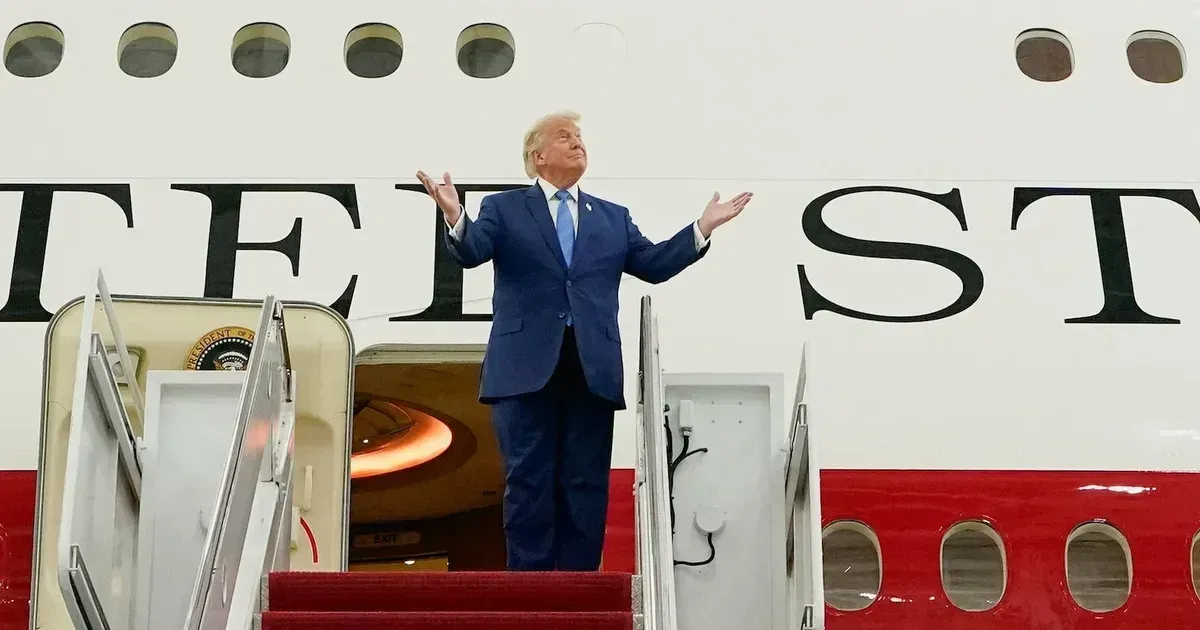
Donald Trump showcased a Qatari-donated Boeing 747 at Joint Base Andrews, presenting the aircraft as a temporary answer to long-running delays in the Air Force One replacement program. The event took place on June 19, 2026, as the Air Force continued modifying the aircraft for presidential service. The tour turned a procurement workaround into a political and ethics fight over foreign gifts, security and presidential image. ABC News reported that Trump praised the plane as one of the world's most luxurious aircraft and described it as a practical bridge until new Boeing-built presidential jets arrive. The Qatari 747 is roughly 14 years old and was valued around $400 million before modifications, according to ABC's reporting. Previous estimates and lawmaker questions have put the potential retrofit cost far higher, making the final public bill one of the central unresolved questions. The administration also has to show that security upgrades are not being rushed to satisfy a political timeline.
A Bridge Plane With Political Weight
The administration's argument is straightforward: the existing presidential aircraft are aging, the Boeing replacements have been delayed, and a ready 747 can fill the gap. That case becomes more complicated because the plane came from Qatar, not a normal procurement process. The unusual origin also makes the aircraft harder to defend as a neutral government asset, even if ownership is routed through formal channels. That is especially true because the aircraft will be seen through the politics of Trump's foreign relationships as much as through the mechanics of aviation procurement.
Foreign gifts to a sitting president or the U.S. government carry legal, diplomatic and perception risks. Even if lawyers describe the donation as unconditional, the public question is whether a luxury aircraft from a foreign monarchy can ever look neutral.
The aircraft is being sold as a bridge solution, but the gift itself has become the story.
That is why lawmakers and ethics experts have focused on the chain of ownership, the cost of modifications and what happens after Trump leaves office. A presidential aircraft is not just transportation. It is a symbol of state power, independence and security. That symbolism is why the provenance of the jet matters almost as much as its performance.
Security Standards Meet Luxury Design
Turning a donated luxury jet into an Air Force One platform requires more than repainting the fuselage. Communications, defensive systems, secure workspaces, maintenance rules and classified modifications all matter. Officials have emphasized that the aircraft must meet presidential safety standards before entering service. Those standards include secure communications, survivability, countermeasure systems and compartment layouts that ordinary luxury aircraft were never built to carry. Every retrofit decision will have to satisfy the people responsible for continuity of government, not only the people responsible for schedules. That security burden is why the bridge-plane argument will remain under scrutiny even if the aircraft looks ready from the outside.
The tension is speed. The more quickly the aircraft is brought online, the more scrutiny falls on which modifications are prioritized and which are deferred. A plane designed for elite private travel is not automatically ready for the operational burden of presidential command.
PBS described the aircraft as a bridge plane until the newer Air Force One aircraft arrive. That framing may calm procurement concerns, but it does not erase the novelty of accepting a foreign-donated 747 for one of the most sensitive aviation roles in government.
The procurement history gives the controversy extra force. Boeing's next-generation presidential aircraft program has faced repeated delays, leaving the White House and Air Force with pressure to explain whether a foreign-donated bridge aircraft is a practical shortcut or a political workaround. That distinction matters because presidential transport is built around continuity of government, not only luxury travel.
Congressional oversight is likely to focus on three details: who pays for the modifications, who owns the aircraft during and after service, and whether any part of the arrangement creates a benefit for Trump personally. Until those questions are answered in public, the aircraft will remain a symbol of both impatience with Boeing delays and discomfort with foreign gifts.
The Optics Are the Vulnerability
The strongest criticism of the Qatari jet is not that the United States lacks the technical ability to secure it. It is that the arrangement blurs lines the presidency usually tries to keep bright. A foreign-funded luxury plane is easy to explain as efficient and difficult to defend as clean.
Trump benefits from the visual power of unveiling a grand aircraft. Opponents benefit from the same image because it reinforces questions about gifts, influence and personal spectacle.
The strategic risk is that a bridge aircraft meant to solve a logistics problem becomes another trust problem. Air Force One is supposed to project national continuity. If the public sees the plane mainly as a foreign favor, every flight will carry more political baggage than passengers.