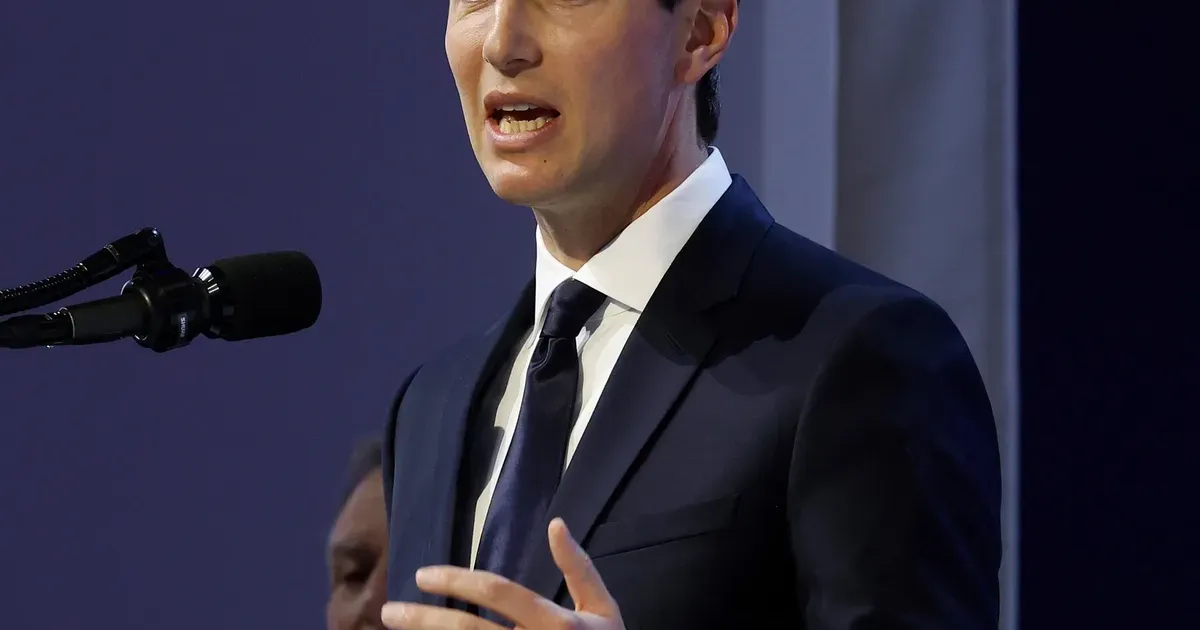
Jared Kushner traveled to Saudi Arabia and Qatar last week to conduct high-level diplomatic discussions on behalf of the administration. Simultaneously, the former White House adviser used the trip to pitch his private equity firm to the same foreign officials he met in an official capacity. Affinity Partners, the investment vehicle founded by Kushner, is currently seeking at least $5 billion in new capital from sovereign wealth funds and private investors across the Persian Gulf. This dual track of statecraft and fundraising has reignited long-standing concerns regarding the blurring of public service and private gain within the executive branch.
Aides familiar with the itinerary confirmed that Kushner held multiple sessions with representatives from the Public Investment Fund of Saudi Arabia. These meetings occurred in the same windows as his briefings on regional security and trade stabilization. Records indicate that Affinity Partners already manages approximately $3 billion, with a significant portion of that capital originating from Riyadh. The push for an additional $5 billion would effectively triple the firm's assets under management and provide Kushner with millions of dollars in annual management fees.
While federal ethics laws generally prohibit government employees from participating in matters that affect their personal financial interests, the role of a special envoy often exists in a regulatory gray area. Kushner is non-salaried representative, a status that allows him to bypass certain disclosure requirements that apply to full-time cabinet members. Still, the optics of soliciting billion-dollar checks while negotiating regional peace treaties have drawn the attention of ethics watchdogs in Washington and London.
Foreign Investment Targets for Affinity Partners
Managers at Kushner's firm have focused their recent efforts on the Public Investment Fund, which is chaired by Crown Prince Mohammed bin Salman. In fact, the Saudi fund previously committed $2 billion to Affinity Partners despite internal pushback from its own investment committee. Documents reviewed by investigators at the time suggested the committee harbored concerns about the firm's lack of a track record. But the board of the sovereign wealth fund overruled those objections and proceeded with the investment.
Separate solicitations have targeted the Abu Dhabi Investment Authority and the Qatar Investment Authority. These entities control trillions of dollars in global assets and frequently use their capital to cement political alliances. In Qatar, Kushner met with senior members of the ruling family to discuss regional mediation efforts. By contrast, his business associates held parallel meetings with the Qatari sovereign fund to discuss the specifics of a possible equity partnership. This simultaneous engagement forces foreign governments to weigh their diplomatic relationship with the United States against the financial demands of a presidential relative.
Conflicts of Interest in Middle East Diplomacy
Legal experts suggest that the lack of a blind trust remains the central issue in Kushner's current arrangement. Traditional protocol for high-ranking officials involves divesting from active management of private firms to prevent the appearance of a quid pro quo. Kushner has maintained his ownership stake in Affinity Partners throughout his tenure as an envoy.
The intermingling of private financial solicitation with official diplomatic missions creates a situation where foreign leaders may feel compelled to invest in order to maintain favorable standing with the White House.
In fact, the $5 billion fundraising goal coincides with several sensitive diplomatic negotiations regarding the sale of advanced weaponry to Gulf states. To that end, the administration has been pushing for new security guarantees that would benefit several of the same countries currently being courted by Kushner's firm. Critics argue that these overlapping interests make it impossible to determine if American foreign policy is being driven by national security or by the prospect of future investment returns. One specific proposal involves a multi-billion dollar infrastructure project that would require both state approval and private equity backing.
Ethical Scrutiny of Kushner's Private Equity Solicitations
Internal memos from the State Department suggest that some career diplomats have expressed unease about the arrangement. For one, the logistics of these trips often involve shared resources, such as secure communication lines and government-provided security details. Yet the division between the diplomatic mission and the business pitch is rarely defined in writing. In particular, the absence of a formal ethics agreement for Kushner's envoy role means there is no mechanism to prevent him from discussing business deals during official state dinners. The Public Investment Fund has declined to comment on the specific nature of the recent solicitations.
But the pressure on Kushner is mounting as members of the House Oversight Committee demand access to his travel logs. This represents the third time in four years that his business dealings have faced formal inquiry. For instance, a 2024 report highlighted that Kushner's firm had not yet returned a profit for its primary investors despite collecting nearly $100 million in fees. Even so, the prestige of his political connection appears to be a sufficient draw for sovereign funds looking to maintain a direct line to the Oval Office. The firm's marketing materials emphasize its ability to handle complex geopolitical shifts for its partners.
Diplomatic Access and the Five Billion Dollar Goal
Investment professionals in New York note that raising such a large sum for a relatively new firm is an anomaly in the current market. Most private equity groups spend years building a performance history before seeking multi-billion dollar commitments. By contrast, Kushner's primary asset is his perceived influence over American foreign policy. At its core, the value proposition of Affinity Partners relies on the belief that Kushner will remain a central figure in Mideast diplomacy for the foreseeable future. The perception is bolstered by his frequent appearances at the side of world leaders during high-stakes summits.
Sovereign wealth funds in the region often view these investments as a form of geopolitical insurance. For instance, a significant commitment to a firm led by a presidential confidant can serve as a hedge against shifting diplomatic priorities. Meanwhile, Kushner continues to expand his firm's footprint with new offices in Miami and Jerusalem. These locations mirror the geographic focus of his diplomatic work, further blurring the lines between his two roles. Recent filings show that Affinity Partners has already deployed capital into several Israeli technology startups that specialize in cybersecurity. The Israeli government provided regulatory fast-tracking for at least one of these deals.
The Elite Tribune Perspective
Should the American public be surprised that the corridors of power have been transformed into a global bazaar for private equity? The current situation involving Jared Kushner is not merely a lapse in judgment; it is the logical conclusion of a system that has systematically dismantled the barriers between public service and private profit. For decades, the Washington establishment maintained a polite fiction of ethical distance, using blind trusts and cooling-off periods to mask the eventual monetization of political influence. Kushner has simply dispensed with the pretense.
By soliciting billions from foreign sovereigns while simultaneously acting as the nation’s primary interlocutor in the Middle East, he has effectively turned the office of the Special Envoy into a lead-generation tool for his balance sheet. It is the new architecture of influence, where the traditional safeguards of the Hatch Act and emoluments clauses are treated as quaint relics of a pre-transactional era. If a presidential son-in-law can use statecraft for a five-billion-dollar payday without consequence, then the very concept of the public interest has been successfully privatized.
We are no longer debating whether a conflict of interest exists. what is unfolding is the birth of a permanent consultant class that views the US State Department as a subsidiary of its investment portfolio.