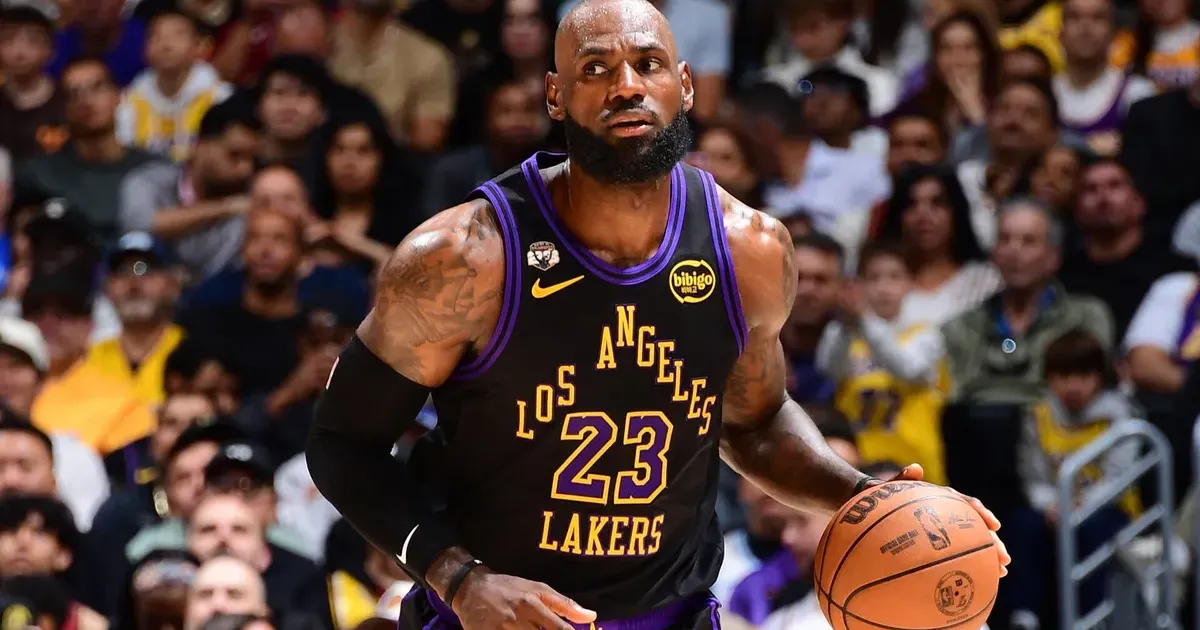
LeBron James eclipsed the record for most total victories in professional basketball history, leading his team to a dominant win over the Cleveland Cavaliers. The milestone came on April 1, 2026. Victory at Crypto.com Arena saw the veteran forward achieve his 1,229th combined win across the regular season and the playoffs. This tally includes 1,045 regular season triumphs and 184 postseason victories, pushing him past the previous benchmark held by Kareem Abdul-Jabbar for decades. James finished the evening with a modest stat line of 14 points, six assists, and five rebounds in the 125-108 win.
History often works in cycles, as James reached this peak against the very franchise where he began his career and earned his first professional win. Cleveland proved to be a fitting backdrop for a record that highlights a 23-year journey of sustained competitive relevance. While Kareem Abdul-Jabbar still maintains the record for most regular-season wins at 1,074, the aggregate total now belongs to the Lakers star. Statisticians anticipate James will claim the regular-season crown as well if he remains healthy through the early months of the next season.
Los Angeles Lakers coaching staff used a balanced rotation to manage the aging star’s minutes, particularly following a difficult start to the 2025-2026 campaign. Early season struggles were defined by a 14-game absence due to sciatica, an injury that threatened to derail his record-setting pace. Physical recovery allowed him to return to a roster currently fighting for playoff positioning in a crowded Western Conference. Success on the court Wednesday night was driven largely by collective effort rather than individual scoring dominance.
Winning Statistics and Mathematical Dominance
Statistical depth defines the career of James, who now sits atop the league in multiple historical categories. He currently holds the all-time marks for games played at 1,617 and total career points at 43,325. His resume includes 22 All-Star selections and 21 All-NBA honors, showcasing a level of consistency that few peers in any sport have matched. High turnover numbers, totaling 5,634, serve as a byproduct of his high-usage style and nearly a quarter-century of primary ball-handling duties. Total field goals made by James stand at 15,919, yet another metric where he has distanced himself from the pack.
Records held by Kareem Abdul-Jabbar once seemed overwhelming, but the sheer volume of games played by James has made the impossible look routine. James currently ranks fourth all-time in assists, sixth in steals, and fifth in triple-doubles. Such accumulation of data points suggests a player who has mastered the art of statistical padding through sheer durability. The Los Angeles Lakers have benefited from this longevity, even as James has transitioned into a more calculated, less explosive version of his former self. His scoring average has dipped this season, reflecting the natural decline of a 41-year-old athlete.
“No NBA player has been part of more wins than LeBron James,” according to an official statement from the NBA record-keeping department on April 1, 2026.
Critics point to the expanded playoff format as a reason for the discrepancy between James and Kareem Abdul-Jabbar in the total win column. Modern schedules offer more opportunities for postseason victories than the eras of the 1970s or 1980s. Despite these differences, the ability to show up for 292 playoff games is a feat of endurance that defies conventional logic. James has outlasted nearly every contemporary from his 2003 draft class, most of whom retired nearly a decade ago. Basketball historians will debate the value of these total win numbers compared to winning percentages for years to come.
Luka Dončić and the Next Generation Pursuit
Luka Dončić provided a glimpse into the future of these records by scoring 42 points in the same contest. The Slovenian guard reached the 15,000-career-point milestone at just 27 years and 31 days old. Only Kevin Durant and James reached that scoring mark at a younger age, placing Dončić on a trajectory to challenge several of the records being celebrated tonight. Dončić added 12 assists and five rebounds to his 42 points, outperforming the record-breaker in every statistical category on the floor. Competition between the established legend and the rising superstar highlighted the generational transition currently occurring in the league.
Pressure to maintain this scoring pace for another 15 years is the primary hurdle for Dončić or any other challenger. James achieved his success through a rigid health regimen that costs millions of dollars annually in recovery technology. Most players see their productivity fall off a cliff after age 35, yet James continues to contribute to winning basketball in his fourth decade. The Los Angeles Lakers organization has built its current marketing and basketball strategy entirely around this historic tail end of a career. Other teams are now attempting to replicate this model of veteran preservation with mixed results.
Evolution of the Modern NBA Iron Man
Sciatica issues earlier this season ended some of the most impressive streaks in sports history. James saw his legendary double-digit scoring streak end, along with his run of consecutive All-Star starting assignments. These developments indicate that while the wins continue to pile up, the individual dominance is finally beginning to fracture. The Los Angeles Lakers must now find ways to win games where James is a supporting actor instead of the lead protagonist. Wednesday’s victory against the Cavaliers showed glimpses of this new reality, with James taking a backseat to younger teammates for long stretches of the second half.
Longevity at this scale changes the way front offices evaluate aging stars. Contracts for players in their late 30s are becoming more common as medical advancements extend prime years. LeBron James is the prototype for this new era, proving that a player can remain a viable starter long after their physical peak. This milestone is the final proof of concept for the modern athlete as a long-term investment. Whether future players possess the mental fortitude to endure 23 seasons of travel and competition is a different matter entirely. Winning remains the only metric that truly validates the grueling process of an NBA season.
Longevity Behind the Record
Does the crowning of a new wins leader actually settle the debate over basketball supremacy, or does it merely reward the person who stayed at the party the longest? This record is a monument to endurance, not necessarily to peak performance. James has played three more seasons than Kareem Abdul-Jabbar and has benefited from a playoff structure that bloats the schedule for the sake of television revenue. To suggest that 1,229 wins makes him a greater winner than players with better Finals records or higher career winning percentages is a fallacy of logic that the sports media is all too eager to embrace.
The Los Angeles Lakers find themselves in an unstable position where they are celebrating a retirement tour that refuses to end. While James collects his flowers, the team remains a middle-of-the-pack seed in the Western Conference. They are essentially a traveling museum exhibit, prioritizing individual milestones over the cutthroat pursuit of another championship. Dončić, then again, is currently playing the brand of dominant, high-stakes basketball that James used to own. One man is chasing ghosts while the other is chasing a legacy that is still very much in doubt.
Ultimately, the record books will reflect the numbers, but they will never capture the diminishing returns of a legend who refuses to walk away. Performance on the court on April 1, 2026, confirmed that the era of James as a singular force is over, regardless of what the win column says. The King has become a clerk, diligently filing away records while others fight for the throne.