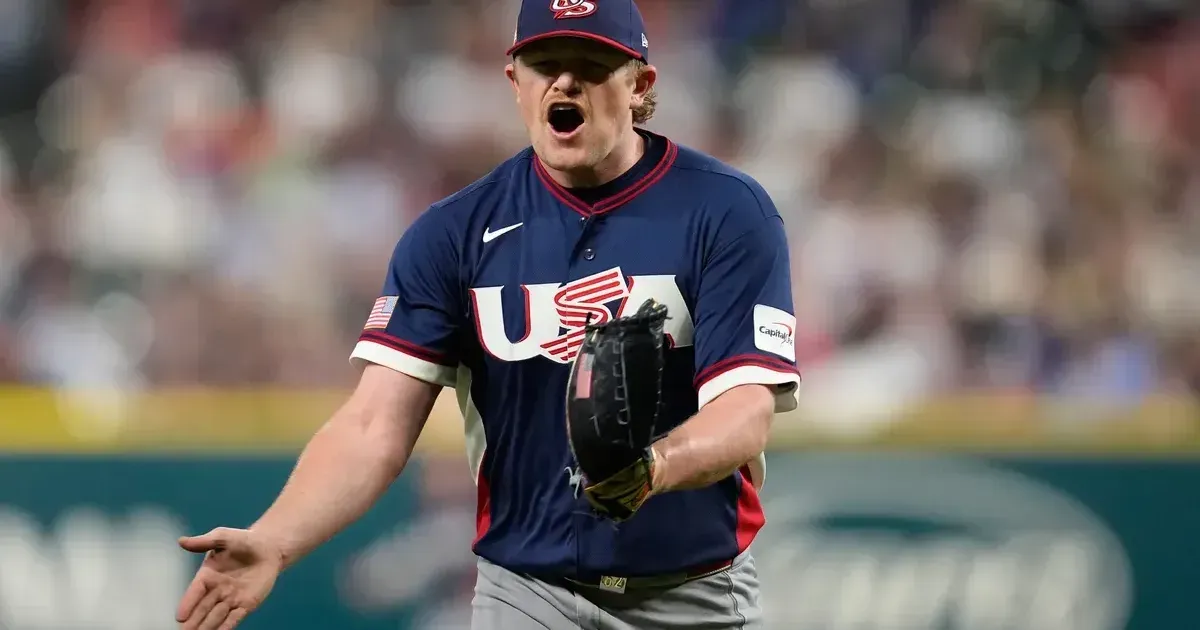
Logan Webb dismantled the Canadian lineup on March 15 to secure a spot for the United States in the 2026 World Baseball Classic final. Miami fans witnessed a dominant performance as the right-hander threw seven scoreless innings, allowing just two hits while striking out nine batters. Performance like this reinforces why the San Francisco Giants made him the foundation of their rotation with a $90 million extension. Webb relied heavily on his signature sinker, forcing weak contact throughout the evening at LoanDepot Park.

Canada struggled to find any rhythm against a pitcher who seemed determined to translate his regular-season consistency to the international stage. Pitching with a lead provided by early American home runs, Webb never allowed a runner to reach third base.

Critics often question the intensity of March baseball, but the atmosphere in Florida suggested a postseason environment. Webb appeared to thrive under the bright lights, a sharp contrast to his recent Octobers spent watching from home. San Francisco has missed the playoffs for several consecutive seasons, leaving their ace without a platform for high-stakes competition. This performance served as a reminder of the talent currently languishing on a mediocre Giants roster. Team USA manager Mark DeRosa praised the efficiency of his starter, noting that the bullpen remained rested for the upcoming championship game. Webb threw 94 pitches.

Logan Webb and the Giants Playoff Drought

Giants fans watched the broadcast with a mixture of pride and frustration. Webb has established himself as one of the most durable starters in Major League Baseball, yet he has lacked the supporting cast necessary to contend for a World Series title recently. His outing against Canada showcased the poise of a seasoned veteran who belongs in the spotlight. San Francisco management faces increasing pressure to build a winner around their 29-year-old anchor before his prime years evaporate. Farhan Zaidi, the Giants' president of baseball operations, has struggled to attract top-tier free agents to Northern California despite having significant financial resources. Webb remains the primary reason for optimism in the Bay Area.

In fact, his performance on Sunday night was the most consequential of his career to date. While regular-season wins count toward the standings, the win-or-go-home nature of the WBC semifinals added a layer of gravity to every delivery. Webb attacked the strike zone with precision, recording 14 groundball outs. Canadian hitters could not lift the ball, as his changeup consistently faded away from left-handed swingers. Scouts in attendance noted that his velocity sat two miles per hour higher than his 2025 average. Adrenaline clearly played a role in his execution.

Still, the focus now shifts to the emotional weight of his success. Webb has often spoken about his desire to lead the San Francisco Giants back to the postseason. Seeing him celebrate with teammates in a Team USA jersey provides a glimpse of what could be if the Giants front office provides adequate help. The disparity between his international success and his club's recent win-loss record is impossible to ignore. San Francisco finished fourth in the National League West last year.

Italy Pivots Pitching Strategy Against Venezuela

Italy surprised tournament observers by making an abrupt change to their starting rotation for the semifinal against Venezuela. Manager Marco Mazzieri had originally signaled that a traditional starter would take the mound. Instead, the Italian staff opted for a tactical pivot, utilizing a series of relief specialists to neutralize the powerful Venezuelan hitters. This decision aimed to disrupt the timing of superstars like Ronald Acuña Jr. and Luis Arraez. Venezuela arrived in the semifinals with the highest team batting average in the tournament, forcing Italy to rethink their conventional approach. Mazzieri decided to start Matt Festa in a high-use opening role.

Meanwhile, the Venezuelan dugout remained confident in their own offensive depth. Italy’s strategy required perfect execution from every arm in the bullpen, leaving little margin for error. Small nations often utilize these unorthodox methods to close the talent gap against traditional baseball powerhouses. Italy relied on data-driven matchups to select which pitchers would face specific segments of the Venezuelan order. Every substitution was calculated to maximize horizontal movement and limit the power of the South American lineup. Italy led by one run entering the middle innings.

According to team officials, the late-night strategy session lasted until 3:00 a.m. at the team hotel. Coaches reviewed thousands of data points on Venezuelan hitting tendencies before finalizing the change. Venezuela’s aggressive approach at the plate makes them vulnerable to high-spin breaking balls, a specialty of the Italian relievers. Switching the starter late in the process forced the Venezuelan hitters to abandon their specific pre-game preparations. Italy intended to create chaos.

Yet, the risk of such a move is by nature high. Relief pitchers are not accustomed to the routine of starting a game, which can lead to early command issues. Italy’s coaching staff monitored every pitch count with extreme scrutiny, ready to pull any player at the first sign of fatigue. The crowd in Miami reacted with confusion when the starting lineup was announced over the speakers. Venezuela eventually found a hole in the strategy during the seventh inning.

Nolan McLean Anchors New York Mets Hopes

Nolan McLean stands on the precipice of international stardom as he prepares to start the WBC final. The New York Mets rookie has become the talk of the tournament, balancing his duties as a hard-throwing pitcher and a power-hitting prospect. McLean represents the new wave of multi-talented athletes following the path cleared by Shohei Ohtani. His selection as the starter for the championship game signals the immense trust the American coaching staff has in his raw ability. McLean possesses a fastball that touches 100 miles per hour and a slider that generates elite swing-and-miss rates. He feels ready for the burden.

"You're crazy if you don't want to do this."

For one, the pressure of a global final would intimidate most players with such limited professional experience. McLean has only spent one full season in the minor leagues, yet he carries himself with the confidence of a ten-year veteran. New York fans are watching closely, hoping this performance is a signal of his future at Citi Field. The Mets have invested heavily in their scouting department to identify players with this specific psychological profile. McLean thrives when the stakes are highest, a trait that was evident during his collegiate career at Oklahoma State. His teammates have nicknamed him the Big Game Hunter.

Separately, the logistics of his preparation have been meticulous. McLean spends double the time in the film room compared to his peers, studying the swing paths of international hitters. He understands that his power is his greatest asset, but his intelligence on the mound is what will determine his longevity. The WBC has provided a stage for him to prove that he can handle the rigors of two-way play at the highest level. Mets owner Steve Cohen has expressed his excitement regarding the rookie’s development. New York expects him to join the rotation by May.

In turn, the upcoming final is a massive audition for the regular season. If McLean can handle a lineup filled with All-Stars, the Mets will have little reason to keep him in Triple-A. The American coaching staff has limited his pitch count throughout the tournament to ensure his arm remains fresh for this specific moment. Pitching coaches have worked with him on refining his split-finger fastball, a pitch that could become his primary weapon against left-handed batters. McLean threw a bullpen session on Friday that left scouts speechless.

At its core, the 2026 World Baseball Classic has become a showcase for the next generation of Major League talent. While established stars like Webb provide the foundation, rookies like McLean offer a glimpse into the future of the sport. The tournament has successfully captured the attention of a global audience, proving that international competition can coexist with the traditional MLB schedule. Attendance records have been shattered across all venues in Miami, Phoenix, and Tokyo. The final is expected to draw over 20 million viewers worldwide.

The Elite Tribune Perspective

Why do critics still treat the World Baseball Classic as a spring training distraction when the evidence suggests it is the most essential pulse-check for the sport? The standard complaints about player injury risks and disrupted schedules feel with growing frequency antiquated in a globalized market. If we truly want baseball to thrive beyond the borders of North America and Japan, these high-stakes clashes must be treated with the same reverence as the FIFA World Cup. The passion displayed by Italian and Venezuelan fans in Miami was not a manufactured marketing gimmick.

It was a visceral display of national identity through sport. Logan Webb’s dominance was not a fluke; it was a professional athlete finding the competitive fire that his club team has failed to provide. Major League Baseball owners who discourage their stars from participating are effectively sabotaging the long-term growth of their own product for short-sighted insurance concerns. We are seeing a shift where the players themselves are demanding these opportunities. Nolan McLean is a generation that does not fear the workload or the pressure. The WBC is no longer a preseason exhibition.

It is the definitive stage where the modern game proves its relevance to a world that is moving faster than a 100-mile-per-hour fastball.